
About the author
Sarah Mitchell
Pest & Plant Health Writer
Sarah writes about integrated pest management, disease symptoms, and pet-safe gardening. She consults extension publications and keeps a reference garden for photographing real-world plant problems.
“Seeing your vibrant green plant suddenly develop strange spots or wilt can be disheartening. But don't panic! Identifying common plant diseases is the first step to nursing your leafy friend back to health.
From the ePlant AI team, we want to empower you with the knowledge to be a plant health detective. Many common plant diseases are caused by fungi or bacteria and can be treated effectively if caught early. This guide will help you identify the tell-tale signs of common ailments.
And remember, if you're ever in doubt, the ePlant AI app's disease diagnosis feature is your secret weapon. A quick photo can provide an AI-powered diagnosis and a recommended course of action.
The Rogue's Gallery: Common Plant Diseases
Powdery Mildew
How to recognize it:
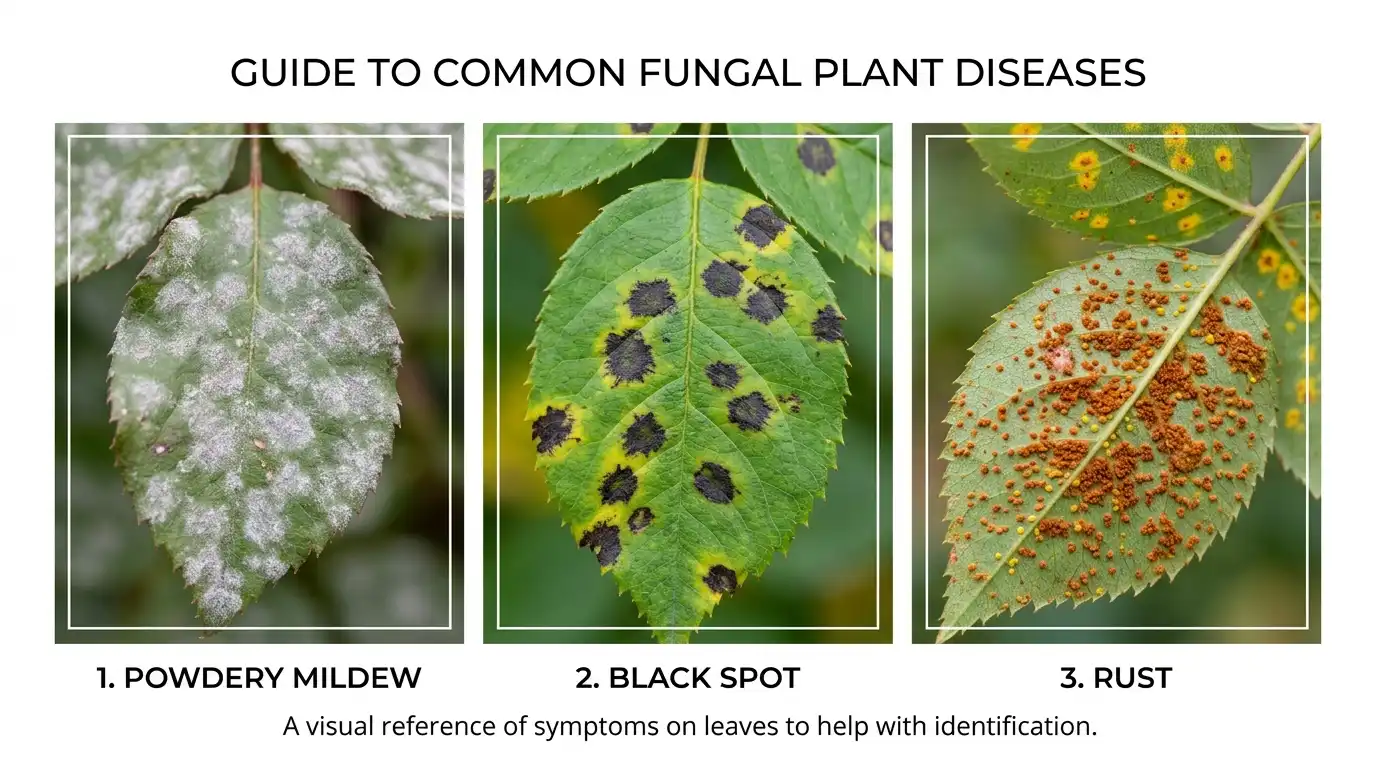
This fungal disease looks exactly like its name suggests: white, powdery patches on the leaves and stems of plants. It often starts as circular spots but can eventually cover an entire leaf.
Primary targets:
Begonias, succulents (especially Kalanchoe), squash, and roses are particularly susceptible, especially in humid conditions with poor air circulation.
Black Spot
How to recognize it:
Identified by black or dark brown circular spots on the upper sides of leaves. The area around the spots will often turn yellow. Affected leaves frequently drop from the plant prematurely.
Primary targets:
Roses are famously prone to black spot. It thrives in wet, warm weather and spreads when water splashes from an infected leaf to a healthy one.
Root Rot
How to recognize it:
This one is insidious because it starts below the soil. Above ground, you'll see wilting, yellowing leaves, and stunted growth. If you check the roots, they will be brown, mushy, and may have a foul smell, instead of being firm and white.
Primary targets:
Virtually any potted plant can get root rot. It's not caused by a single pathogen but is the result of soil that is too wet for too long, which suffocates the roots and invites fungi and bacteria.
Is Your Plant Sick?
Don't guess, get answers. Use the ePlant AI app to take a photo of the affected area and get an instant disease diagnosis and treatment plan from our AI.
Diagnose My PlantFirst Aid for Your Plants
Once you've identified the problem, it's time for action. Here are some general treatment strategies.
- Prune and Remove: For fungal leaf spots like powdery mildew and black spot, the first step is to remove all affected leaves to prevent further spread. Dispose of them in the trash, not the compost.
- Improve Airflow: Pruning some of the inner branches or leaves can increase air circulation, which makes conditions less favorable for fungal growth.
- Natural Fungicides: A spray made from neem oil can be effective against many fungal diseases. A baking soda solution (1 tablespoon of baking soda and 1/2 teaspoon of liquid soap in a gallon of water) can also help change the pH of the leaf surface, making it inhospitable to fungi.
- For Root Rot: Act fast. Remove the plant from its pot and trim away all mushy, dark roots with clean scissors. Repot in a new pot with fresh, well-draining soil. And moving forward, adjust your watering habits.
Pro Tip
When watering, aim for the soil, not the leaves. Wet foliage is a primary way that fungal diseases spread. Water in the morning so any splashes have time to dry during the day.
Prevention is Key
The best way to fight disease is to prevent it. A healthy, happy plant is much more resilient. Ensure your plants have the right amount of light, water, and nutrients. Don't overcrowd them, and always check new plants for signs of trouble before introducing them to your collection.
Stay Ahead of Plant Problems
ePlant AI does more than just diagnose. Get personalized care reminders for watering, fertilizing, and more to keep your plants in peak condition.
Download ePlant AI for FreeFrequently Asked Questions
Are yellow leaves always a sign of disease?
Not always. Yellowing leaves can also be a sign of overwatering, underwatering, or nutrient deficiencies. The ePlant AI app can help you distinguish between these different issues.
Can a plant recover from root rot?
Yes, if caught early enough. The key is to act quickly by trimming the dead roots and repotting in fresh soil. After that, be very careful not to overwater as the plant recovers.