
About the author
Sarah Mitchell
Pest & Plant Health Writer
Sarah writes about integrated pest management, disease symptoms, and pet-safe gardening. She consults extension publications and keeps a reference garden for photographing real-world plant problems.
"Some plants have sap that makes skin sensitive to sunlight and can cause serious burns or blisters. Giant hogweed and wild parsnip are the most notorious. Do not touch them bare-handed; learn how to recognize them and stay safe.
Official sources such as the CDC and FDA warn about phytophotodermatitis and toxic plant sap. Use ePlant AI to identify plants from a safe distance (do not touch unknown plants). For indoor safety, see our toxic houseplants for pets.
Dangerous Plants That Can Burn Your Skin
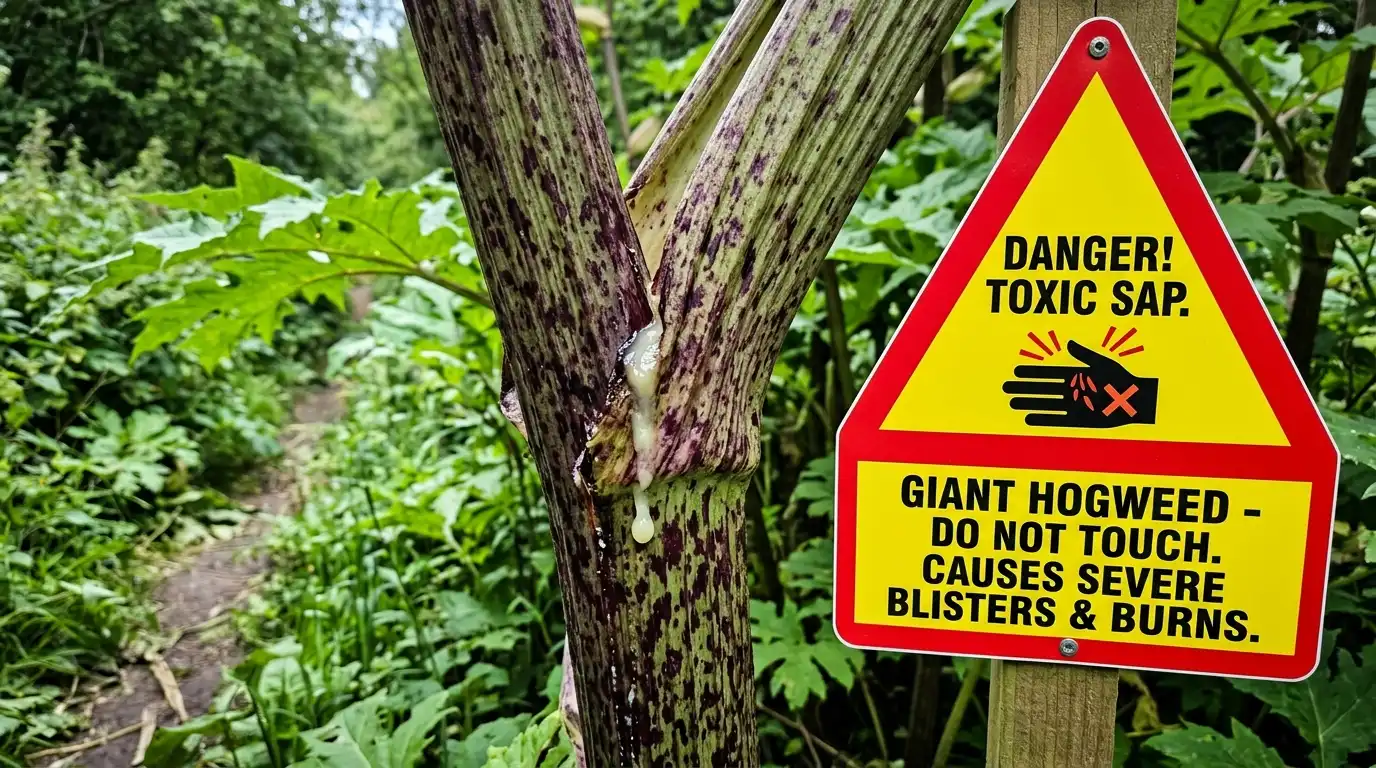
- Giant hogweed (Heracleum mantegazzianum) – Large, deeply cut leaves; white flower umbels; hollow purple-spotted stems. Sap causes severe burns when exposed to sun. Report to authorities; do not touch.
- Wild parsnip (Pastinaca sativa) – Yellow flower umbels; compound leaves. Sap can cause similar burns. Often along roadsides.
- Cow parsnip (Heracleum maximum) – Native; smaller than giant hogweed but same family. Can still cause skin reaction in some people.
- Poison ivy, oak, sumac – Urushiol causes allergic rash; not the same as phototoxic burns but also avoid contact.
If you get sap on your skin, wash immediately with soap and water and avoid sunlight on that area. Seek medical attention for severe reactions. Use ePlant AI to ID plants from a photo without touching them.
Pro Tip
When hiking or gardening in areas where these grow, wear long sleeves and gloves. Do not use a string trimmer or mower on unknown tall plants; sap can spray onto skin.
Identify Plants From a Safe Distance
Take a photo with ePlant AI to identify plants without touching them.
Identify with ePlant AIFrequently Asked Questions
What is phytophotodermatitis?
It is a skin reaction that occurs when plant sap (furocoumarins) on the skin is exposed to UV light. The result can be redness, blisters, and sometimes long-lasting discoloration. Giant hogweed and wild parsnip are common causes.