
About the author
Maya Chen
Houseplant Care Editor
Maya has spent twelve years writing about indoor gardening and troubleshooting houseplants for beginners. She tests care routines on her own collection of pothos, ferns, and philodendrons before publishing guides.
"Repotting is one of the most impactful things you can do for a houseplant. When done at the right time and in the right way, it gives roots room to breathe, refreshes the soil, and sets your plant up for years of healthy growth.
Knowing when and how to repot can feel overwhelming, but it doesn't have to be. This guide walks you through the signs that your plant needs a new pot, the best time of year to do it, and a clear step-by-step process so you can repot with confidence. For species-specific advice, use the ePlant AI identifier to name your plant, then check our plant encyclopedia for care notes.
Research from institutions like the Royal Horticultural Society and University of Maryland Extension backs the basics we cover here: timing, pot size, and soil choice all matter for long-term plant health.
When to Repot: 5 Signs Your Plant Is Ready
Repotting too often can stress plants; waiting too long can stunt growth or cause root rot. Watch for these cues.
- Roots growing through drainage holes - Roots circling the bottom or poking out mean the root ball is cramped.
- Roots visible at the soil surface - Dense mats of roots on top indicate the pot is full below.
- Water runs straight through - Soil that no longer holds moisture may be degraded or too root-bound.
- Slower growth or smaller new leaves - The plant may have run out of space or nutrients in the current pot.
- Pot is top-heavy or cracking - The root system has outgrown the container.
If you're unsure what species you have, snap a photo and use ePlant AI's free plant ID so you can look up its specific repotting needs.
Best Time of Year to Repot
The ideal window is late winter into early spring, when days lengthen and plants naturally start a new growth cycle. Repotting then gives roots time to establish before summer. You can repot in summer if needed, but avoid doing it in autumn or winter when growth slows and roots recover more slowly.
Tropical houseplants often follow seasonal light changes, so aligning repotting with brighter months supports a smooth transition. For more tailored timing, identify your plant with ePlant AI and cross-check care guides in our encyclopedia.
Step-by-Step: How to Repot a Houseplant
Gather a new pot (only one size up), fresh potting mix, and something to cover the drainage hole (e.g. a mesh square or broken crock). Then follow these steps.
- Water the plant a day before. Moist (not soggy) soil makes it easier to slide the root ball out and reduces transplant shock.
- Prepare the new pot. Add a layer of fresh mix at the bottom so the top of the root ball will sit about 1 in (2.5 cm) below the rim. Cover the drainage hole to keep soil in.
- Remove the plant from its current pot. Tip the pot sideways, support the stem and soil, and gently squeeze or tap the pot to release the root ball. Avoid yanking by the stem.
- Loosen the roots. Gently tease circling roots at the bottom and sides. If the root ball is very tight, make a few shallow vertical cuts to encourage new root growth. Trim any dead or rotten roots.
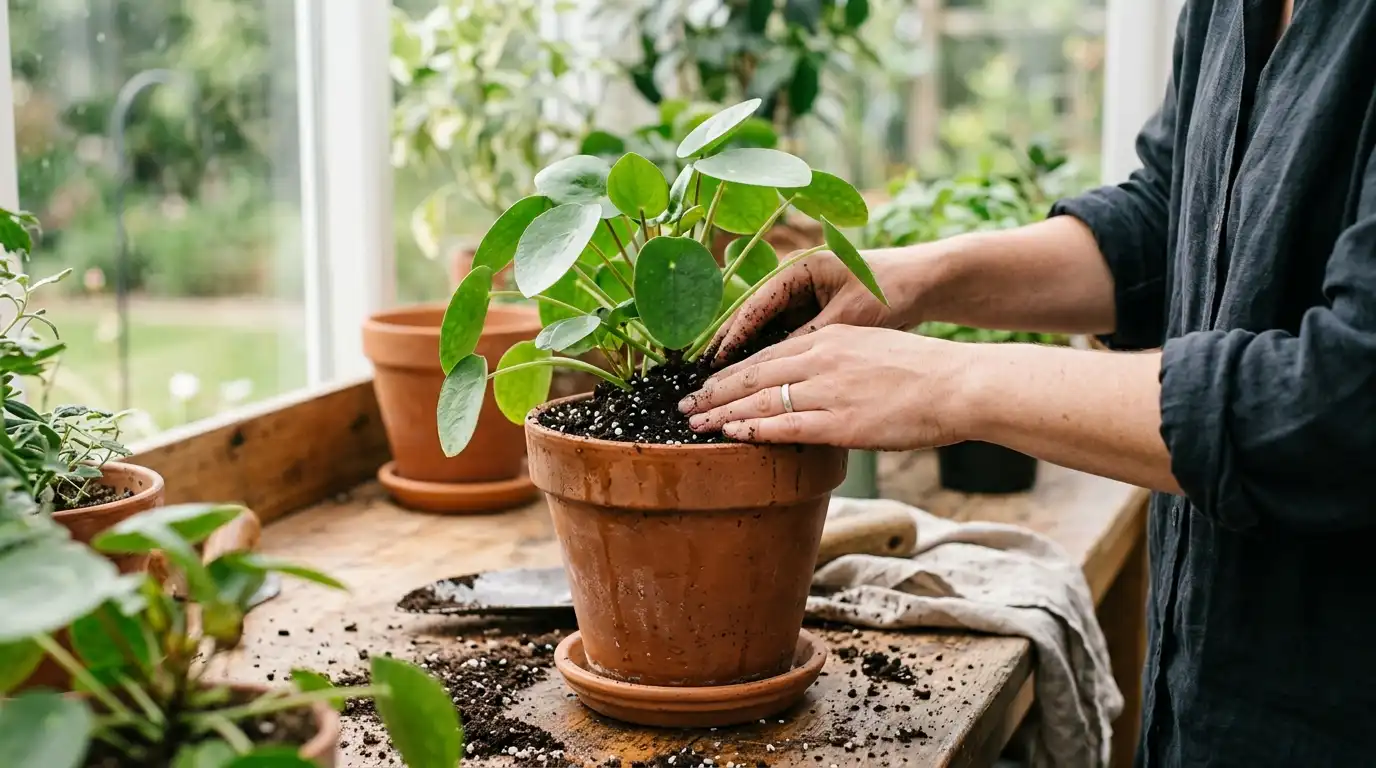
- Center the plant and fill with soil. Set the plant at the same depth as before. Fill around the root ball with fresh mix, pressing lightly to remove large air pockets. Leave a small gap between the soil surface and the rim for watering.
- Water once, then hold off. Water thoroughly until it runs from the drainage hole, then let the top inch of soil dry before watering again so roots can recover without sitting in wet soil.
After repotting, keep the plant in indirect light for a week or two and avoid fertilizing for about a month so roots can settle. For ongoing care reminders and tips, the ePlant AI app can help you stay on track.
Pro Tip
Only move up one pot size (e.g. 6 in to 8 in). A pot that's too large holds excess moisture and can lead to root rot. Match the pot to the root mass, not the foliage.
Not Sure What Plant You Have?
Identify it with ePlant AI, then get repotting and care tips tailored to that species.
Identify Your PlantFrequently Asked Questions
How often should I repot my houseplants?
Most houseplants benefit from repotting every 1–2 years when they're actively growing. Slow growers (e.g. many succulents and cacti) may only need it every 2–3 years. Let the plant's roots and growth rate guide you, not the calendar alone.
Can I reuse old potting soil when repotting?
It's best to use fresh potting mix for repotting. Old soil can be depleted of nutrients, compacted, or hold pathogens. If you must reuse, mix it with new soil and add a bit of compost or slow-release fertilizer, and avoid reusing soil from a plant that was sick.
Should I water right after repotting?
Yes. Water thoroughly once after repotting so the new soil settles and roots make contact. Then allow the top inch of soil to dry before watering again to avoid overwatering while the plant adjusts.