
About the author
James Okonkwo
Horticulturist & Plant Identification Specialist
James holds a B.Sc. in plant science and has led community plant-ID workshops across the UK. He focuses on field identification, invasive species awareness, and how AI tools fit alongside traditional botany.
"Weeds are simply plants growing where we don't want them. Identifying them is the first step to controlling them without harming desirable plants.
This guide covers common garden weeds and practical control options. Use the ePlant AI identifier to confirm what’s in your garden-sometimes “weeds” are volunteer flowers or useful plants. For more on plant ID, see our AI identification guide and encyclopedia.
Extension resources such as University of Maryland Extension and RHS weeds offer region-specific weed and control advice.
Common Weeds and How to Manage Them
- Dandelion (Taraxacum) - Rosette of toothed leaves; yellow composite flowers. Hand-dig or spot-treat; remove before seed heads form.
- Crabgrass (Digitaria) - Low, spreading annual grass. Pre-emergent in spring; pull or hoe young plants.
- Clover (Trifolium) - Three-leaflet leaves; small white or pink flowers. Often indicates low nitrogen; can be mowed or hand-removed.
- Broadleaf plantain (Plantago major) - Broad, ribbed leaves in a basal rosette. Dig out or spot-treat.
- Chickweed (Stellaria) - Small leaves; white flowers; mat-forming. Pull when soil is moist; mulch to suppress.
- Purslane (Portulaca oleracea) - Succulent leaves; low, spreading. Edible; pull or hoe before it sets seed.
Identify unknown plants with ePlant AI before treating-you might be pulling a desirable seedling.
Pro Tip
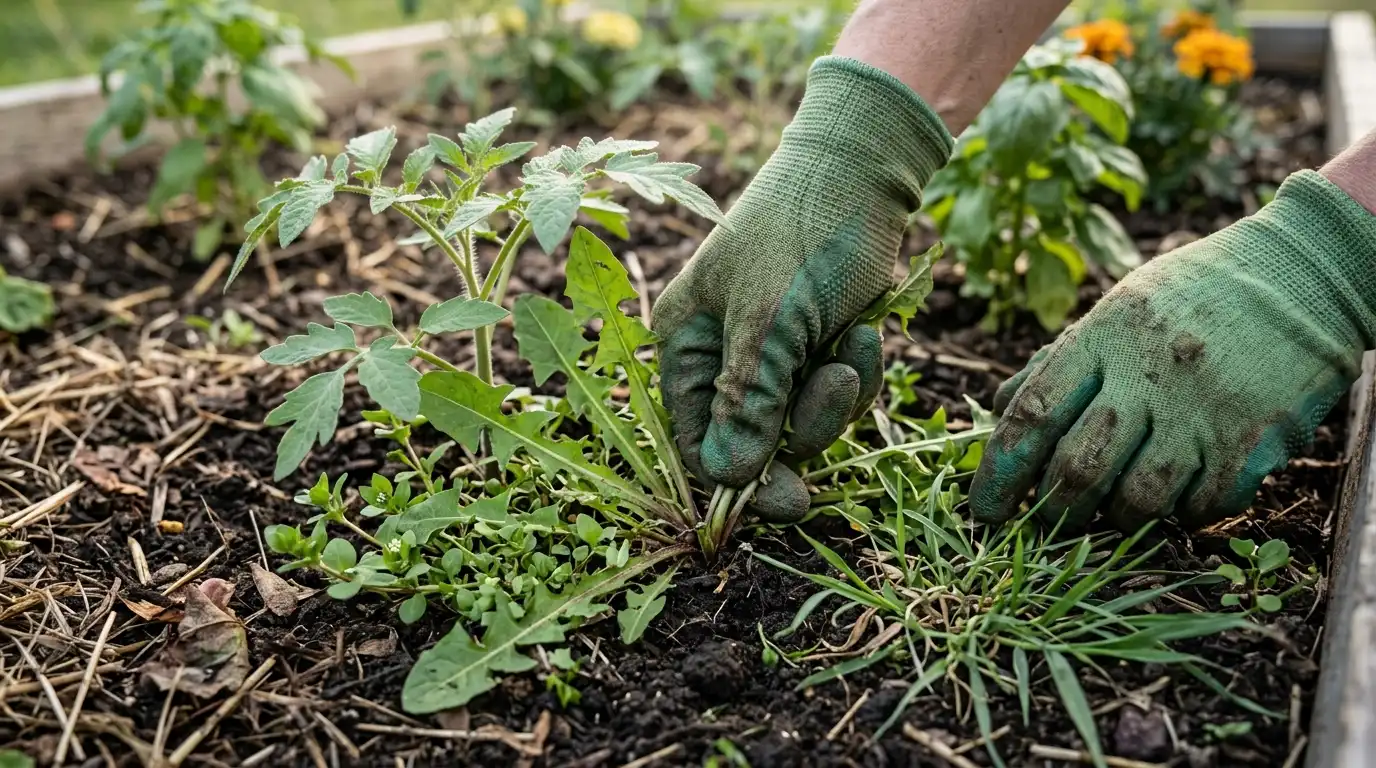
Mulch beds to block light and reduce weed germination. Pull weeds when the soil is moist so roots come out more easily.
Not Sure If It's a Weed?
Snap a photo with ePlant AI to identify the plant before you remove it.
Identify with ePlant AIFrequently Asked Questions
Can ePlant AI identify weeds?
Yes. Take a clear photo of the leaves and any flowers; ePlant AI's AI can suggest species so you can confirm whether it’s a weed or a wanted plant before taking action.