
About the author
Maya Chen
Houseplant Care Editor
Maya has spent twelve years writing about indoor gardening and troubleshooting houseplants for beginners. She tests care routines on her own collection of pothos, ferns, and philodendrons before publishing guides.
Heating and air conditioning drop indoor humidity to 30–40%, while many tropical houseplants prefer 50–60% or higher. This guide shows practical ways to raise humidity without fogging your windows.
Pair these tips with our tropical plants at home and lighting guide. Identify species with ePlant AI.
Signs Your Air Is Too Dry
- Brown, crispy leaf edges on calathea, ferns, or peace lily
- New leaves smaller or stuck in the sheath
- Spider mites appearing despite good care (they love dry air)
Methods That Actually Help
- Humidifier: Best for collections of ferns, anthuriums, and calatheas.
- Grouping plants: Shared transpiration raises local humidity slightly.
- Pebble trays: Pot sits above water, not in it; mild benefit near the pot.
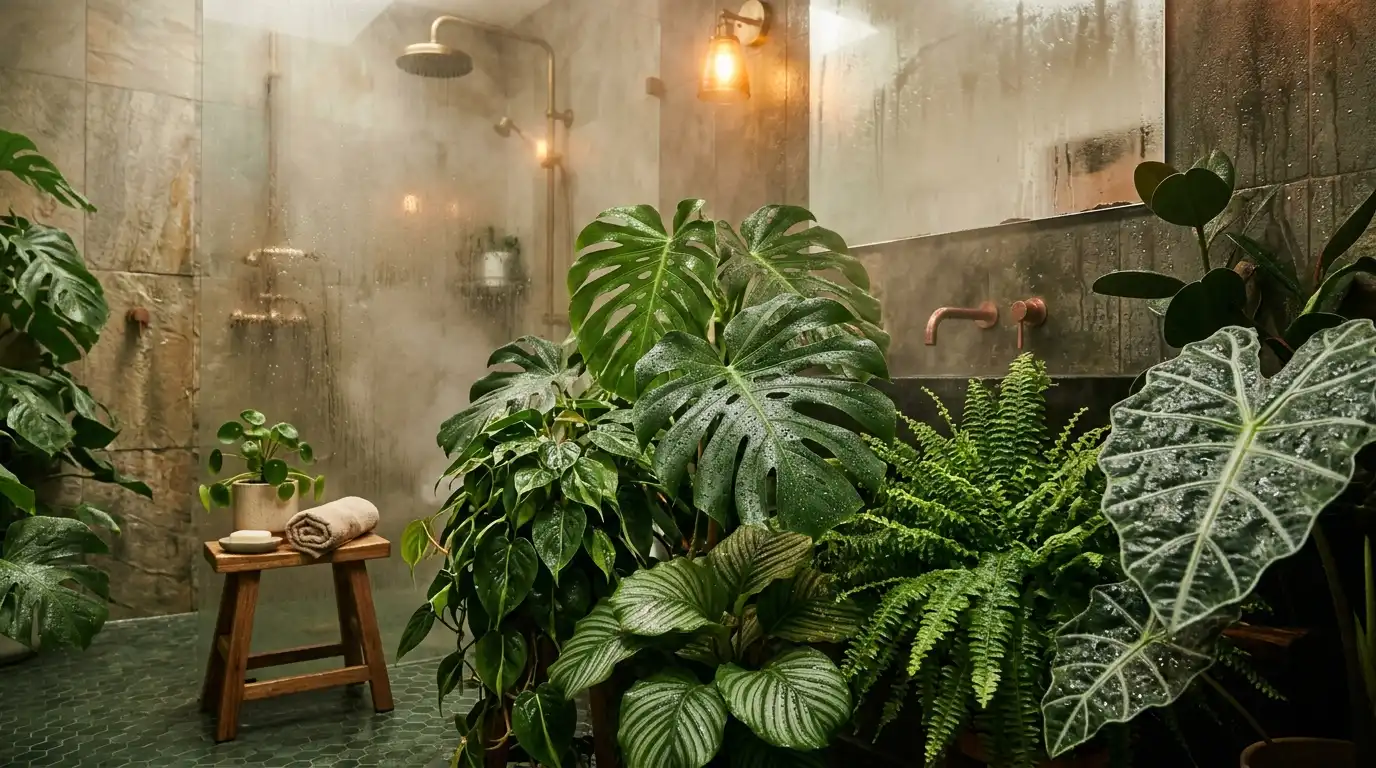
- Bathroom or kitchen: Use bright windows in naturally humid rooms when light allows.
Frequently Asked Questions
Does misting increase humidity enough?
Misting raises humidity for minutes only and can spread fungal spots if leaves stay wet overnight. It is a supplement, not a solution for dry heating-season air.
What humidity do monsteras need?
Monstera tolerates average home humidity but grows faster with 50%+. Brown tips usually mean underwatering or salt buildup, not humidity alone-check both.