
About the author
James Okonkwo
Horticulturist & Plant Identification Specialist
James holds a B.Sc. in plant science and has led community plant-ID workshops across the UK. He focuses on field identification, invasive species awareness, and how AI tools fit alongside traditional botany.
"Invasive plants spread beyond where they are planted and can crowd out native species. Many are still sold at garden centers. Here are 15 to avoid in 2026 and what to grow instead.
University and federal invasive species programs and the RHS list species to avoid; regional lists vary. Use ePlant AI to ID plants and our encyclopedia for care. For a related pest, see tree of heaven and spotted lanternfly.
15 Invasive Plants to Avoid and Alternatives
- Tree of heaven (Ailanthus) – Invasive tree; lanternfly host. Alternative: native sumac, serviceberry.
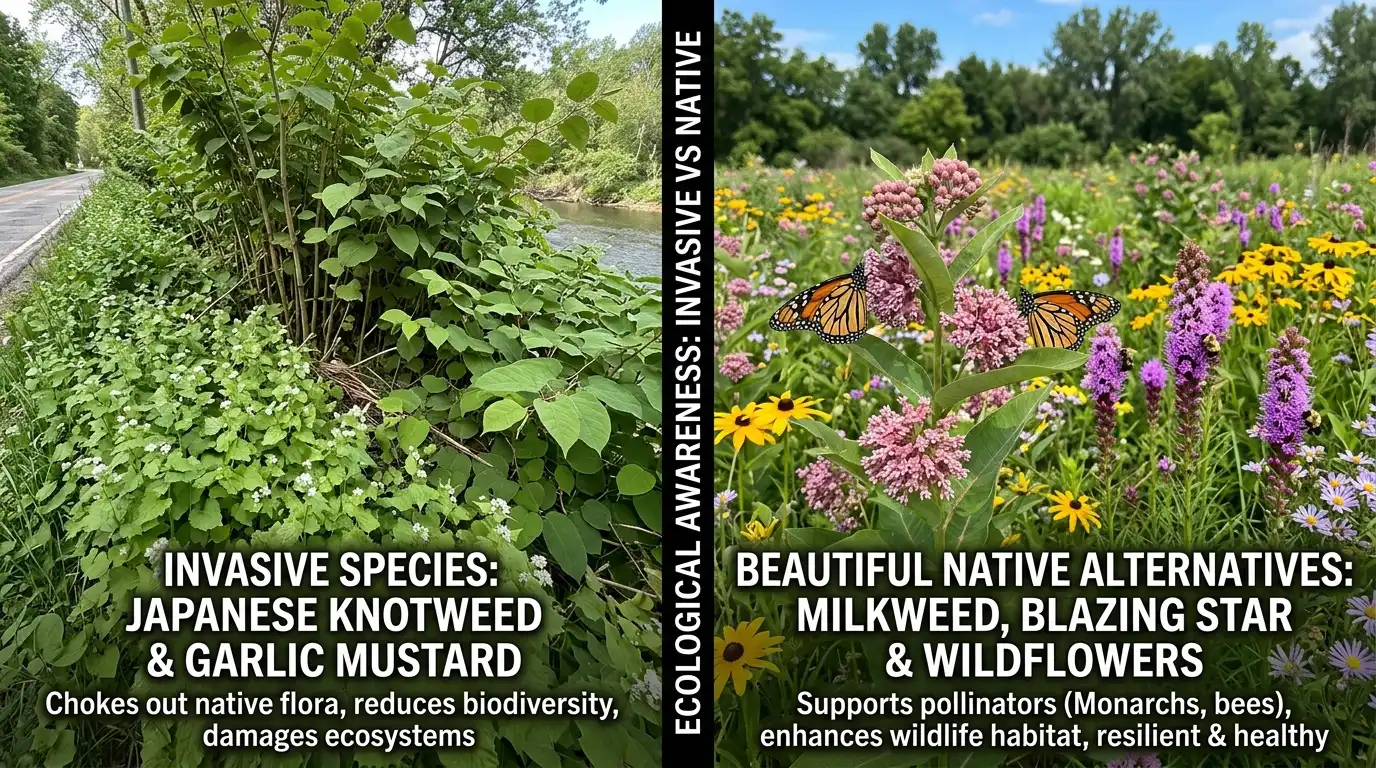
- Japanese knotweed – Extremely invasive; difficult to control. Alternative: native asters, bee balm.
- English ivy (Hedera helix) – Smothers trees and ground. Alternative: native vines or Virginia creeper (where appropriate).
- Bradford pear (Callery pear) – Weak structure; invasive spread. Alternative: serviceberry, dogwood.
- Burning bush (Euonymus alatus) – Invasive in many regions. Alternative: blueberry (fall color), native viburnum.
- Barberry (Berberis thunbergii) – Invasive; tick habitat. Alternative: ninebark, other native shrubs.
- Butterfly bush (Buddleja davidii) – Seeds spread; crowds natives. Alternative: native bee balm, Joe Pye weed.
- Purple loosestrife – Invades wetlands. Alternative: native blazing star, cardinal flower.
- Chinese wisteria (invasive types) – Aggressive vine. Alternative: American wisteria (native).
- Miscanthus (some cultivars) – Can seed into wild areas. Alternative: native grasses, switchgrass.
- Norway maple – Invasive; shades out natives. Alternative: sugar maple, red maple.
- Russian olive – Invasive in many areas. Alternative: native shrubs and trees.
- Kudzu – Highly invasive vine. Avoid; use native vines where needed.
- Japanese barberry – Same as barberry above; avoid. Alternative: native shrubs.
- Winged euonymus – Same as burning bush; avoid. Alternative: native fall-color shrubs.
Check your state or region's invasive plant list before buying. For drought-tolerant non-invasives, see drought-tolerant plants.
Pro Tip
Just because a plant is sold in a store does not mean it is safe for your region. Check your state agriculture or extension invasive species list before planting.
Identify Plants Before You Plant
Use ePlant AI to confirm plant ID and learn more about native and non-invasive options.
Identify with ePlant AIFrequently Asked Questions
What makes a plant invasive?
Invasive plants spread quickly outside their intended area, often with no natural controls, and can outcompete native species, change habitats, or cause economic harm. Invasiveness depends on region; check your local list.