
About the author
James Okonkwo
Horticulturist & Plant Identification Specialist
James holds a B.Sc. in plant science and has led community plant-ID workshops across the UK. He focuses on field identification, invasive species awareness, and how AI tools fit alongside traditional botany.
"Tree of heaven (Ailanthus altissima) is an invasive tree that spreads quickly and is the preferred host of the spotted lanternfly, a serious pest. Knowing how to identify both helps you report and manage them and protect your landscape.
The USDA and state agencies link tree of heaven to spotted lanternfly spread; the pest is established in multiple states. Use ePlant AI to identify trees and plants; for official reporting, follow your state's agriculture or extension guidelines. For other invasives, see our invasive plants to avoid.
Identifying Tree of Heaven
Compound leaves with many leaflets; each leaflet has a small gland near the base. Crushed leaves and bark smell like burnt peanut butter or rubber. Bark is smooth and pale when young. It can look like sumac or walnut; the smell and leaf glands help distinguish it. Do not confuse with native sumac or black walnut.
Identifying Spotted Lanternfly
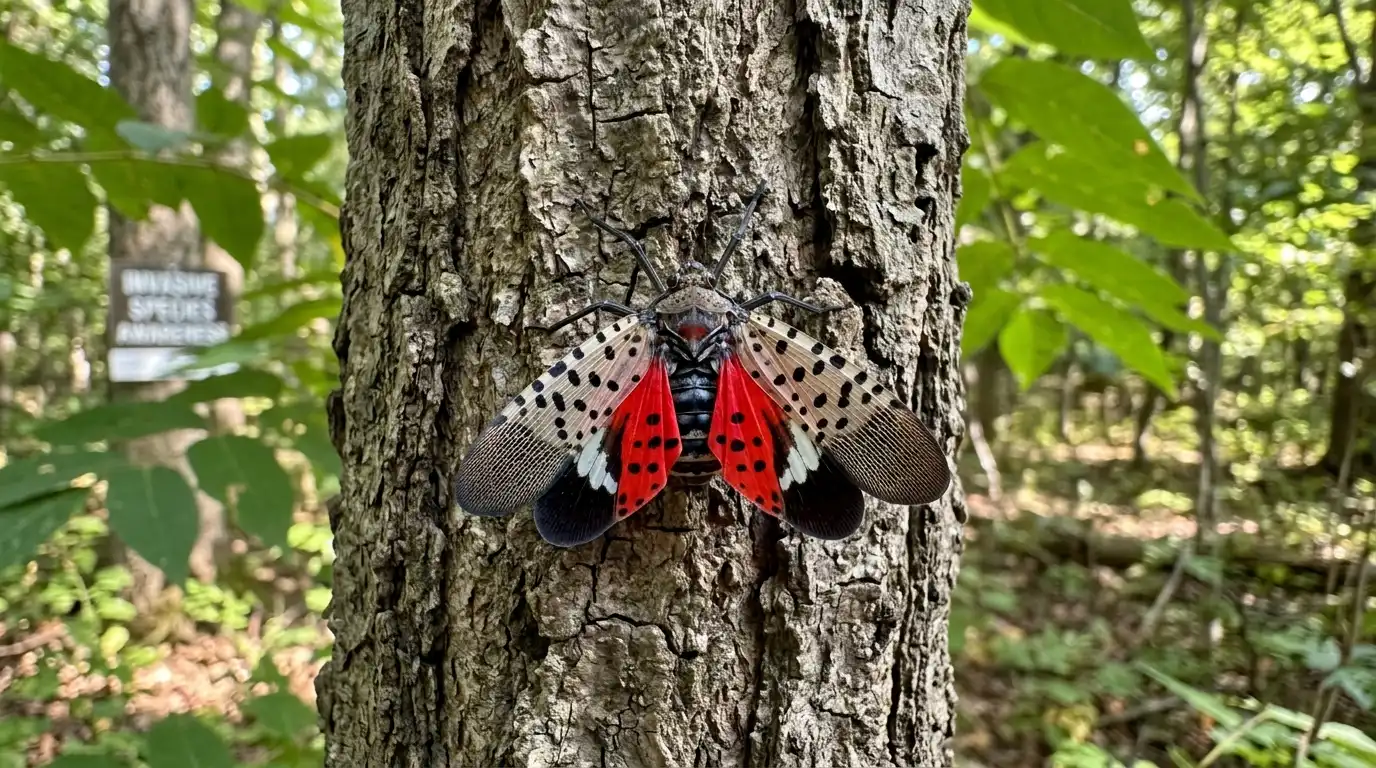
Adults are about 1 inch; gray wings with black spots; red hind wings when flying. Nymphs are black with white spots, then red and black with white spots. They cluster on stems and leaves and excrete honeydew. If you see them, report to your state agriculture department; do not transport plants or materials that could spread eggs or insects.
Removing tree of heaven (where allowed and safe) can reduce lanternfly habitat. Always follow local regulations and get professional help for large trees. Use ePlant AI to confirm tree ID and our encyclopedia for more plant info.
Identify Trees and Plants
Snap a photo with ePlant AI to name trees and plants and learn more about them.
Identify with ePlant AIFrequently Asked Questions
Should I remove tree of heaven from my property?
Tree of heaven is invasive and hosts spotted lanternfly. Removal can help, but it resprouts easily; follow local guidelines and consider professional removal for large trees. Check with your extension office or state agriculture department for best practices.