
About the author
James Okonkwo
Horticulturist & Plant Identification Specialist
James holds a B.Sc. in plant science and has led community plant-ID workshops across the UK. He focuses on field identification, invasive species awareness, and how AI tools fit alongside traditional botany.
"Mushroom foraging is rewarding only when done safely. Never eat a wild mushroom based on an app or photo alone-always confirm with an expert or reliable field guide.
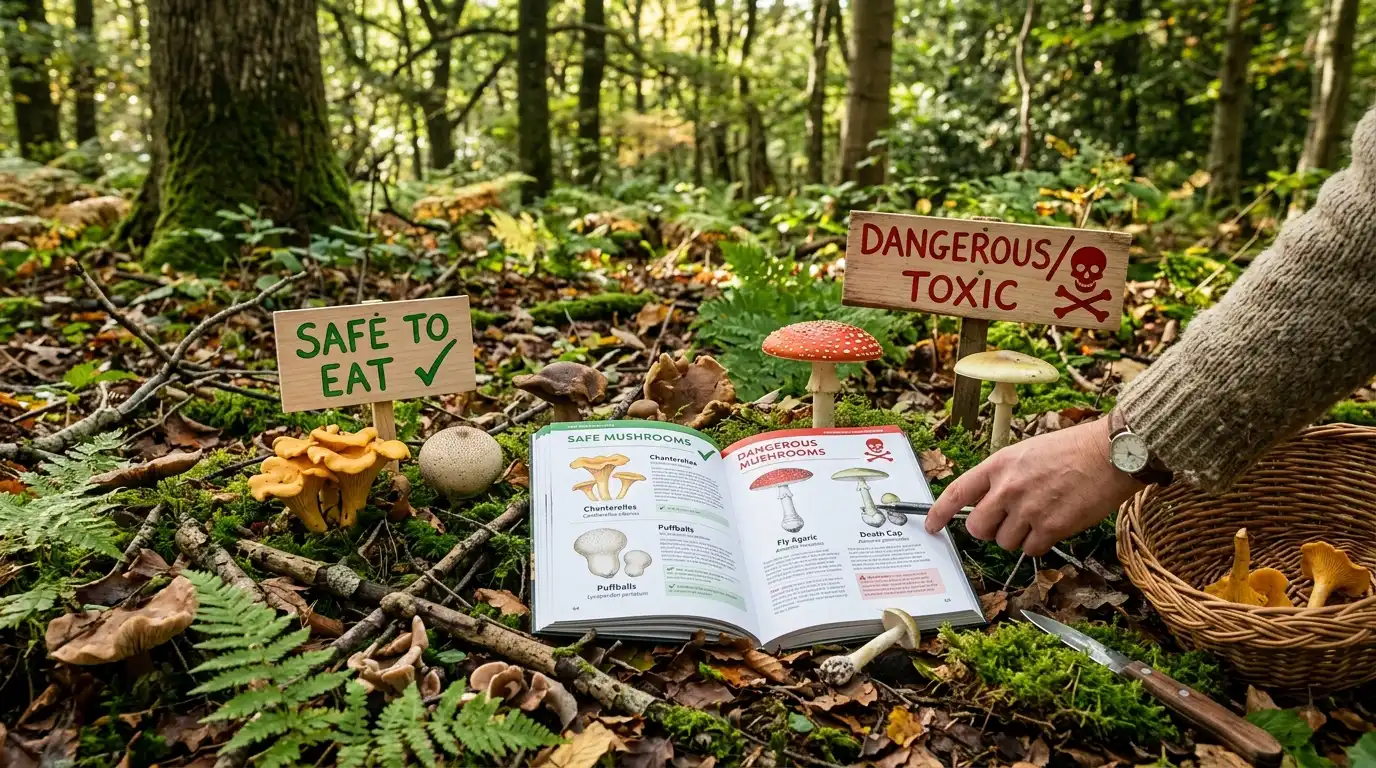
This guide introduces basic mushroom anatomy and safety rules. ePlant AI is built for plant identification (including fungi that affect plants). For wild mushroom ID and edibility, rely on expert mycologists, local clubs, and trusted resources such as the Wild Food UK guide and Mushroom Expert. When in doubt, do not eat.
For plant and garden issues (e.g. fungi on leaves or soil), use ePlant AI and our plant diseases guide to get diagnosis and care advice.
Safety First: Rules for Mushroom Foraging
- Never eat a mushroom you have not identified with certainty using expert sources.
- Many toxic mushrooms look like edible ones; one mistake can be fatal.
- Use local mycological societies, certified foragers, or reliable field guides-not only apps or photos.
- When foraging, note habitat, substrate, and take photos of cap, gills, stem, and base; share with experts for ID.
Basic Mushroom Anatomy
Cap, gills (or pores), stem, ring, and base are key for ID. Color, size, and whether the mushroom bruises or bleeds when cut also matter. Document these and consult an expert before any consumption.
For garden and houseplant problems-powdery mildew, mold on soil, or leaf spots-ePlant AI and our disease guide can help you identify and treat plant ailments safely.
Frequently Asked Questions
Can I use ePlant AI to identify mushrooms?
ePlant AI is optimized for plant identification and plant disease diagnosis. Do not use it as the sole basis for identifying wild mushrooms for consumption. Always consult a qualified mycologist or trusted field guide before eating any wild mushroom.
What should I photograph in the field?
Cap top and underside, stem (including base in soil), any ring or volva, nearby trees (for habitat), and a size reference. Spore prints help experts but take time-photograph first, then collect only if you know safe handling.
Are lawn mushrooms dangerous to pets?
Some lawn fungi are toxic if eaten. Remove unknown mushrooms from areas pets explore and contact your vet if ingestion occurs. ePlant AI can help document the specimen for a professional, not replace veterinary advice.