
About the author
Sarah Mitchell
Pest & Plant Health Writer
Sarah writes about integrated pest management, disease symptoms, and pet-safe gardening. She consults extension publications and keeps a reference garden for photographing real-world plant problems.
"Spider mites leave fine webbing and stippled leaves; thrips cause silvery scars and distorted growth; mealybugs look like white cotton in leaf axils; fungus gnats are tiny flies around the soil. Here is how to tell them apart and fix each problem.
Correct ID is the first step to the right treatment. Extension resources like UMD Extension and the RHS focus on these same indoor pests. Use the ePlant AI identifier to name your plant and our disease diagnosis if you see damage. Full control methods are in our common plant pests guide.
Spider Mites
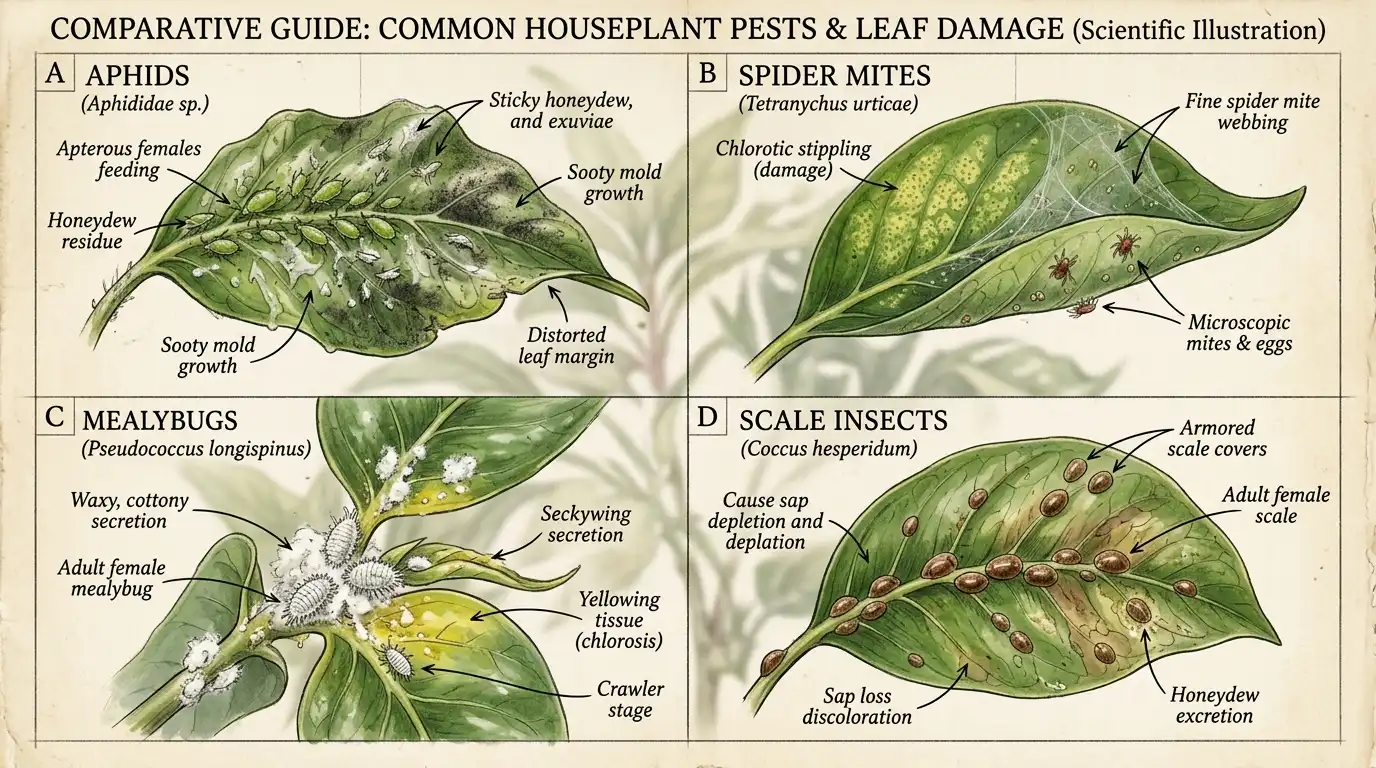
Signs: Fine silky webbing between leaves and stems; tiny yellow or white speckles on leaves (stippling); leaves can turn bronze or drop. They are tiny and often need a magnifier. Common on ficus, Calathea, and ivy. Fix: Increase humidity; spray with water or insecticidal soap; neem oil. Repeat as needed.
Thrips
Signs: Silvery or brown scars on leaves and petals; distorted new growth; tiny slender insects. They scrape and suck tissue. Common on flowers and new growth. Fix: Remove damaged parts; blue sticky traps; spinosad or insecticidal soap; isolate affected plants.
Mealybugs
Signs: White cottony masses in leaf axils, on stems, or under leaves; sticky honeydew; sooty mold. Common on succulents, orchids, and ficus. Fix: Dab with alcohol on a cotton swab; spray with insecticidal soap or neem; repeat. See pest guide.
Fungus Gnats
Signs: Small dark flies hovering around the soil and pot; larvae in wet soil. They do not usually damage leaves but are a sign of overwatering. Fix: Let soil dry between waterings; use yellow sticky traps; top dress with sand or reduce moisture. See yellow leaves and overwatering.
Pro Tip
Isolate any new plant for a week or two and inspect it before placing it near the rest of your collection. Many pests hitch a ride on new plants.
Not Sure What Is Bugging Your Plant?
Upload a photo with ePlant AI for an AI-powered ID and pest/disease hints.
Diagnose with ePlant AIFrequently Asked Questions
How do I tell spider mites from thrips?
Spider mites produce fine webbing and cause stippled (speckled) leaves. Thrips leave silvery or brown scars and distorted growth and do not make webbing. Both are tiny; use a magnifier or tap a leaf over white paper to see movement.
Are fungus gnats harmful to plants?
Adult fungus gnats are mostly a nuisance. Larvae can feed on roots in very wet soil and weaken plants. The real fix is to let the soil dry and improve drainage; that also helps prevent root rot.