
About the author
Maya Chen
Houseplant Care Editor
Maya has spent twelve years writing about indoor gardening and troubleshooting houseplants for beginners. She tests care routines on her own collection of pothos, ferns, and philodendrons before publishing guides.
"Houseplants don't just look good-many can help improve indoor air quality by absorbing certain volatile compounds and releasing oxygen. Picking the right ones gives you a healthier, greener home.
Research such as the classic NASA Clean Air Study and follow-up work by the EPA on indoor air has highlighted plants' potential to reduce trace levels of some pollutants. This list covers ten popular, easy-to-grow options that are often cited for air-purifying traits. For care details on any plant, identify it with ePlant AI and check our encyclopedia.
Note: Plants alone can't replace good ventilation or address serious air-quality issues, but they can complement a healthy indoor environment.
10 Air-Purifying Plants to Grow at Home
These species are widely recommended for beginners and are often included in discussions of plants that may help with indoor air. All prefer bright indirect or medium light unless noted.
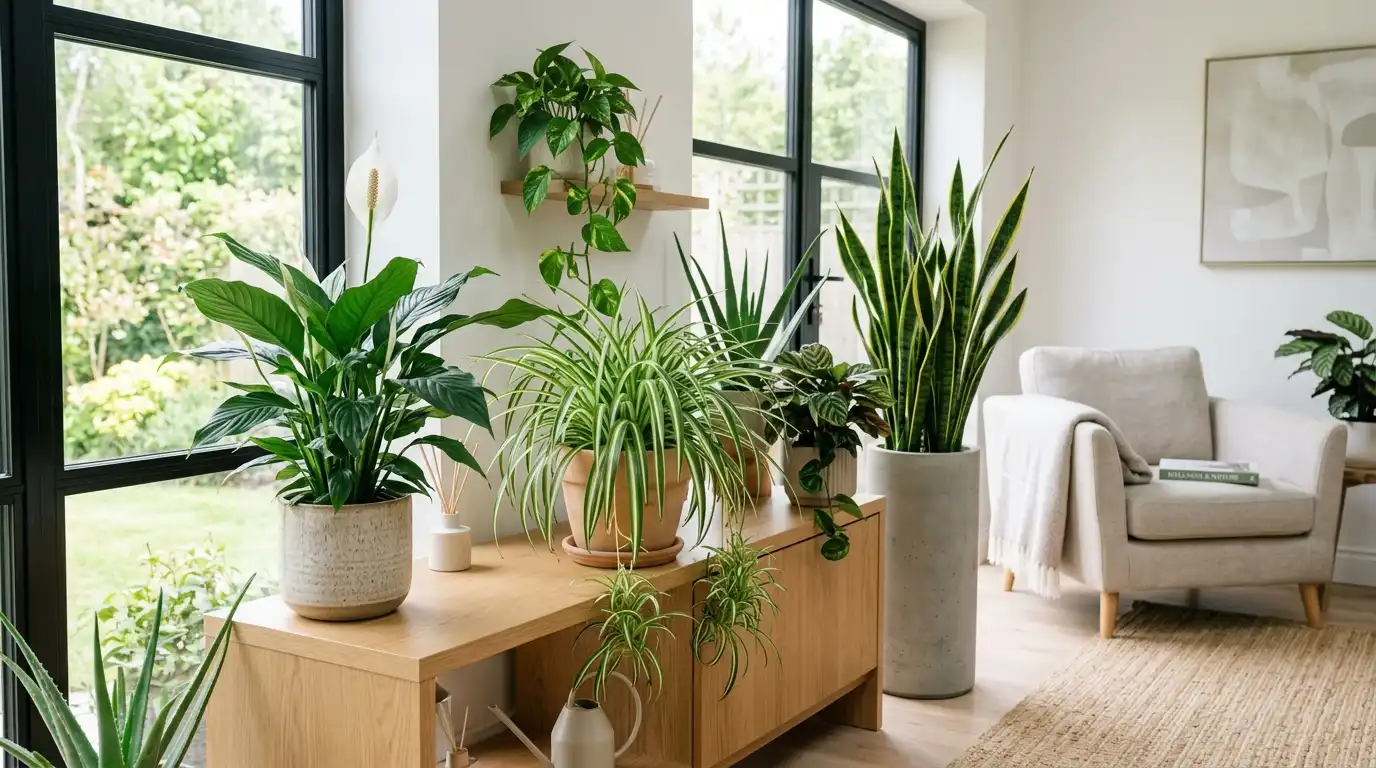
- Snake plant (Sansevieria) - Tolerates low light and irregular watering. Often cited for filtering formaldehyde and releasing oxygen at night.
- Spider plant (Chlorophytum comosum) - Adaptable and fast-growing. Easy to propagate; safe for pets.
- Peace lily (Spathiphyllum) - Prefers medium light and consistent moisture. Showy white blooms; avoid if you have curious pets (mildly toxic).
- Pothos (Epipremnum aureum) - Very forgiving; trails or climbs. Tolerates low light; keep away from pets.
- Rubber plant (Ficus elastica) - Bold foliage; likes bright indirect light and moderate watering.
- Boston fern (Nephrolepis exaltata) - Loves humidity and indirect light. Good for bathrooms if light allows.
- Dracaena (e.g. D. marginata, D. fragrans) - Upright, architectural; several varieties available. Prefer moderate light and even moisture.
- Aloe vera - Succulent; needs bright light and minimal water. Gel has topical uses; keep out of reach of pets.
- English ivy (Hedera helix) - Trailing or climbing; can help in cooler, brighter spots. Toxic to pets if ingested.
- Chinese evergreen (Aglaonema) - Colorful leaves; tolerates lower light. Easy-care option for offices or darker rooms.
To confirm a plant's identity and get tailored care (water, light, toxicity), use ePlant AI's free identifier and our plant encyclopedia. For pet safety, also see our guide on toxic plants and safe alternatives.
How Plants May Help Indoor Air
Plants take in gases through their leaves and roots; microbes in the soil can also break down some compounds. Lab studies have shown that certain species can reduce trace amounts of chemicals like formaldehyde, benzene, and xylene in enclosed chambers. Real-world rooms have more air volume, ventilation, and variable conditions, so the effect at home is likely modest-but adding plants is still a positive step for well-being and greenery.
Place several plants in the rooms you use most, keep them healthy with proper light and water (the ePlant AI app can help with reminders), and combine them with good ventilation for the best indoor environment.
Pro Tip
Dust leaves occasionally so they can absorb light and “breathe” efficiently. Wipe with a damp cloth or give smooth-leaved plants a gentle shower.
Identify Your Air-Purifying Plants
Snap a photo with ePlant AI to name your plant and get care tips so it stays healthy and effective.
Identify with ePlant AIFrequently Asked Questions
Do air-purifying plants really work?
Studies show that some plants can remove trace amounts of certain VOCs in controlled conditions. In a normal room, the effect is small compared with ventilation and reducing sources of pollution, but plants still improve well-being and add humidity and greenery.
Which plant purifies the air the most?
There’s no single “best” plant-different studies test different species and chemicals. Snake plant, peace lily, pothos, and spider plant are among the most commonly recommended and are easy to care for.
Are air-purifying plants safe for pets?
Not all of them. Peace lily, pothos, and English ivy are toxic to cats and dogs. Spider plant and Boston fern are generally considered safer. Always confirm toxicity before bringing a plant home-ePlant AI's encyclopedia and our toxic plants blog can help.