
About the author
Sarah Mitchell
Pest & Plant Health Writer
Sarah writes about integrated pest management, disease symptoms, and pet-safe gardening. She consults extension publications and keeps a reference garden for photographing real-world plant problems.
"Many popular houseplants are toxic to cats and dogs. Knowing which ones to avoid-and which safe options look just as good-helps you keep your home green and your pets safe.
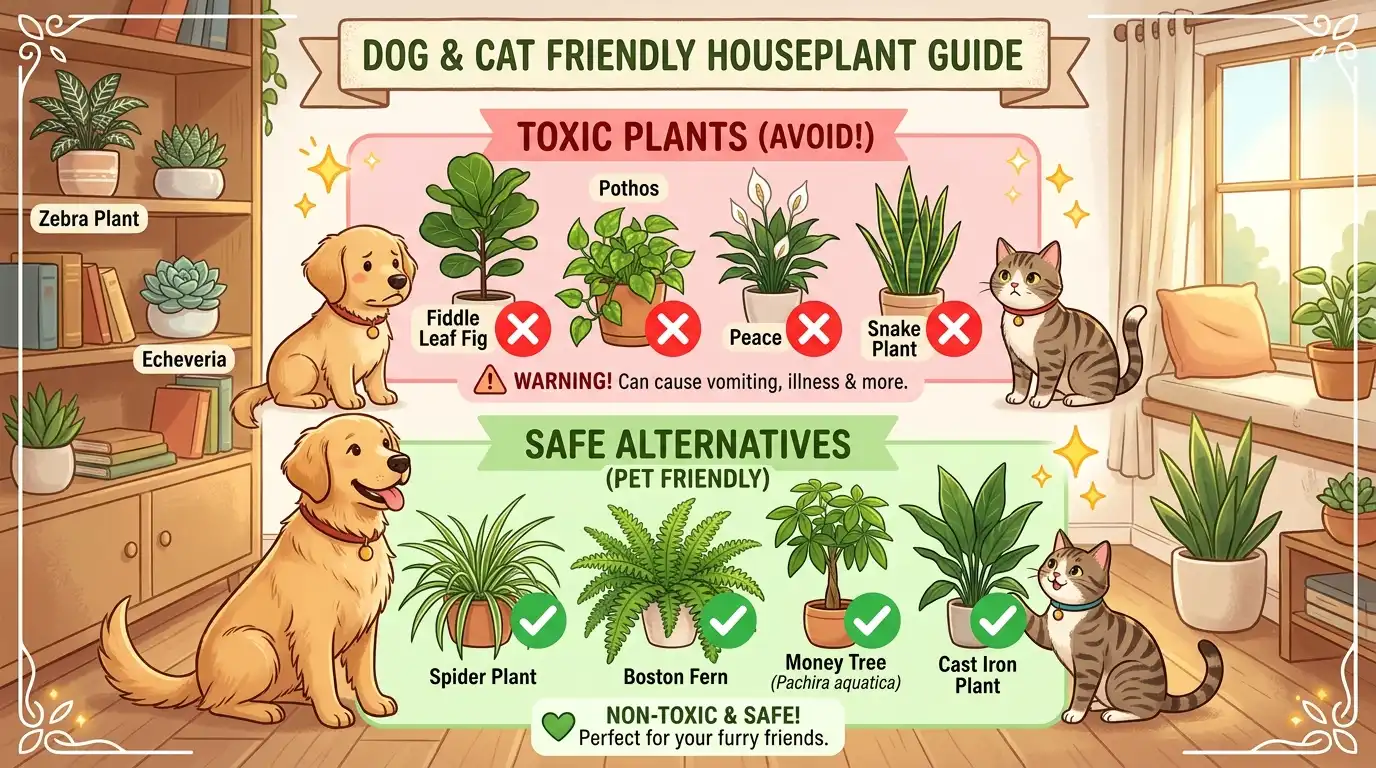
This guide lists ten common toxic houseplants and suggests pet-safe alternatives. Always confirm plant identity before bringing anything new home; use the ePlant AI identifier and check our encyclopedia for care and toxicity notes. For authoritative toxicity information, see the ASPCA's list of toxic and non-toxic plants and your vet if a pet has ingested a plant.
If you're choosing air-purifying plants and have pets, our air-purifying plants guide calls out which options are safer for pets.
10 Plants to Avoid (Toxic to Cats & Dogs)
- Peace lily - Contains calcium oxalate; causes mouth irritation and vomiting. Safe alternative: Boston fern, spider plant.
- Pothos / Devil's ivy - Same irritants; oral and stomach upset. Safe alternative: Peperomia, Calathea (many species).
- Philodendron - Calcium oxalate crystals. Safe alternative: Prayer plant (Maranta), cast-iron plant.
- Monstera - Toxic; mouth and GI irritation. Safe alternative: Parlor palm, areca palm.
- Sago palm - Highly toxic; can cause liver failure. Avoid entirely. Safe alternative: Majesty palm, Kentia palm (non-cycad palms).
- Oleander - Extremely toxic; all parts. Keep out of reach or avoid. Safe alternative: Hibiscus (non-oleander), flowering African violet.
- Lilies (true lilies, e.g. Easter lily) - Especially dangerous to cats; kidney failure. Safe alternative: Orchids, African violet.
- Aloe vera - Latex under the skin is toxic; causes vomiting. Safe alternative: Haworthia, echeveria (succulents generally safer in small amounts).
- Snake plant - Saponins; nausea and vomiting if ingested. Safe alternative: Spider plant, Boston fern.
- English ivy - Can cause GI upset and discomfort. Safe alternative: Swedish ivy (Plectranthus), baby tears.
When in doubt, keep plants out of reach or in a room pets can't access, and use ePlant AI to confirm identity before buying.
Pet-Safe Alternatives at a Glance
Spider plant, Boston fern, parlor palm, areca palm, peperomia, Calathea, Maranta, African violet, haworthia, and Swedish ivy are often cited as safer options. Always double-check with the ASPCA list or your vet, since common names can refer to different species. For care tips on any plant, identify it with ePlant AI and read our encyclopedia.
Pro Tip
Place toxic plants on high shelves or in hanging baskets well out of reach. Even “safe” plants can cause mild stomach upset if eaten in large amounts, so discourage chewing on any houseplant.
Identify Plants Before You Buy
Snap a photo with ePlant AI to confirm the species and check if it’s safe for your pets.
Identify with ePlant AIFrequently Asked Questions
Are snake plants toxic to dogs?
Yes. Snake plants contain saponins that can cause nausea and vomiting in dogs and cats. Keep them out of reach or choose a pet-safe alternative like spider plant or Boston fern.
What if my pet ate a toxic plant?
Contact your vet or an animal poison control service (e.g. ASPCA Poison Control) immediately. If you can, identify the plant (ePlant AI can help from a photo) so the vet knows what was ingested.