Skip to plant details

Stinking ChamomileAnthemis cotula

Also known as Chamomile · Common Dog Fennel · Common Dogfennel

  • Category: Ornamental
  • Type: Herb
  • Sunlight: Prefers full sun to partial shade, requiring at least 6 hours of direct sunlight daily.
  • Water: Water moderately, allowing soil to dry slightly between waterings. Avoid waterlogged conditions.
  • Temperature: Thrives in moderate temperatures between 15-25 °C.
  • Habitat: Outdoor

Safety note: This plant may be toxic to humans and pets. See toxicity details.

Stinking Chamomile (Anthemis cotula) is an aromatic annual herb with a pungent odor, often found as a weed in disturbed areas and fields.

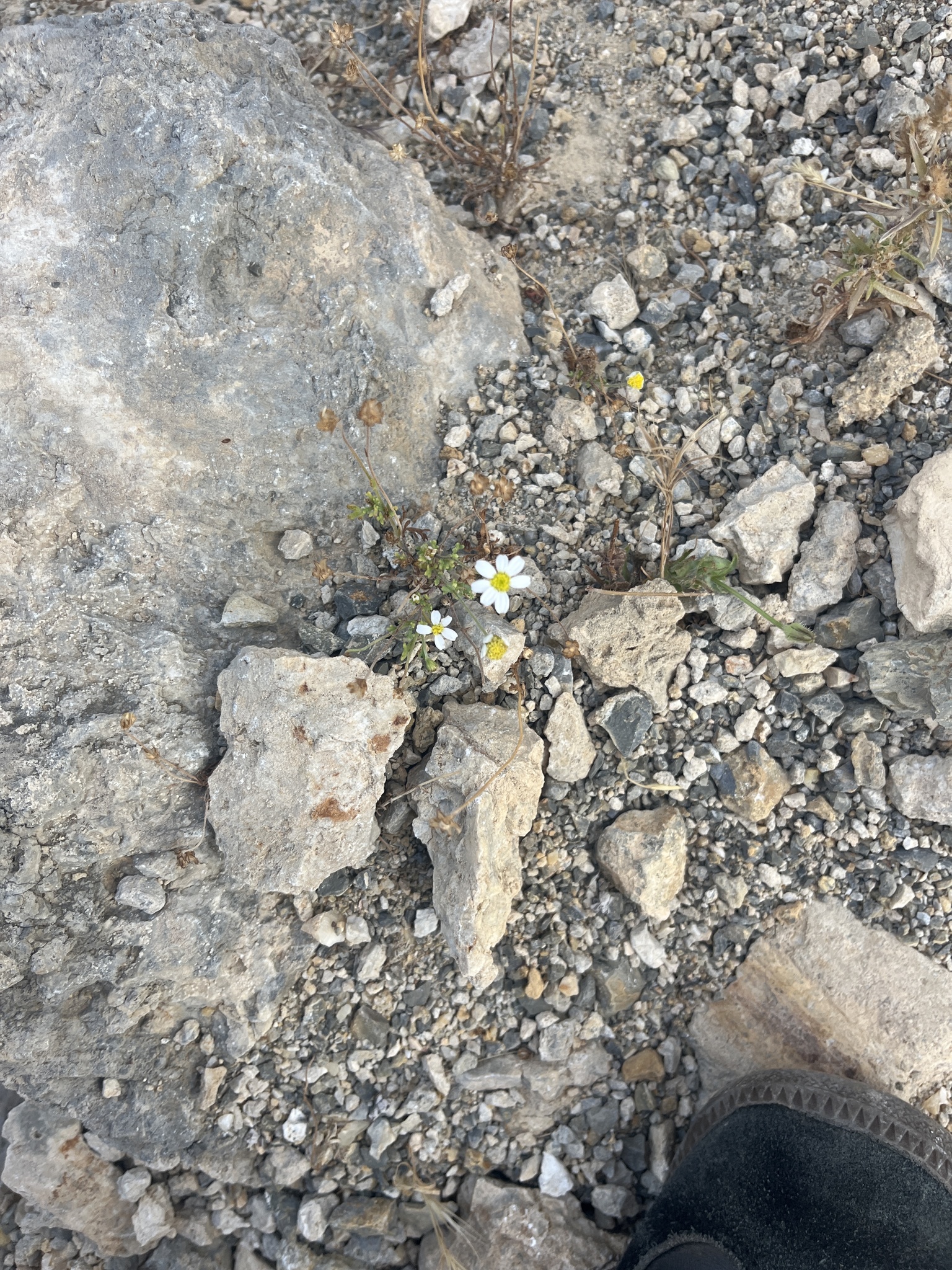
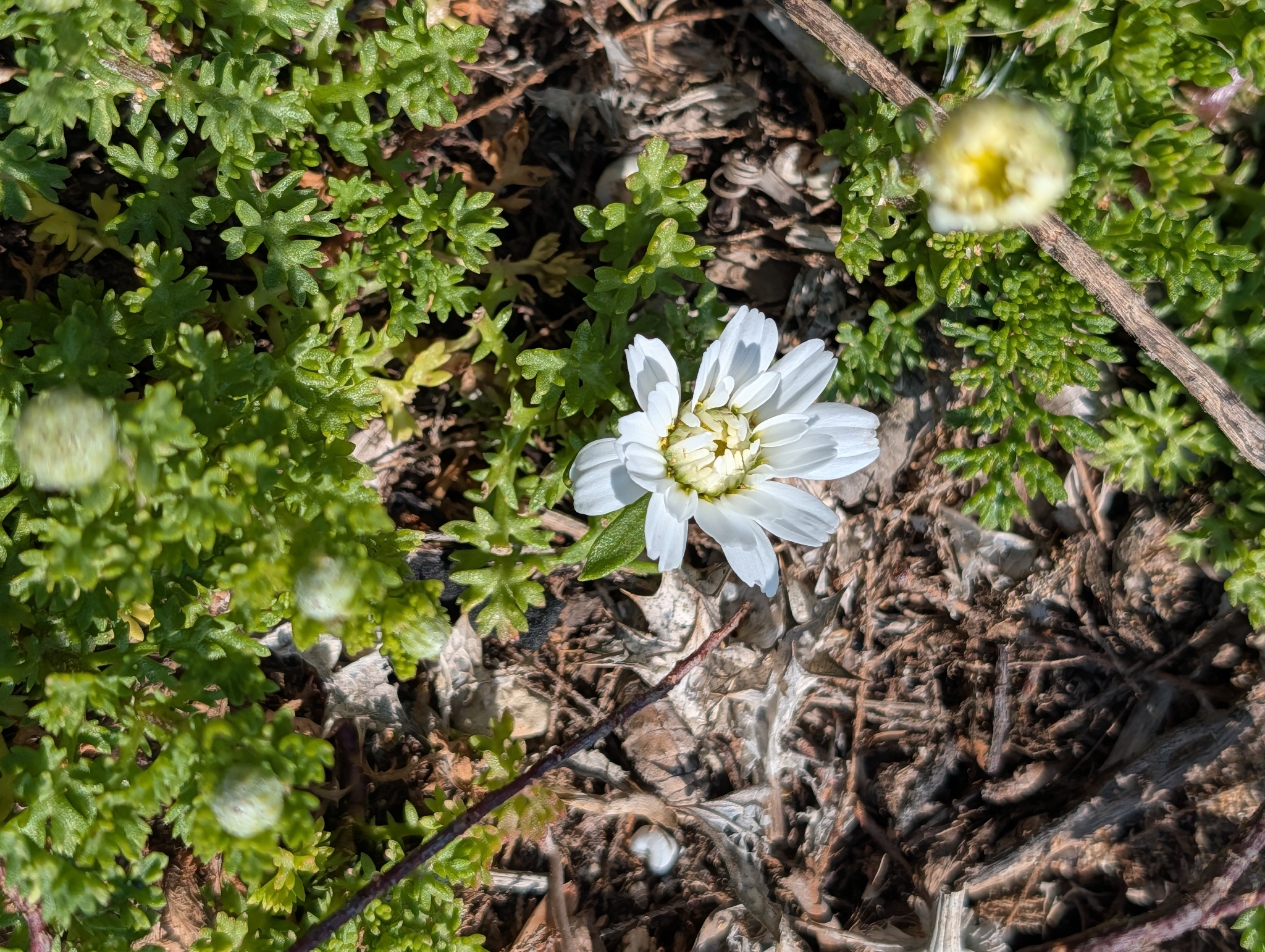
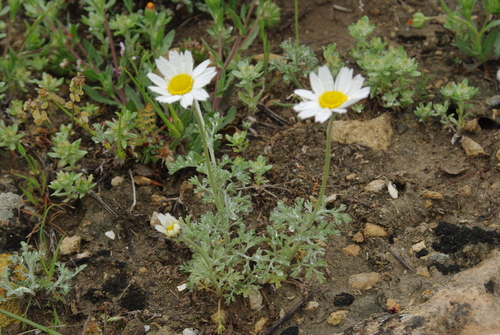
Anthemis cotula, commonly known as stinking chamomile, is a herbaceous annual plant belonging to the Asteraceae family. While its common name suggests a resemblance to the more widely recognized chamomile species, Anthemis cotula possesses distinct characteristics and a different ecological role. It is often found as a weed in disturbed areas, contributing to its notoriety. Physically, Anthemis cotula typically grows to a height of 15 to 50 centimeters, though it can occasionally reach up to 70 centimeters. Its stems are erect, branched, and somewhat hairy. The leaves are finely divided, giving them a feathery appearance, and are alternate along the stem. They are typically 2 to 5 centimeters long and are deeply lobed or pinnately compound, with narrow, linear segments. The most striking feature of Anthemis cotula is its flower heads, which are solitary and borne on long, slender stalks. These flower heads resemble those of true chamomile, with a prominent central disc composed of numerous small, tubular florets, surrounded by ray florets. The ray florets are typically white and strap-shaped, while the disc florets are yellow. A distinguishing characteristic, and the source of its common name, is the strong, unpleasant odor emitted by the plant, particularly when crushed. This odor is often described as pungent or acrid. The fruits are small, ribbed achenes. The native distribution of Anthemis cotula is believed to be in Europe and North Africa, but it has been widely introduced and naturalized in many parts of the world, including North America, Australia, and New Zealand. It thrives in a variety of habitats, commonly appearing in cultivated fields, pastures, roadsides, waste grounds, and other disturbed soils. It prefers well-drained soils and can tolerate a range of soil types, often colonizing areas with low nutrient content. Cultivation requirements are minimal, as it is an opportunistic species that readily establishes itself in suitable conditions. Historically, Anthemis cotula has been noted for its medicinal properties, though its use is less common and more controversial than that of its relatives like Matricaria chamomilla. Traditional uses have included applications for digestive ailments and as an external wash. However, due to its acrid nature and potential for skin irritation, its medicinal application requires caution. Ecologically, it plays a role in colonizing disturbed habitats and can contribute to biodiversity in certain environments, though it is often considered a weed in agricultural settings due to its competitive nature and the unpleasant odor it produces. There is no significant ornamental, culinary, or economic importance attributed to Anthemis cotula. An interesting adaptation of Anthemis cotula is its ability to thrive in disturbed environments, often outcompeting other vegetation. The strong, unpleasant odor, while off-putting to humans, may serve a purpose in deterring herbivores, thus aiding in its survival and reproduction. Its prolific seed production further contributes to its widespread presence in suitable habitats.

Photograph © Layla

Stinking Chamomile Care Summary

At-a-glance light, water, soil, and growing conditions from plant data

Light

Prefers full sun to partial shade, requiring at least 6 hours of direct sunlight daily.

80% intensity

Water

Water moderately, allowing soil to dry slightly between waterings. Avoid waterlogged conditions.

50% intensity

Established plants are drought-tolerant.

Soil

Tolerates a wide range of soils, including poor, sandy, or clay soils. Prefers well-drained conditions.

50% intensity

Temperature

Thrives in moderate temperatures between 15-25 °C.

70% intensity

Can tolerate cooler temperatures.

Habitat

Outdoor

50% intensity

Fertilizer

Requires minimal fertilization. A light application of balanced fertilizer in spring is usually sufficient.

20% intensity

Avoid over-fertilizing.

Stinking Chamomile Toxicity

Safety information from plant toxicity data

Toxicity details for Stinking Chamomile
AttributeValue
Toxic for humansYes

3/5 intensity

Toxic for petsYes

3/5 intensity

EdibleNo

Contains anthemic acid and volatile oils. Ingestion can cause gastrointestinal upset, vomiting, and diarrhea. Skin contact may cause irritation or dermatitis in sensitive individuals.

Stinking Chamomile Quick Facts

Key traits and growing stats from plant data

Plant Type
Herb
Plant Category
Ornamental
Plant Place Type
Ground, Garden
Plant Environment
Outdoor
Lifespan
Annuals
Plant Height
0.2-0.6 m
Spread
0.2-0.5 m
Growth Rate
Moderate
Dormancy
None (annual)
Leaf Color
Green
Leaf Type
Finely divided, feathery
Flower Size
1.5-2.5 cm
Weed Status
Yes

Care guide for Stinking Chamomile

Watering, pruning, propagation, and repotting details from plant data

Water

Water moderately, allowing the soil to dry slightly between waterings. Avoid waterlogged conditions, which can lead to root rot. Established plants are quite drought-tolerant.

Pruning

Deadheading spent flowers can encourage further blooming and prevent self-seeding. Trim back leggy growth to maintain a more compact shape. Remove entire plant at the end of its growing season.

Propagation

Easily grown from seed sown directly outdoors in early spring or late fall. Seeds germinate readily in well-prepared soil. Can also be propagated by cuttings, though less common.

Repotting

Not typically grown in pots. If container-grown, repot in spring when new growth appears, using fresh potting mix. Ensure adequate drainage to prevent root issues.

Identify plants like this with ePlant

Snap a photo to get care tips and match similar species on the go.

Try for Free

Flowering & Fruiting Cycles

Monthly activity intensity for bloom and fruit across both hemispheres.

Northern hemisphere

Flowering & fruiting calendar

Peak bloom · JulPeak fruit · Aug
FloweringFruiting
02468JanFebMarAprMayJunJulAugSepOctNovDecActivity intensityMonths88
Southern hemisphere

Flowering & fruiting calendar

Peak bloom · DecPeak fruit · Dec
FloweringFruiting
02468JanFebMarAprMayJunJulAugSepOctNovDecActivity intensityMonths87

Stinking Chamomile Names & Synonyms

Common names and botanical synonyms

Common Names

  • Chamomile
  • Common Dog Fennel
  • Common Dogfennel
  • Dog Chamomile
  • Dog's Chamomile
  • Dog-Fennel
  • Fetid Chamomile
  • Fetid Mayweed
  • Foetid Chamomile
  • Mayweed
  • Mayweed Chamomile
  • Mayweed Dogfennel
  • Poison Daisy
  • Stinking Chamomile
  • Stinking Mayweed
  • Stinkweed
  • Wild Chamomile
  • بابونه بهاری

Synonyms

  • Anthemis psorosperma Ten.
  • Anthemis ramosa Spreng.
  • Chamaemelum cotula (L.) All.
  • Cotula foetida S.G.Gmel.
  • Maruta cotula (L.) DC.
  • Maruta foetida (S.G.Gmel.) Cass.
  • Maruta vulgaris Bluff & Fingerh.
  • Matricaria cotula (L.) Baill.

Stinking Chamomile Taxonomy

Botanical classification

Taxonomic classification of Stinking Chamomile
RankName
kingdomPlantae
divisionTracheophyta
classMagnoliopsida
orderAsterales
familyAsteraceae
genusAnthemis
speciesAnthemis cotula

Stinking Chamomile FAQs

Answers based on plant encyclopedia data

Is Stinking Chamomile poisonous to pets?

Yes, Stinking Chamomile is considered mildly toxic to pets. Ingestion can cause gastrointestinal upset, such as vomiting and diarrhea. It is best to prevent pets from chewing on the plant.

What is the difference between Stinking Chamomile and true Chamomile?

Stinking Chamomile (Anthemis cotula) has a pungent, unpleasant odor when crushed and is considered a weed. True Chamomile (Matricaria chamomilla) has a sweet, apple-like scent and is widely used for herbal teas.

How do I get rid of Stinking Chamomile?

As an annual weed, Stinking Chamomile can be controlled by hand-pulling before it sets seed, especially when the soil is moist. Mowing or using herbicides can also be effective in larger infestations.

Can Stinking Chamomile be used for anything?

While not used medicinally like true chamomile, Stinking Chamomile has been historically used in some traditional remedies, though its efficacy and safety are debated. It is primarily known as a weed.

Does Stinking Chamomile attract beneficial insects?

Yes, the flowers of Stinking Chamomile can attract pollinators like bees and other beneficial insects, which can help with pest control in the garden.