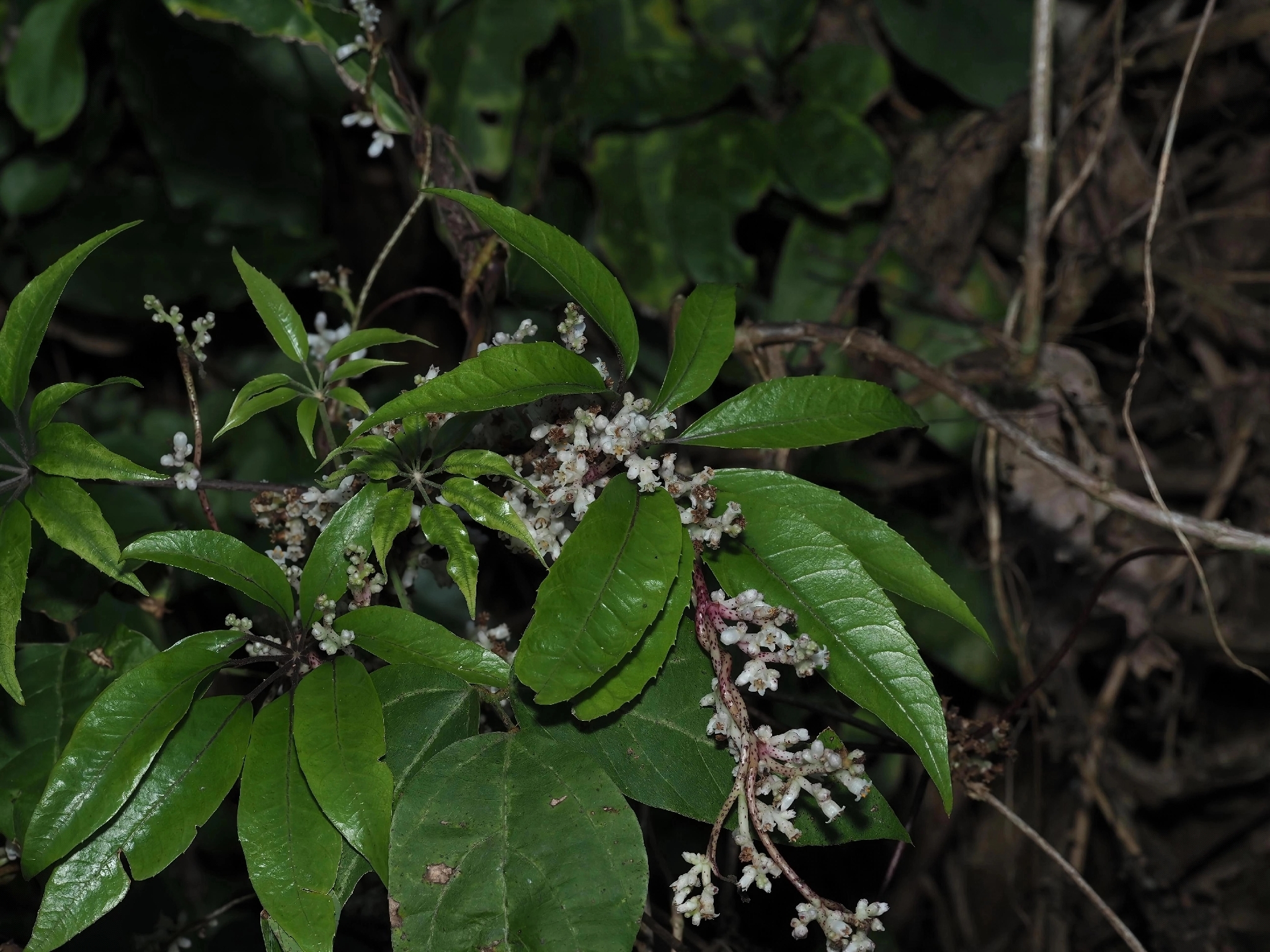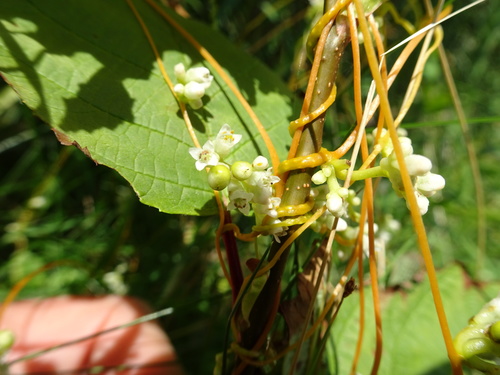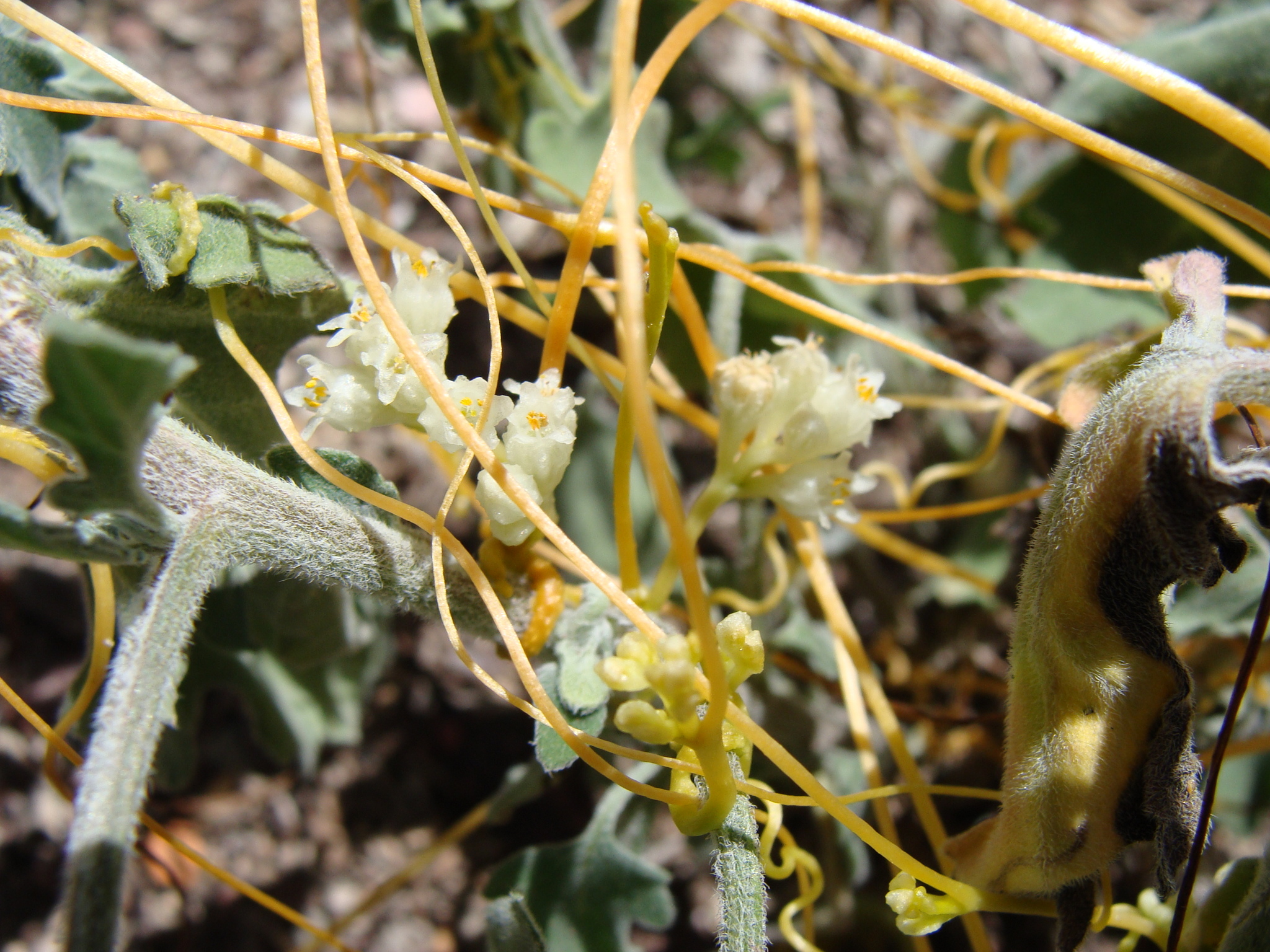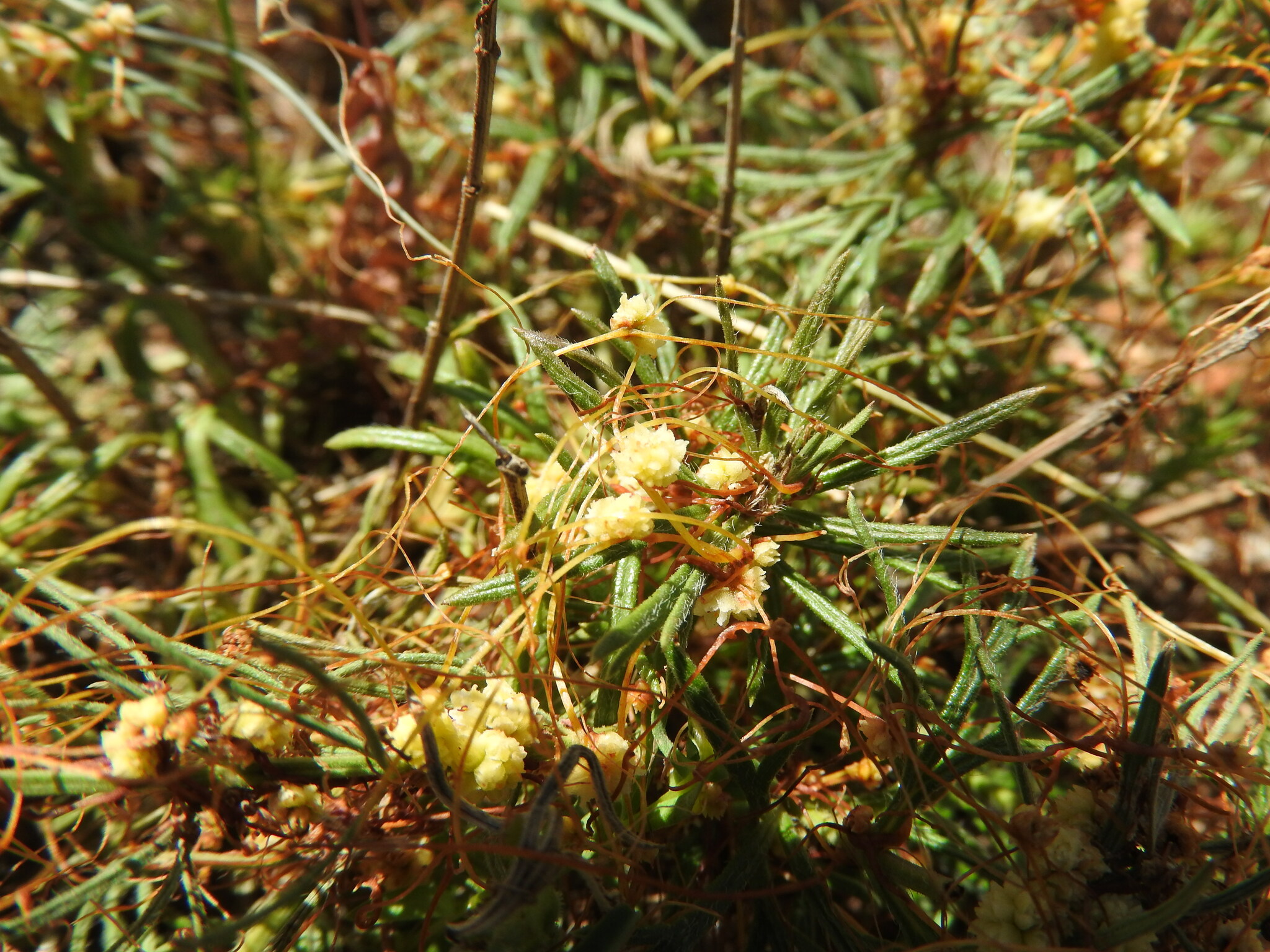
Field Dodder (Cuscuta campestris) is a parasitic annual vine that lacks chlorophyll and attaches to host plants to obtain nutrients. It has a distinctive yellow to orange stem and small, bell-shaped flowers.
Above information is sourced from Wikipedia
Sunlight
Requires full sun to thrive and parasitize hosts effectively.
Watering
Obtains water from host plant.
Soil
Does not require soil for survival as it is a parasite. It attaches to host plants and derives nutrients and water directly from them.
Temperature
Grows best in moderate to warm temperatures, typically between 18-25°C.
Habitat
Outdoor
Fertilizer
Does not require fertilization; nutrients are sourced from host plants.
Requires full sun to thrive and parasitize hosts effectively.
Needs bright, open areas.
Obtains water from host plant.
Does not require soil for survival as it is a parasite. It attaches to host plants and derives nutrients and water directly from them.
Grows best in moderate to warm temperatures, typically between 18-25°C.
Optimal growing season.
Outdoor
Does not require fertilization; nutrients are sourced from host plants.
Plant Type
Vine
Plant Environment
Outdoor
Lifespan
Annuals
Plant Height
0.1-0.5 m
Spread
1-3 m
Growth Rate
Fast
Dormancy
None (annual)
Leaf Type
Scale-like
Flower Size
0.3-0.5 cm
Weed Status
Yes
Toxic for humans
No
Rating: 0/5
Toxic for pets
No
Rating: 0/5
Edible
No