Also known as Bonairiaanse Oleander · Bridal Boquet · Bridal Bouquet
Category: Ornamental
Type: Shrub, Tree
Sunlight: High
Water: Moderate
Temperature: Moderate
Habitat: Outdoor
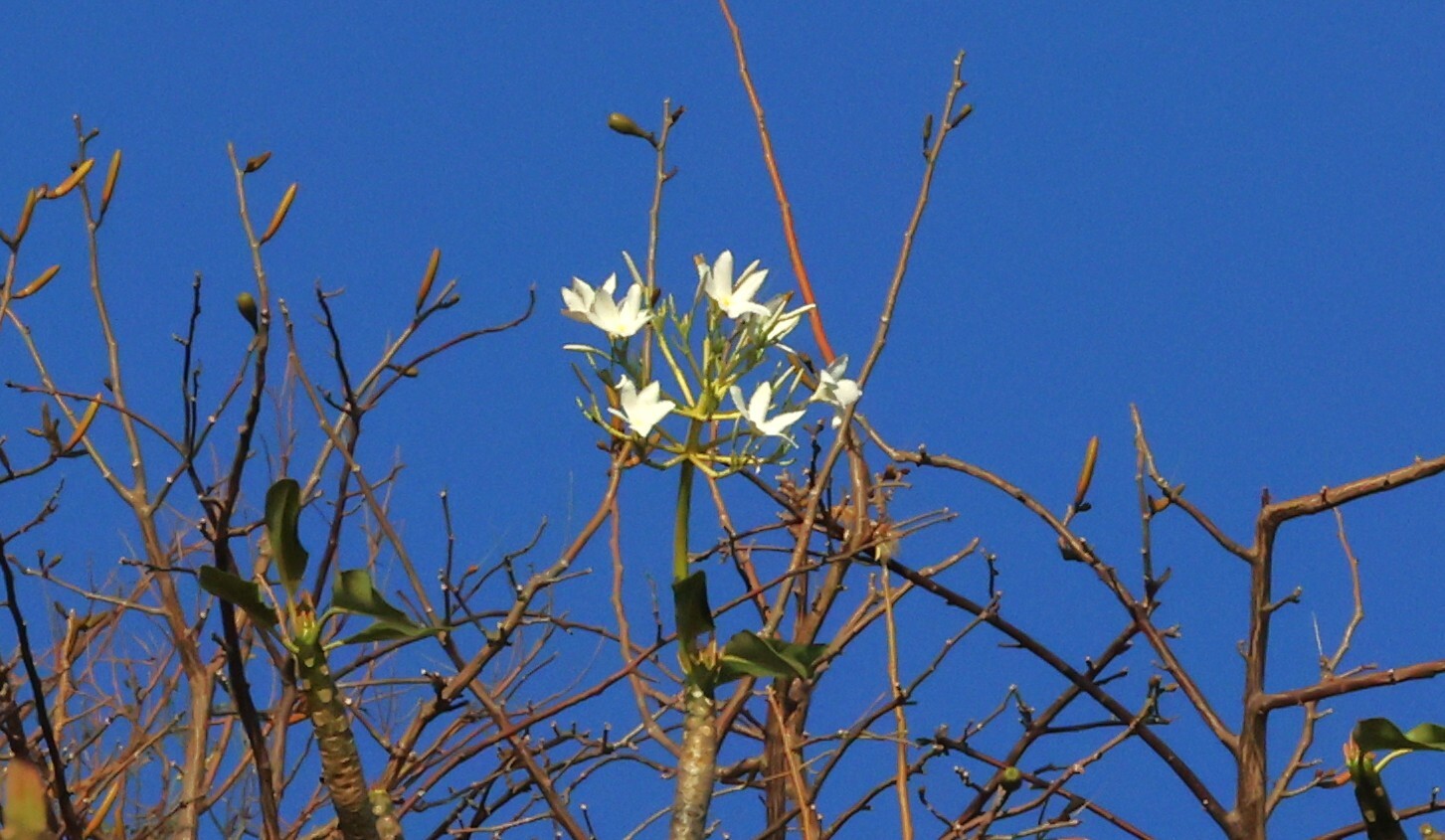
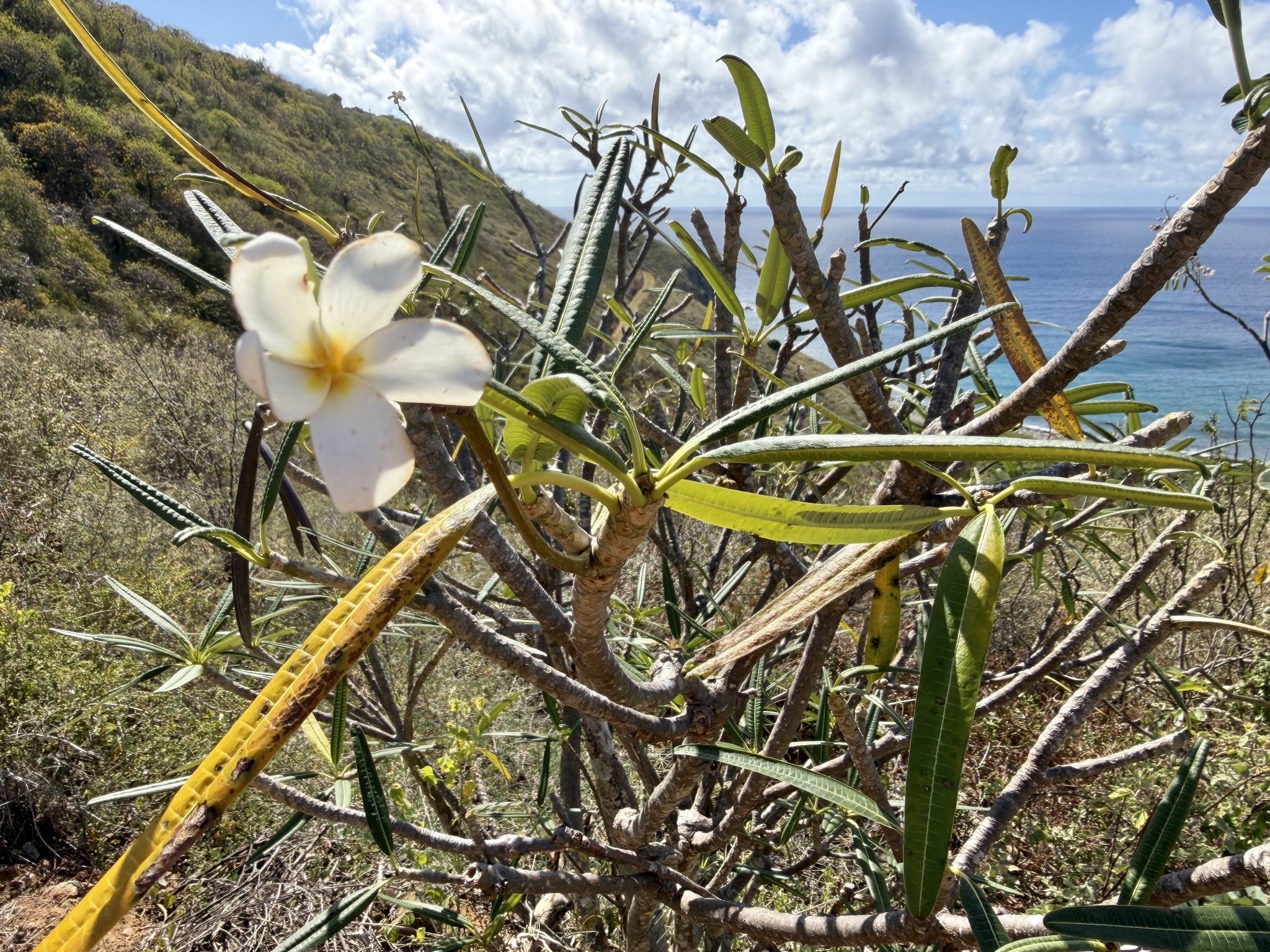
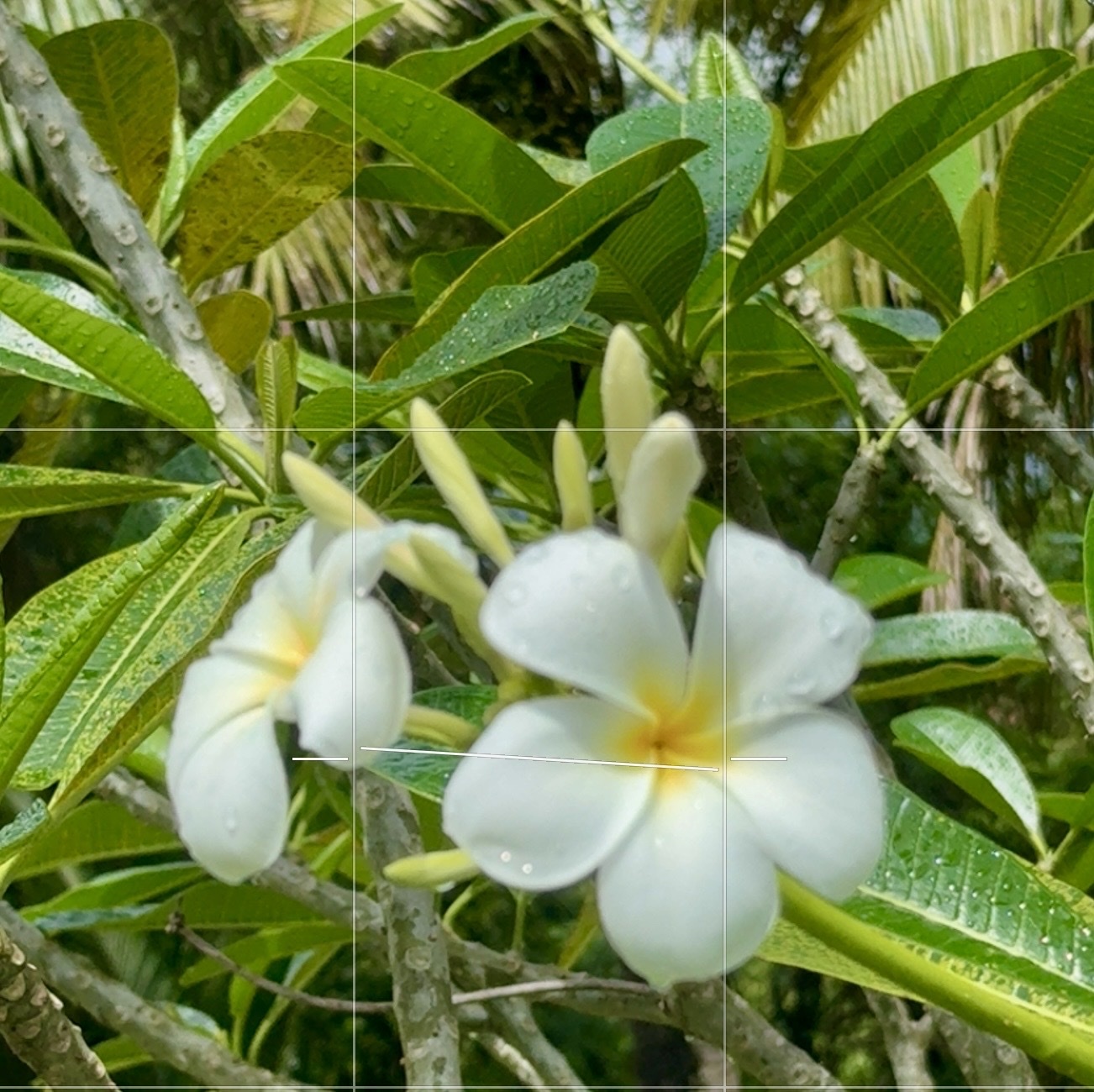
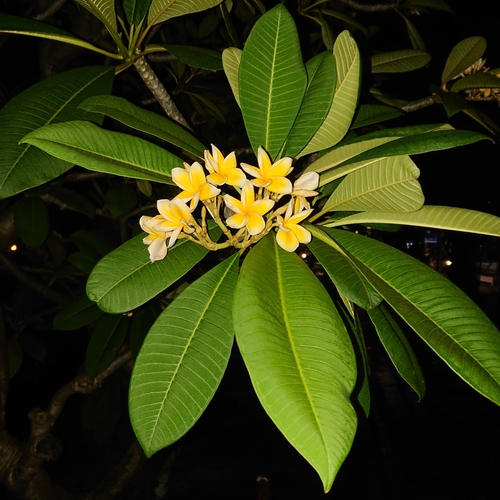
Plumeria pudica, also known as Plumeria pudica, is a small tree or shrub celebrated for its unique, poodle-shaped white flowers with yellow centers and glossy leaves.
Plumeria pudica, commonly known as Plumeria pudica, is a captivating species within the Apocynaceae family, distinguished by its unique foliage and delicate blooms. This plant holds a special place among tropical flora, appreciated for its ornamental appeal and its distinct botanical characteristics that set it apart from its more widely recognized relatives.
Physically, Plumeria pudica presents as a shrub or small tree, typically reaching heights of 1 to 3 meters. Its growth habit is often somewhat bushy, with a tendency to branch from the base. The leaves are a prominent feature, being ovate to elliptic in shape and notably glossy, with a distinctively recurved or rolled margin that gives them a somewhat curled appearance. This characteristic leaf morphology is a key identifier for the species. The plant produces inflorescences bearing flowers that are typically white with a yellow center. The petals are often slightly twisted and possess a pleasant, though generally mild, fragrance. Like other Plumeria species, the flowers are adapted for pollination by insects. Following flowering, the plant may produce fruit, which are typically long, slender follicles containing seeds, though fruit and seed production can be variable. The bark is smooth and grayish-brown, characteristic of many woody plants in this family.
The native distribution of Plumeria pudica is primarily in the tropical regions of Central and South America, extending from Central America southwards into countries like Colombia and Venezuela. It thrives in warm, humid climates and is often found in disturbed areas, along roadsides, or in open woodlands at lower elevations. In cultivation, Plumeria pudica is valued for its ornamental qualities and is grown in tropical and subtropical gardens. It prefers well-drained soil and full sun to partial shade. While it tolerates some drought once established, consistent moisture is beneficial for optimal growth and flowering. It is sensitive to frost and is typically grown outdoors in frost-free regions or as a container plant that can be brought indoors during colder months.
While Plumeria pudica is primarily cultivated for its ornamental value, its specific ecological, medicinal, or economic importance is less extensively documented compared to some other Plumeria species. Its primary significance lies in its contribution to the biodiversity of its native range and its aesthetic appeal in horticultural settings. The plant's unique leaf structure and attractive flowers make it a desirable specimen for collectors and gardeners seeking distinctive tropical plants. Its adaptations to its native environment include its ability to thrive in well-drained soils and its tolerance for the warm, humid conditions characteristic of its natural habitat. The glossy, recurved leaves may offer some protection against intense sunlight or reduce water loss, though further specific research would be needed to confirm these hypotheses.
At-a-glance light, water, soil, and growing conditions from plant data
Light
High
100% intensity
Requires full sun, at least 6-8 hours daily.
Watering
Moderate
50% intensity
Allow soil to dry out slightly between waterings.
Soil
Well-drained
50% intensity
Temperature
Moderate
50% intensity
Prefers warm temperatures, ideally 20-27°C. Protect from frost.
Habitat
Outdoor
50% intensity
Fertilizer
Moderate
50% intensity
Feed during the growing season with a bloom-boosting fertilizer.
Plumeria Pudica Toxicity
Safety information from plant toxicity data
Toxicity details for Plumeria Pudica
Attribute
Value
Toxic for humans
No
0/5 intensity
Toxic for pets
No
0/5 intensity
Edible
No
Non-toxic
Plumeria Pudica Quick Facts
Key traits and growing stats from plant data
Plant Type
Shrub, Tree
Plant Category
Ornamental
Plant Place Type
Garden, Pot
Plant Environment
Outdoor
Lifespan
Perennial
Plant Height
2-5 m
Spread
1-3 m
Growth Rate
Moderate
Dormancy
None
Leaf Color
Green
Leaf Type
Simple
Flower Size
5-7 cm
Optimal Sunlight Lux
60000
Care guide for Plumeria Pudica
Watering, pruning, propagation, and repotting details from plant data
Water
Water Plumeria pudica thoroughly when the top 2-3 cm of soil feels dry. Allow excess water to drain completely to prevent root rot.
Reduce watering significantly during cooler months and dormancy, as the plant is less actively growing and more susceptible to overwatering.
Pruning
Prune Plumeria pudica in late winter or early spring before new growth begins. Remove dead, damaged, or crossing branches to maintain shape and encourage bushier growth.
Pruning also helps manage size and promotes flowering by stimulating new stems.
Propagation
Plumeria pudica can be propagated from stem cuttings taken in spring or early summer. Allow the cuttings to callus over for a few days before planting in well-draining soil.
Keep moist and warm, and roots typically form within 4-8 weeks.
Repotting
Repot Plumeria pudica every 2-3 years or when root-bound, preferably in spring. Use a well-draining potting mix. Choose a pot that is only slightly larger than the current one to avoid overwatering issues.
Ensure the pot has drainage holes.
Identify plants like this with ePlant
Snap a photo to get care tips and match similar species on the go.