Forest Bushwillow Tree (Combretum kraussii) – Benefits, Growing Guide & Care | ePlant AI
Forest Bushwillow (Combretum kraussii)
Combretum kraussii, the Forest Bushwillow, is an evergreen tree from southern Africa, noted for its creamy-white flowers and attractive foliage.
Combretum kraussii, commonly known as the Forest Bushwillow, is a significant species within its native range, valued for its ecological role and ornamental appeal. This evergreen to semi-evergreen tree or large shrub is a member of the Combretaceae family, a group of plants often recognized for their attractive flowers and fruits. The Forest Bushwillow typically grows to a height of 3 to 10 meters, though it can occasionally reach up to 15 meters in ideal conditions, forming a dense, rounded crown. Its growth habit is generally upright, making it a substantial presence in its natural environment.
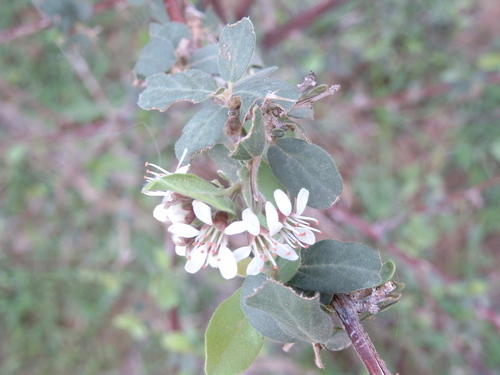
The leaves of Combretum kraussii are a distinctive feature, arranged oppositely or in whorls of three. They are typically ovate to elliptical in shape, measuring between 5 and 12 centimeters in length and 2 to 5 centimeters in width. The leaf surface is smooth and glossy, with a leathery texture, and the color is a rich, deep green. The margins are entire, and the apex is usually acute or acuminate. During autumn, in cooler climates or when experiencing stress, the foliage can develop attractive bronze or reddish hues before dropping, adding seasonal interest. The bark is generally smooth and greyish when young, becoming rougher and fissured with age, often exhibiting a dark grey to brown coloration.
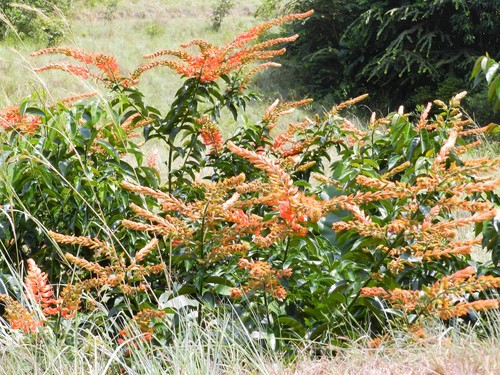
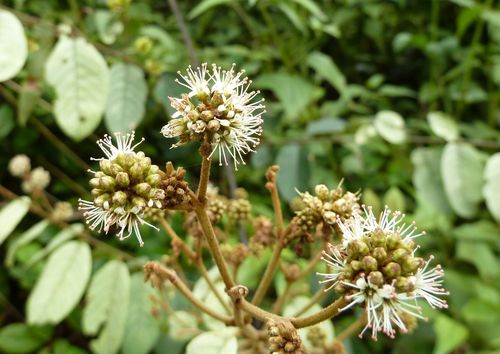
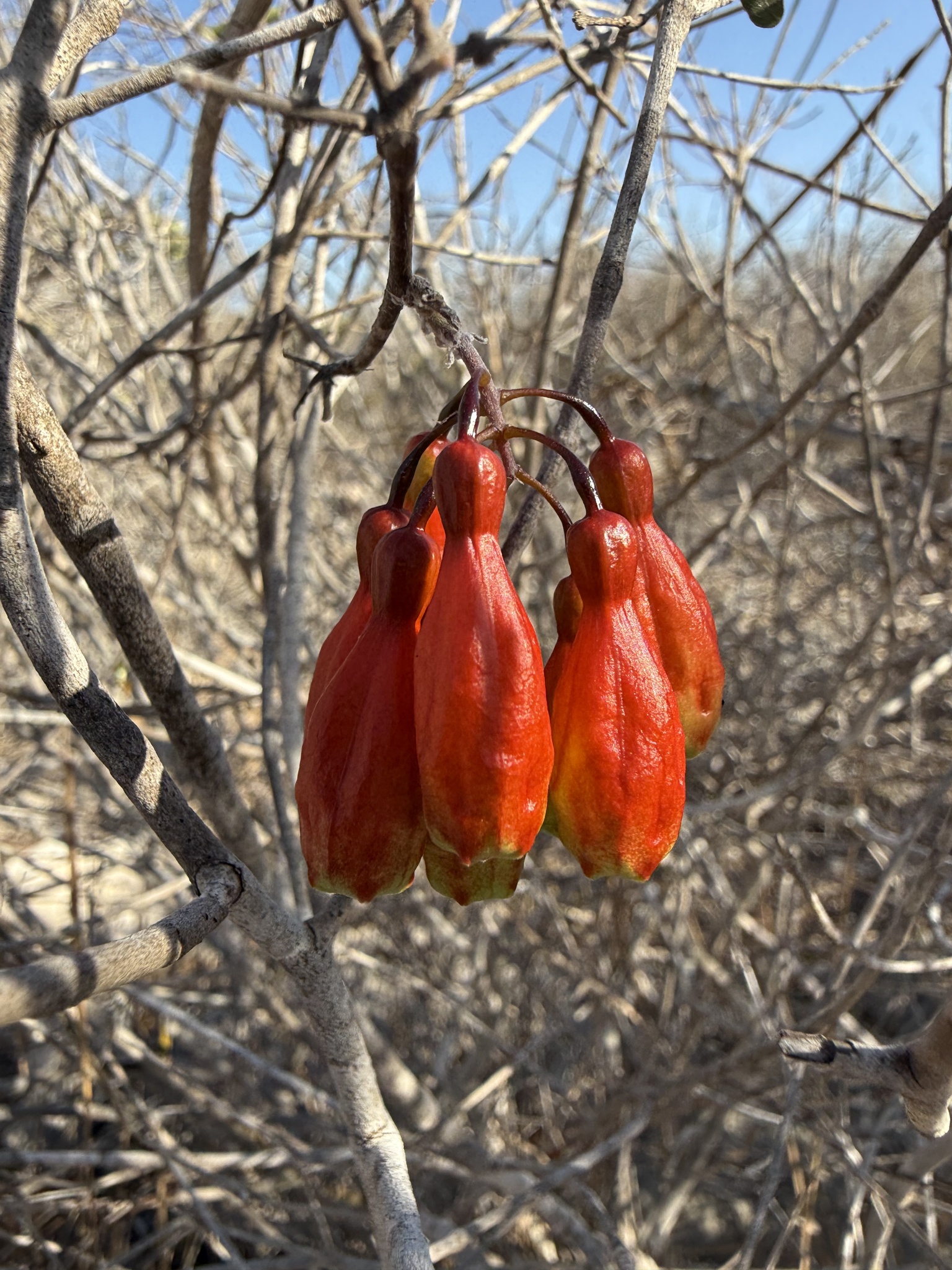
Flowering occurs from late spring through summer, producing abundant, showy inflorescences. The flowers are borne in terminal or axillary panicles and are typically a vibrant creamy white to pale yellow, often with a delicate fragrance. Each individual flower is small, with five petals and prominent stamens that give the flower clusters a fluffy appearance. These blooms are highly attractive to pollinators, particularly bees and butterflies, playing a vital role in the local ecosystem. Following successful pollination, the plant produces small, winged fruits, characteristic of the Combretum genus. These fruits are typically ovoid and about 1 to 1.5 centimeters long, turning from green to a reddish-brown or purplish-black as they mature. The seeds are contained within the winged portion of the fruit, aiding in wind dispersal.
Combretum kraussii is native to the eastern regions of southern Africa, extending from the Eastern Cape province of South Africa northwards into KwaZulu-Natal, Eswatini, and Mozambique. It thrives in a variety of habitats, commonly found in coastal bush, forest margins, riverine thickets, and sometimes in open woodland. It prefers well-drained soils and can tolerate a range of conditions, from sandy coastal soils to richer loams. While it is adapted to subtropical and warm temperate climates, it can also be cultivated in cooler regions with protection from frost, as it is moderately frost-tender. It performs best in full sun to partial shade.
Ecologically, the Forest Bushwillow is an important component of its native flora, providing habitat and food sources for various wildlife. Its flowers attract a multitude of insects, and its fruits are consumed by birds. Ornamentally, Combretum kraussii is appreciated for its attractive foliage, prolific flowering, and graceful form, making it a desirable specimen tree or large shrub for gardens and landscaping in suitable climates. Its ability to attract pollinators also contributes to its ecological and aesthetic value. There is limited documented evidence regarding significant culinary, medicinal, or economic uses that are widely recognized and scientifically established for this specific species.
Prefers full sun to partial shade. Protect from intense afternoon sun in hot climates.
Watering
Water regularly, allowing soil to dry slightly between waterings. Reduce in winter.
Soil
Well-draining soil is essential. Prefers loamy or sandy soils with a slightly acidic to neutral pH.
Temperature
Thrives in warm temperatures between 18-25°C. Can tolerate brief cooler periods.
Habitat
Outdoor
Fertilizer
Feed with a balanced liquid fertilizer during the growing season (spring/summer).
Care Requirements
Light
Prefers full sun to partial shade. Protect from intense afternoon sun in hot climates.
Water
Water regularly, allowing soil to dry slightly between waterings. Reduce in winter.
Soil
Well-draining soil is essential. Prefers loamy or sandy soils with a slightly acidic to neutral pH.
Temperature
Thrives in warm temperatures between 18-25°C. Can tolerate brief cooler periods.
Habitat
Outdoor
Fertilizer
Feed with a balanced liquid fertilizer during the growing season (spring/summer).
Plant Overview
Plant Type
Tree
Plant Category
Flowering, Foliage, Ornamental
Plant Place Type
Ground, Garden
Plant Environment
Outdoor
Lifespan
Perennials
Plant Height
6-15 m
Spread
4-8 m
Growth Rate
Moderate
Dormancy
None
Leaf Color
Green
Leaf Type
Simple
Flower Size
1-2 cm
Image Gallery
Flowering & Fruiting Cycles
Monthly activity intensity for bloom and fruit across both hemispheres.
Northern hemisphere
Flowering & fruiting calendar
Peak bloom · JulPeak fruit · Aug
FloweringFruiting
Southern hemisphere
Flowering & fruiting calendar
Peak bloom · JunPeak fruit · Jul
FloweringFruiting
Synonyms
Combretum nelsonii Dümmer
Combretum woodii Dümmer
Taxonomy
kingdomPlantae
divisionTracheophyta
classMagnoliopsida
orderMyrtales
familyCombretaceae
genusCombretum
speciesCombretum kraussii
Toxicity
Toxic for humans
No
Rating: 0/5
Toxic for pets
No
Rating: 0/5
Edible
No
Additional Care Tips
Water consistently, especially during dry periods, but avoid overwatering. Allow the top inch of soil to dry out between waterings. Reduce watering in winter.
Prune lightly after flowering to maintain shape and remove any dead or crossing branches. Heavy pruning is generally not required but can be done to control size.
Easily propagated from seeds sown in spring or from semi-hardwood cuttings taken in summer. Seeds may require scarification or soaking before sowing.
Repot young plants annually or every two years in spring. Mature trees typically do not require repotting and are best planted in their final position.
FAQs
What is the best soil for Combretum kraussii?
Combretum kraussii prefers well-draining soil. Loamy or sandy soils with a slightly acidic to neutral pH are ideal to prevent root rot.
How often should I water Forest Bushwillow?
Water regularly, especially during dry spells, but allow the top inch of soil to dry out between waterings. Reduce watering in winter.
When does Combretum kraussii bloom?
The Forest Bushwillow typically blooms in spring and summer, producing attractive creamy-white flower clusters.
Can Combretum kraussii be pruned?
Yes, light pruning after flowering helps maintain its shape and remove dead or crossing branches. Heavy pruning is usually not necessary.
Is Combretum kraussii suitable for small gardens?
While it can reach a significant height, its moderate growth rate and attractive form make it suitable for larger gardens or as a specimen tree. Pruning can help manage size.