Fringed Rue (Ruta chalepensis)

Fringed Rue (Ruta chalepensis) is an aromatic herb with yellow flowers and blue-green foliage, valued for medicinal uses and ornamental appeal.

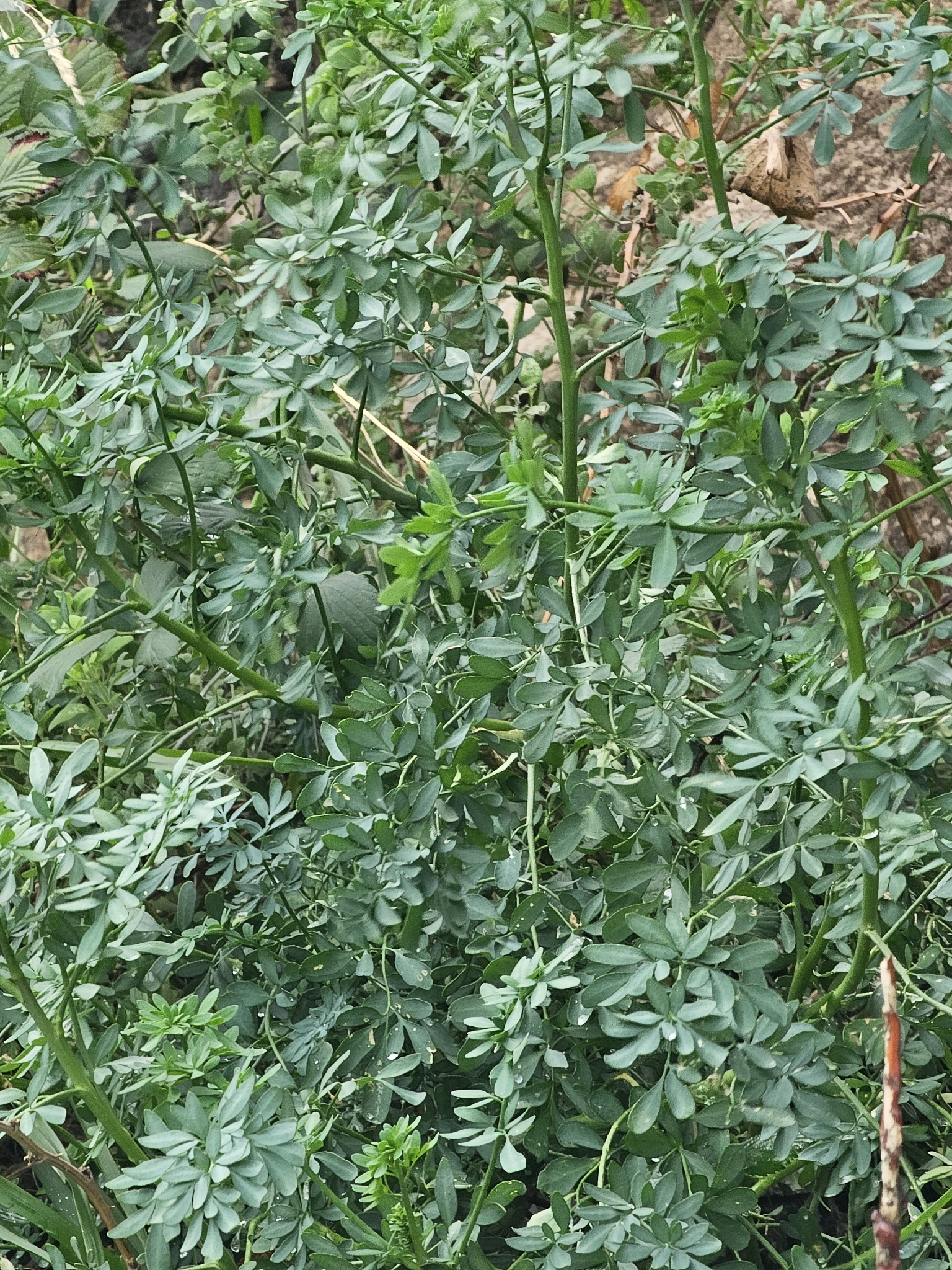
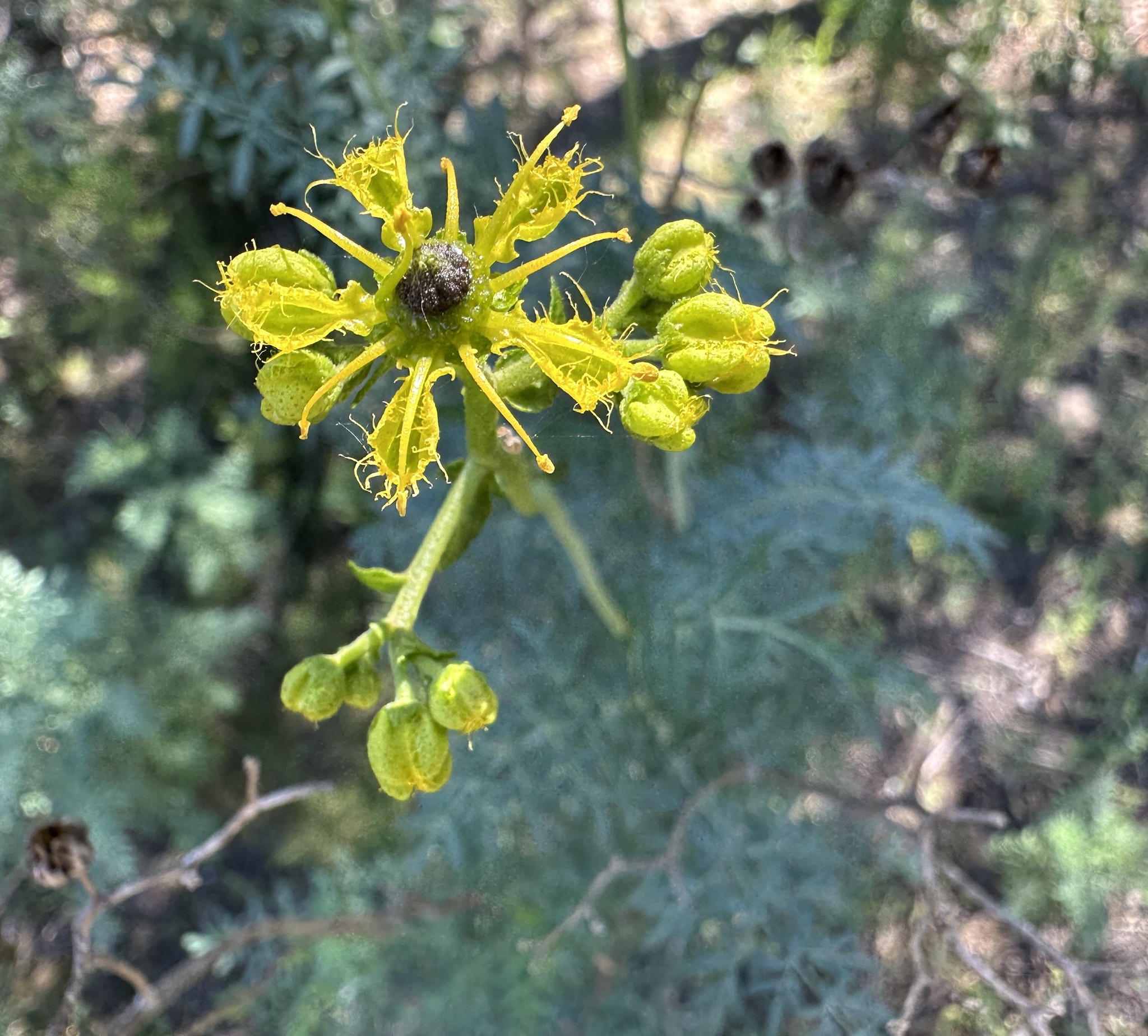
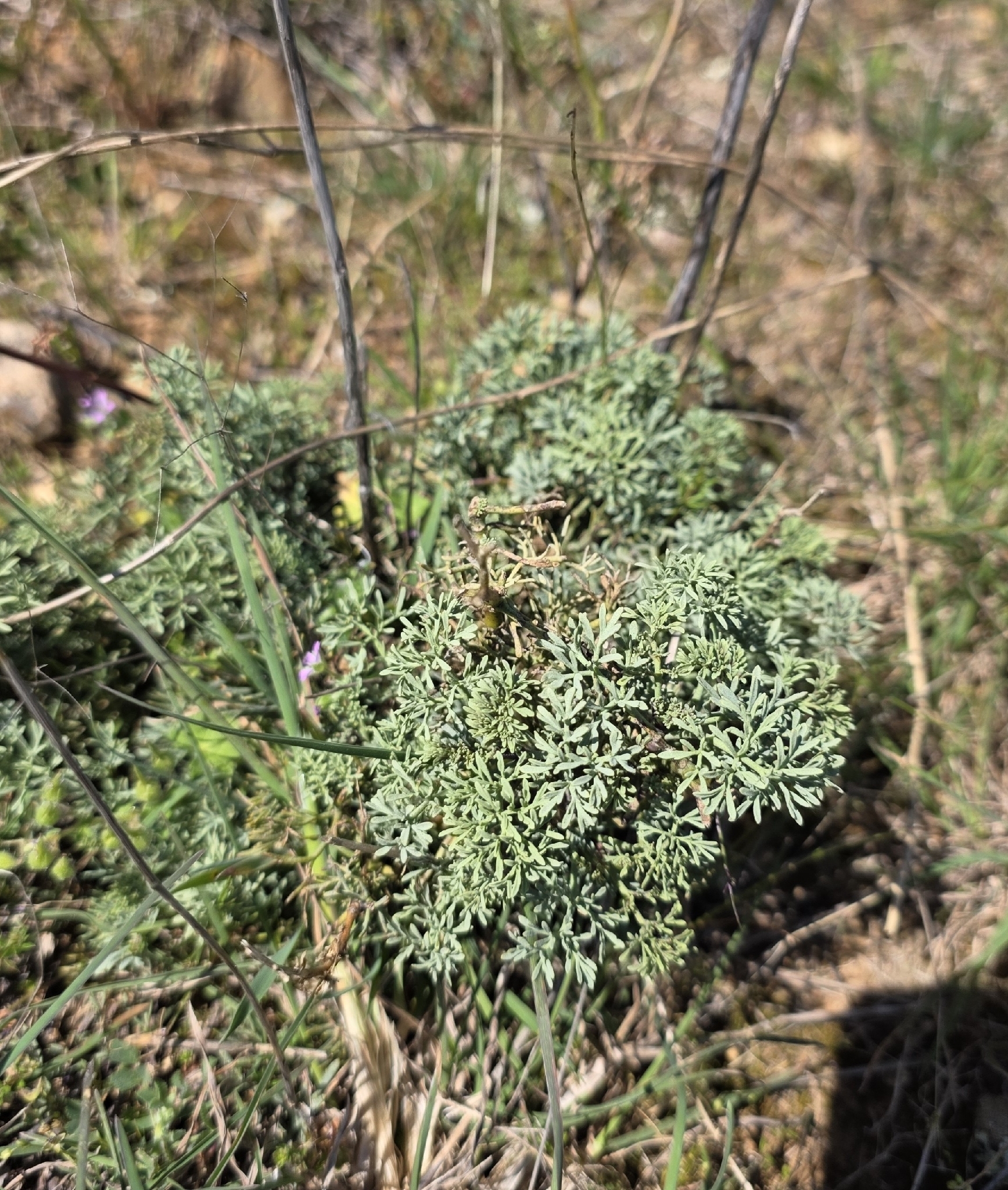
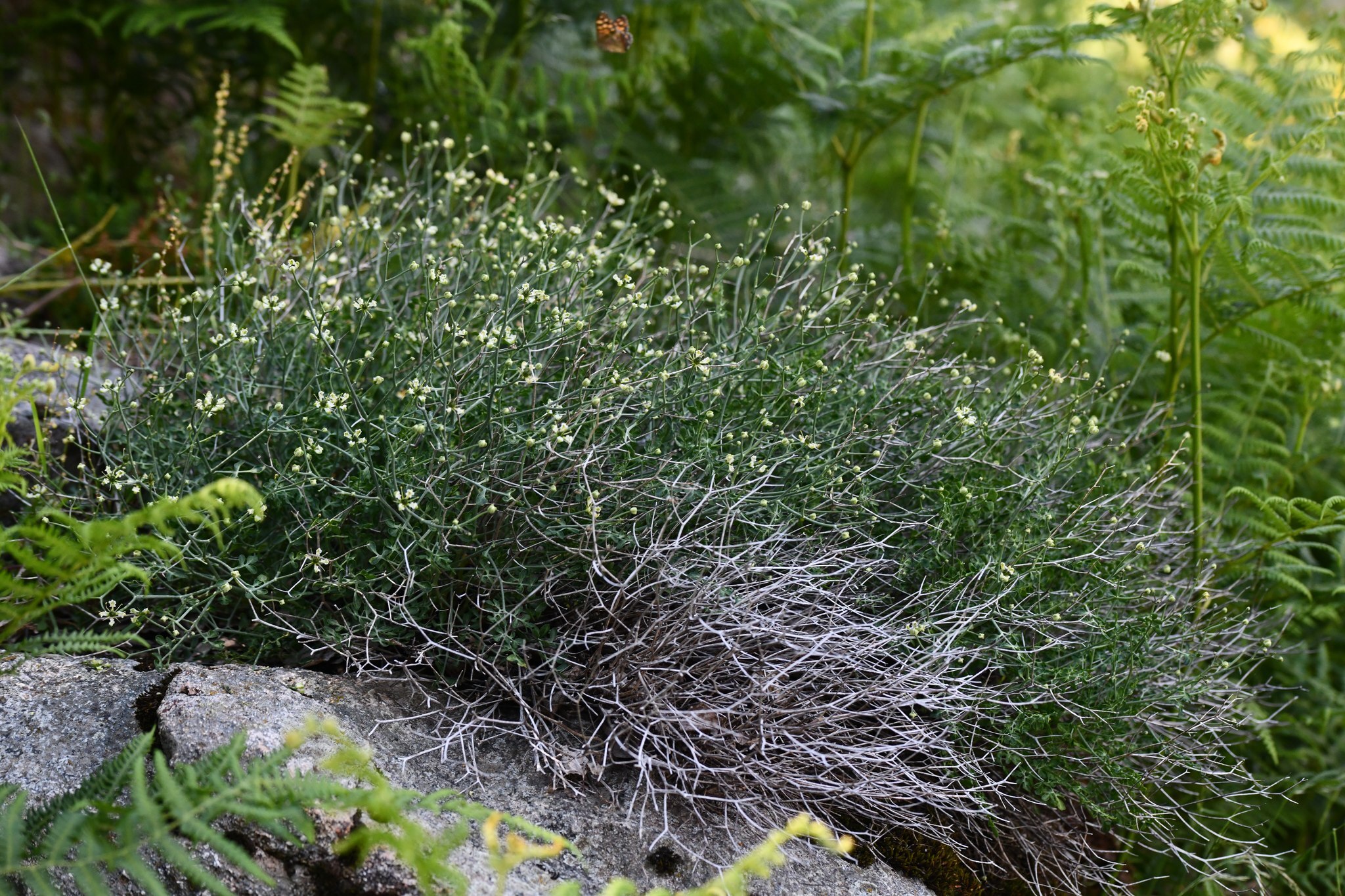
Ruta chalepensis, commonly known as Fringed Rue, is a perennial herb belonging to the Rutaceae family, a group of plants also known as the citrus family. This species is recognized for its distinctive foliage and its historical associations with various traditional uses. Fringed Rue is an aromatic plant, a characteristic shared by many members of the *Ruta* genus. Physically, Ruta chalepensis typically grows as a shrubby herb, reaching heights of approximately 0.5 to 1 meter, though it can occasionally grow taller. Its stems are erect to spreading, often becoming woody at the base with age. The leaves are a prominent feature, being compound and pinnately divided, with segments that are often linear or narrowly oblong and have a characteristic fringed or lobed margin, which gives the plant its common name. The leaves are typically a glaucous green to bluish-green color and possess a strong, pungent aroma when bruised. The flowers of Ruta chalepensis are borne in terminal clusters, known as cymes. Individual flowers are relatively small, typically measuring about 1 to 2 centimeters in diameter, and are usually a vibrant yellow to greenish-yellow. Each flower has four or five petals, which are often notched or irregularly toothed. The fruit is a capsule, which splits open when mature to release its seeds. The seeds are small, dark, and ovoid. The native distribution of Ruta chalepensis is primarily in the Mediterranean region, extending into parts of North Africa and the Middle East. It thrives in a variety of habitats, often found in rocky areas, on dry slopes, along roadsides, and in disturbed ground. It prefers well-drained soils and full sun exposure. While it is native to these regions, Fringed Rue has been cultivated in gardens in other parts of the world, particularly in Mediterranean-like climates. Historically, Ruta chalepensis has been noted for its use in traditional medicine across its native range. Various parts of the plant have been employed in folk remedies, though scientific validation of these uses is often limited. The strong scent of the plant is due to essential oils present within its tissues. In some cultures, it has also been used as a repellent for insects. Its ornamental value lies in its attractive, finely divided foliage and bright yellow flowers, making it a suitable addition to herb gardens or rockeries where its drought tolerance and sunny disposition are appreciated. An interesting characteristic of Ruta chalepensis, and indeed many rue species, is the presence of phototoxic compounds. Contact with the sap of the plant, especially in combination with sunlight, can cause phytophotodermatitis in sensitive individuals, resulting in skin irritation or blistering. This is a notable adaptation and a factor to consider when handling the plant. The aromatic nature of the leaves is a result of specialized glands within the plant's tissues that produce and store volatile oils.

Above information is sourced from Wikipedia

Sunlight

Prefers full sun but tolerates partial shade.

Watering

Water when the top inch of soil feels dry.

Soil

Well-draining soil, including sandy or loamy types. Tolerates poor soil.

Temperature

Thrives in moderate temperatures.

Habitat

Outdoor, Indoor

Fertilizer

Fertilize sparingly in spring.

Care Requirements

Light

Prefers full sun but tolerates partial shade.

At least 6 hours of direct sun is ideal.

Water

Water when the top inch of soil feels dry.

Reduce in winter.

Soil

Well-draining soil, including sandy or loamy types. Tolerates poor soil.

Temperature

Thrives in moderate temperatures.

Ideal range 15-25°C.

Habitat

Outdoor, Indoor

Fertilizer

Fertilize sparingly in spring.

Avoid over-fertilizing.

Plant Overview

Plant Type

Herb

Plant Category

Medicinal, Ornamental

Plant Place Type

Ground, Pot, Garden

Plant Environment

Outdoor, Indoor

Lifespan

Perennials

Plant Height

0.5-1 m

Spread

0.5-1 m

Growth Rate

Moderate

Dormancy

Semi-dormant in winter

Leaf Color

Blue-green

Leaf Type

Compound, pinnately divided

Flower Size

1-2 cm

Image Gallery

Flowering & Fruiting Cycles

Monthly activity intensity for bloom and fruit across both hemispheres.

Northern hemisphere

Flowering & fruiting calendar

Peak bloom · JunPeak fruit · Jul
FloweringFruiting
02468JanFebMarAprMayJunJulAugSepOctNovDecActivity intensityMonths66
Southern hemisphere

Flowering & fruiting calendar

Peak bloom · JulPeak fruit · Jun
FloweringFruiting
02468JanFebMarAprMayJunJulAugSepOctNovDecActivity intensityMonths66
Taxonomy
  • kingdomPlantae
  • divisionTracheophyta
  • classMagnoliopsida
  • orderSapindales
  • familyRutaceae
  • genusRuta
  • speciesRuta chalepensis
Toxicity

Toxic for humans

Yes

Rating: 4/5

Toxic for pets

Yes

Rating: 4/5

Edible

No

Additional Care Tips

Water regularly during the growing season, allowing the soil to dry slightly between waterings. Reduce watering in cooler months to prevent waterlogging.

Prune in spring to shape the plant, remove dead or damaged stems, and encourage bushier growth. Pinch back tips to promote a more compact form.

Easily propagated from seeds sown in spring or from semi-hardwood cuttings taken in summer. Division of established clumps is also effective.

Repot container-grown plants every 2-3 years in spring, using fresh, well-draining potting mix. Choose a pot only slightly larger than the previous one.

FAQs

Is Fringed Rue poisonous?

Yes, Fringed Rue (Ruta chalepensis) is considered toxic to pets and humans if ingested, potentially causing digestive upset and skin irritation upon contact.

How much sun does Ruta chalepensis need?

Fringed Rue thrives in full sun, requiring at least six hours of direct sunlight daily for optimal growth and flowering. It can tolerate partial shade but may become leggy.

What kind of soil is best for Fringed Rue?

This plant prefers well-draining soil, including sandy or loamy types. It is quite tolerant of poor soil conditions and does not require rich, fertile ground.

Can Fringed Rue be grown indoors?

Yes, Fringed Rue can be grown indoors as a houseplant, provided it receives ample sunlight and is planted in well-draining soil. Ensure good air circulation.

When should I prune Ruta chalepensis?

Pruning is best done in spring to shape the plant, remove any dead or damaged stems, and encourage a bushier habit. Pinching back the tips can promote a more compact form.