Robert's Himantoglossum (Himantoglossum robertianum) is a terrestrial orchid native to the Mediterranean, known for its large, hooded flowers and robust growth.
Himantoglossum robertianum is a terrestrial orchid species recognized for its distinctive appearance and ecological role within its native range. This perennial herb is a member of the Orchidaceae family, a diverse group of flowering plants known for their complex floral structures and often specialized pollination strategies. The scientific name Himantoglossum robertianum is the definitive identifier for this particular taxon, and all information presented pertains exclusively to it.
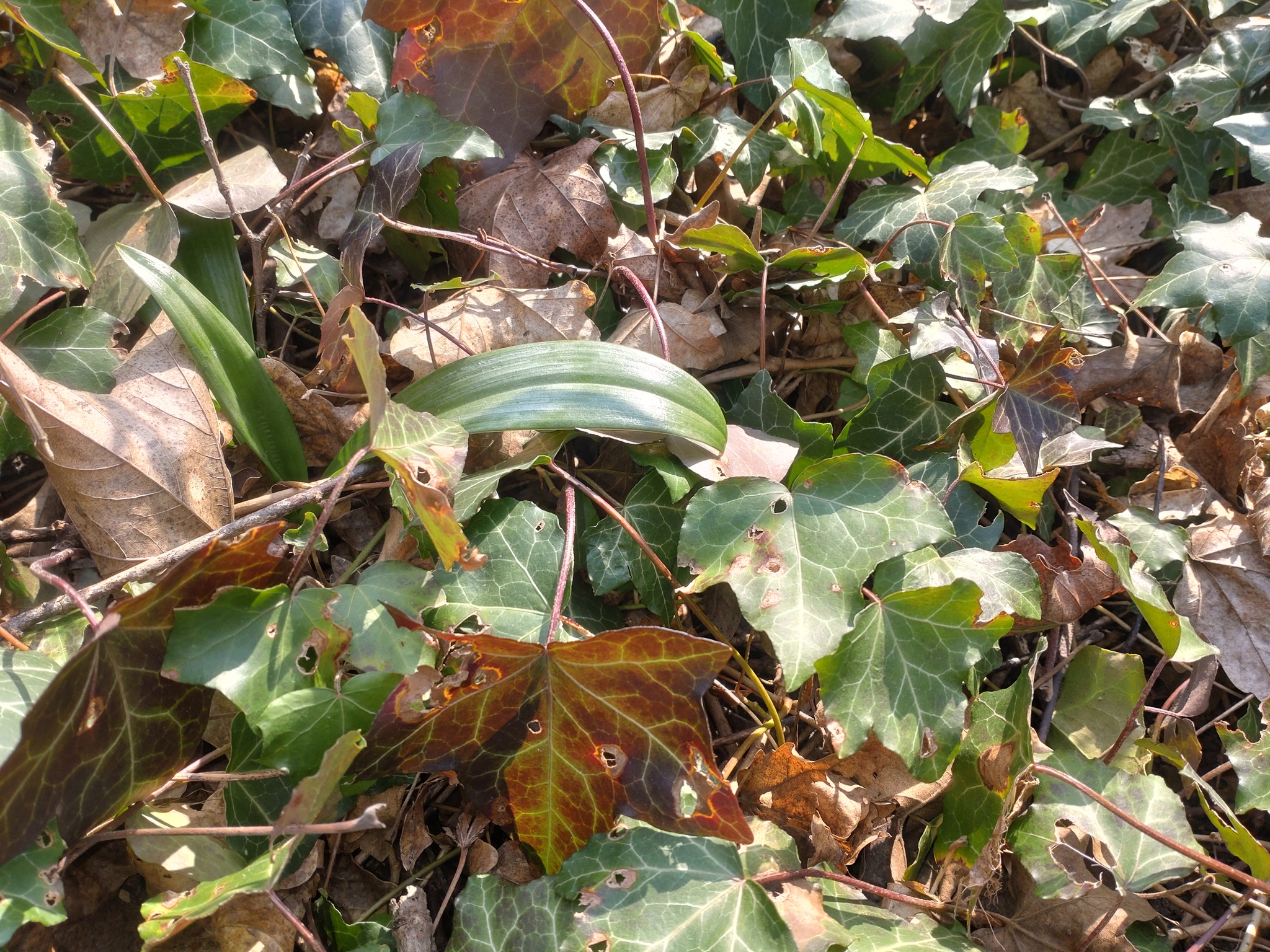
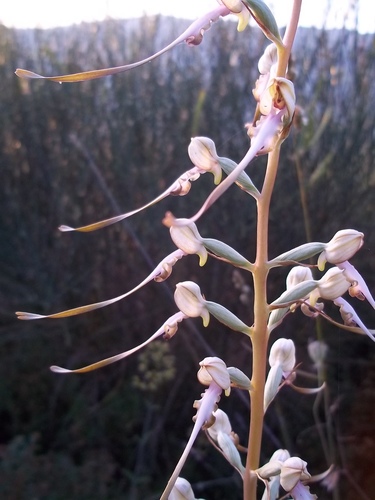
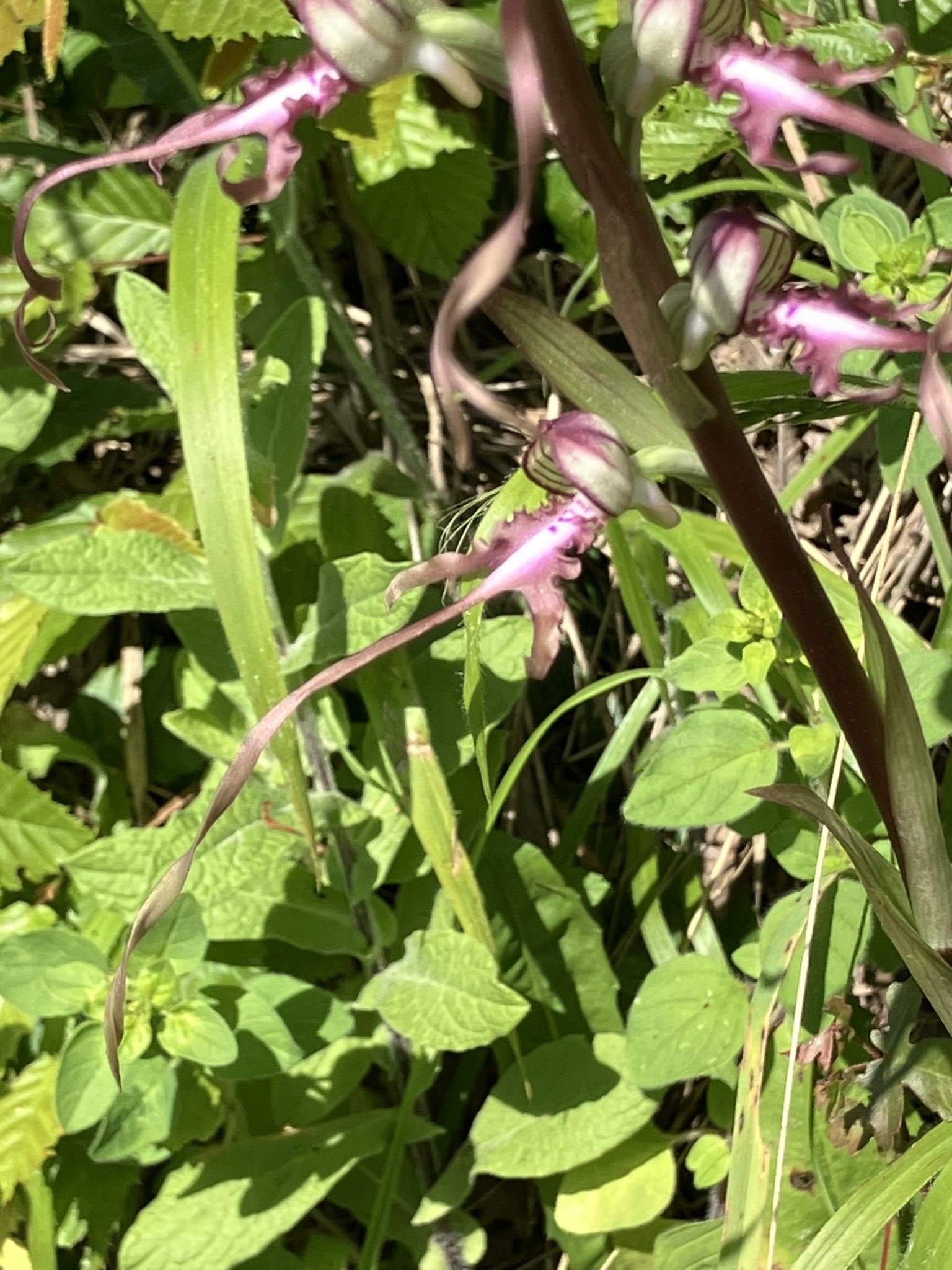
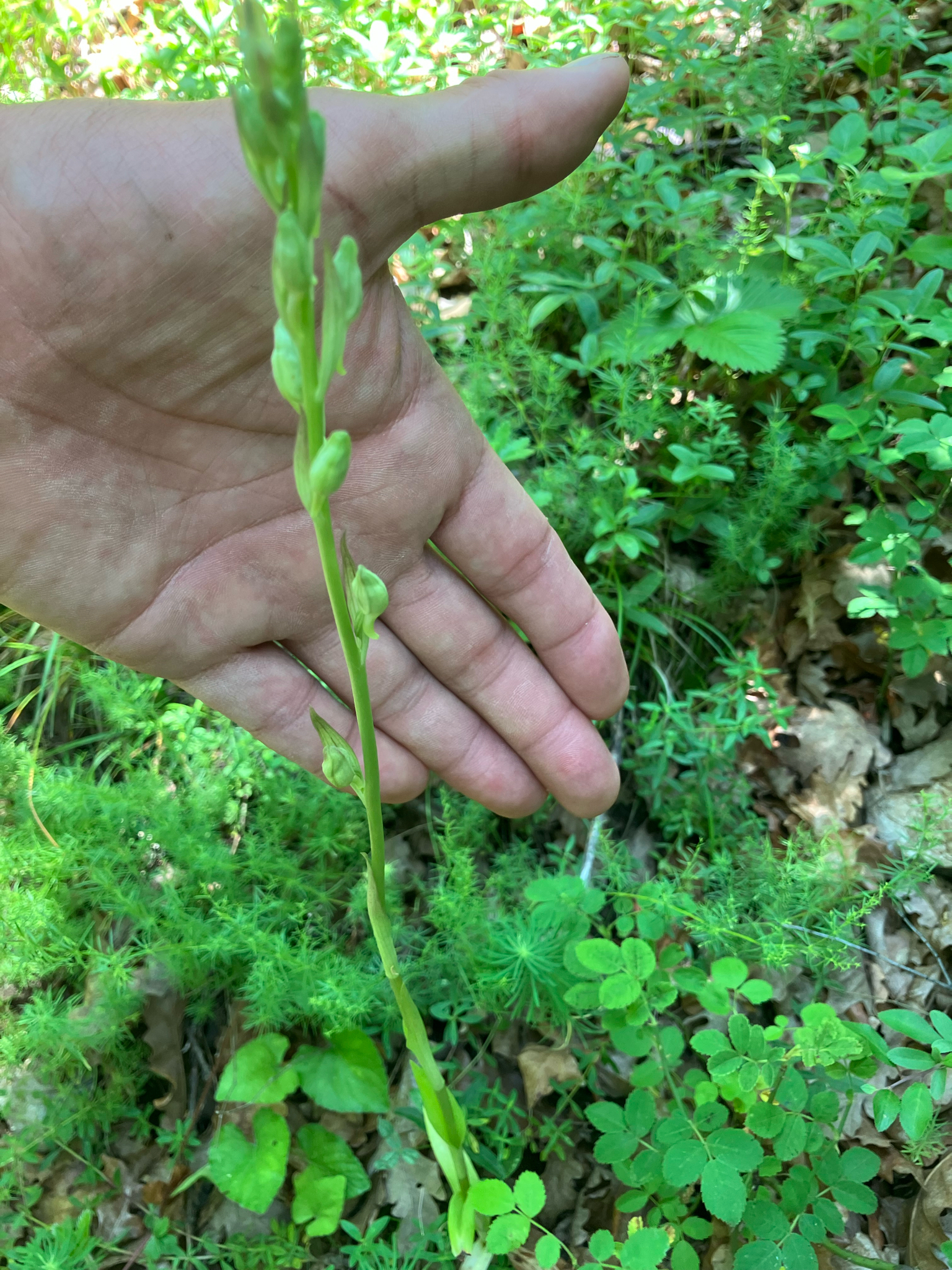
Physically, Himantoglossum robertianum is characterized by its robust growth habit. It typically forms a basal rosette of leaves, which are oblong to lanceolate in shape and can be quite broad, often reaching lengths of up to 20 centimeters. These leaves are usually a deep green and can be somewhat fleshy. The plant produces a single, erect flowering stem that can grow to a considerable height, often exceeding 50 centimeters, and sometimes reaching up to a meter. The inflorescence is a dense spike bearing numerous flowers. The flowers themselves are a striking feature, exhibiting a complex morphology typical of orchids. They are generally greenish-yellow to purplish-brown, with a prominent, deeply lobed labellum (lip) that is often fringed and can have a distinctive, elongated, strap-like central lobe, giving the genus its name (Himantoglossum meaning "strap tongue"). The sepals and petals are typically narrower and arching. Following successful pollination, the plant develops small, dehiscent capsules containing numerous dust-like seeds.
The native distribution of Himantoglossum robertianum is primarily concentrated in the Mediterranean region, extending across parts of Southern Europe, North Africa, and the Middle East. It thrives in a variety of natural habitats, commonly found in open woodlands, scrublands, garrigue, rocky slopes, and sometimes in disturbed areas such as roadsides and fallow fields. It prefers well-drained soils, which can range from calcareous to slightly acidic, and often grows in sunny to partially shaded conditions. Cultivation of this species outside its native range is challenging, as it requires specific environmental conditions, including a distinct dry period during its dormant phase and suitable soil composition. It is not widely cultivated as an ornamental plant due to these horticultural demands and its protected status in many areas.
Ecologically, Himantoglossum robertianum plays a role in its native ecosystems, contributing to plant biodiversity. Like many orchids, it is thought to have a symbiotic relationship with specific mycorrhizal fungi in the soil, which are essential for seed germination and the early development of the seedling. The pollination of its flowers is carried out by insects, though the precise pollinators may vary. There is no established record of Himantoglossum robertianum having significant agricultural, medicinal, culinary, or economic importance. Its primary significance lies in its botanical interest and its contribution to the flora of the Mediterranean basin.
An interesting characteristic of Himantoglossum robertianum is its often substantial size compared to many other orchid species, particularly in its vegetative growth and flowering stem. The intricate structure of its flowers, with the uniquely shaped labellum, is a testament to the evolutionary adaptations that facilitate specific interactions with its pollinators. The plant typically flowers in late winter or early spring, depending on the specific location and climatic conditions.
Prefers full sun to partial shade. Protect from intense afternoon sun in hot climates.
Watering
Water moderately during growth, allow to dry slightly between waterings. Reduce in summer dormancy.
Soil
Requires well-draining soil, such as a mix of loam, sand, and grit. Avoid heavy, waterlogged soils.
Temperature
Ideal growing temperatures are between 10-20°C. Tolerates cooler temperatures but needs protection from hard frost.
Habitat
Outdoor
Fertilizer
Feed sparingly with diluted liquid fertilizer during spring growth.
Care Requirements
Light
Prefers full sun to partial shade. Protect from intense afternoon sun in hot climates.
Water
Water moderately during growth, allow to dry slightly between waterings. Reduce in summer dormancy.
Autumn to Spring active growth, Summer dormancy
Soil
Requires well-draining soil, such as a mix of loam, sand, and grit. Avoid heavy, waterlogged soils.
Temperature
Ideal growing temperatures are between 10-20°C. Tolerates cooler temperatures but needs protection from hard frost.
Avoid extreme heat and frost
Habitat
Outdoor
Fertilizer
Feed sparingly with diluted liquid fertilizer during spring growth.
Once or twice in spring
Plant Overview
Plant Type
Herb
Plant Category
Flowering, Ornamental
Plant Place Type
Ground
Plant Environment
Outdoor
Lifespan
Perennials
Plant Height
0.3-1 m
Spread
0.1-0.3 m
Growth Rate
Slow
Dormancy
Summer
Leaf Color
Green
Leaf Type
Basal rosette
Flower Size
3-5 cm
Image Gallery
Flowering & Fruiting Cycles
Monthly activity intensity for bloom and fruit across both hemispheres.
Northern hemisphere
Flowering & fruiting calendar
Peak bloom · MayPeak fruit · Aug
FloweringFruiting
Southern hemisphere
Flowering & fruiting calendar
Peak bloom · SepPeak fruit · Oct
FloweringFruiting
Synonyms
Aceras longibracteatum Rchb.f.
Barlia longibracteata (Rchb.f.) Parl.
Barlia robertiana (Loisel.) Greuter
Himantoglossum longibracteatum (Rchb.f.) Schltr.
Loroglossum longibracteatum (Rchb.f.) Moris ex Ardoino
Orchis robertiana Loisel.
Taxonomy
kingdomPlantae
divisionTracheophyta
classLiliopsida
orderAsparagales
familyOrchidaceae
genusHimantoglossum
speciesHimantoglossum robertianum
Toxicity
Toxic for humans
No
Rating: 0/5
Toxic for pets
No
Rating: 0/5
Edible
No
Additional Care Tips
Water moderately during the active growing season (autumn through spring), ensuring the substrate dries out slightly between waterings. Reduce watering to almost none during the summer dormancy period to prevent rot.
Pruning is generally not required. Remove any dead or damaged leaves or flower stalks after flowering to maintain tidiness and prevent disease.
Propagation is typically done by division of tubers in late summer or early autumn, just as new growth begins. Seed propagation is possible but slow and challenging, often requiring specific mycorrhizal fungi.
Repot every 2-3 years or when the tuber fills the pot, preferably in late summer or early autumn as new growth emerges. Use a well-draining orchid or terrestrial mix.
FAQs
When is the best time to plant Robert's Himantoglossum?
The best time to plant or repot Robert's Himantoglossum is in late summer or early autumn, just as new growth begins to emerge from the tubers.
Does Robert's Himantoglossum need special soil?
Yes, it requires very well-draining soil. A mix suitable for terrestrial orchids, incorporating grit or sand, is ideal to prevent tuber rot.
Why does my plant die back in summer?
This is normal. Robert's Himantoglossum has a summer dormancy period where the above-ground parts wither, and the tubers rest. Reduce watering significantly during this time.
How often should I water Robert's Himantoglossum?
Water moderately during its active growing season (autumn to spring), allowing the soil to dry slightly between waterings. Keep it dry during summer dormancy.
Can I grow Robert's Himantoglossum from seed?
Growing from seed is possible but very challenging and slow, often requiring specific symbiotic fungi (mycorrhizae) for germination and successful establishment.