Greater Celandine (Chelidonium majus)

Greater celandine (Chelidonium majus) is a flowering plant in the poppy family, known for its bright yellow flowers and orange sap.

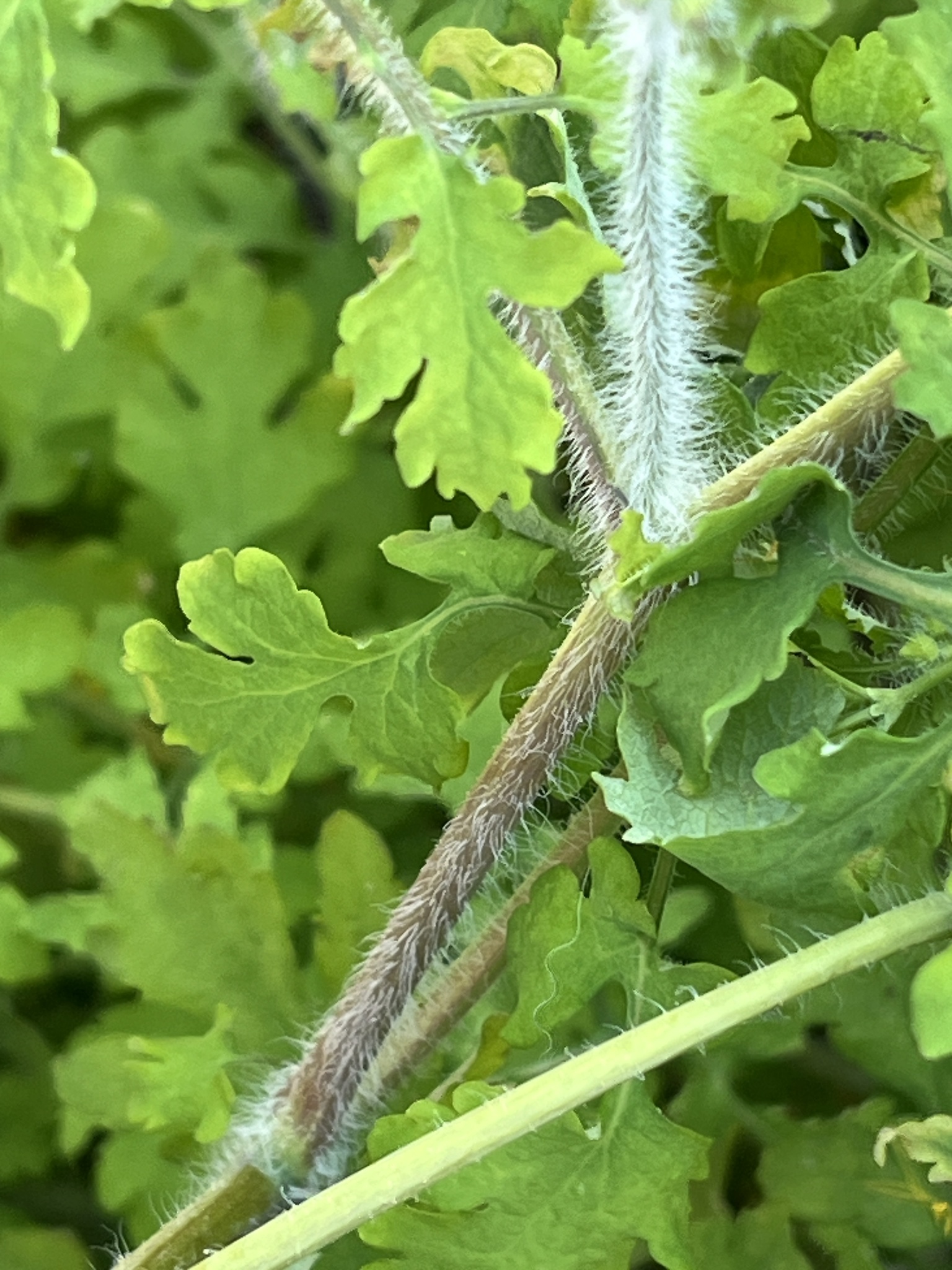
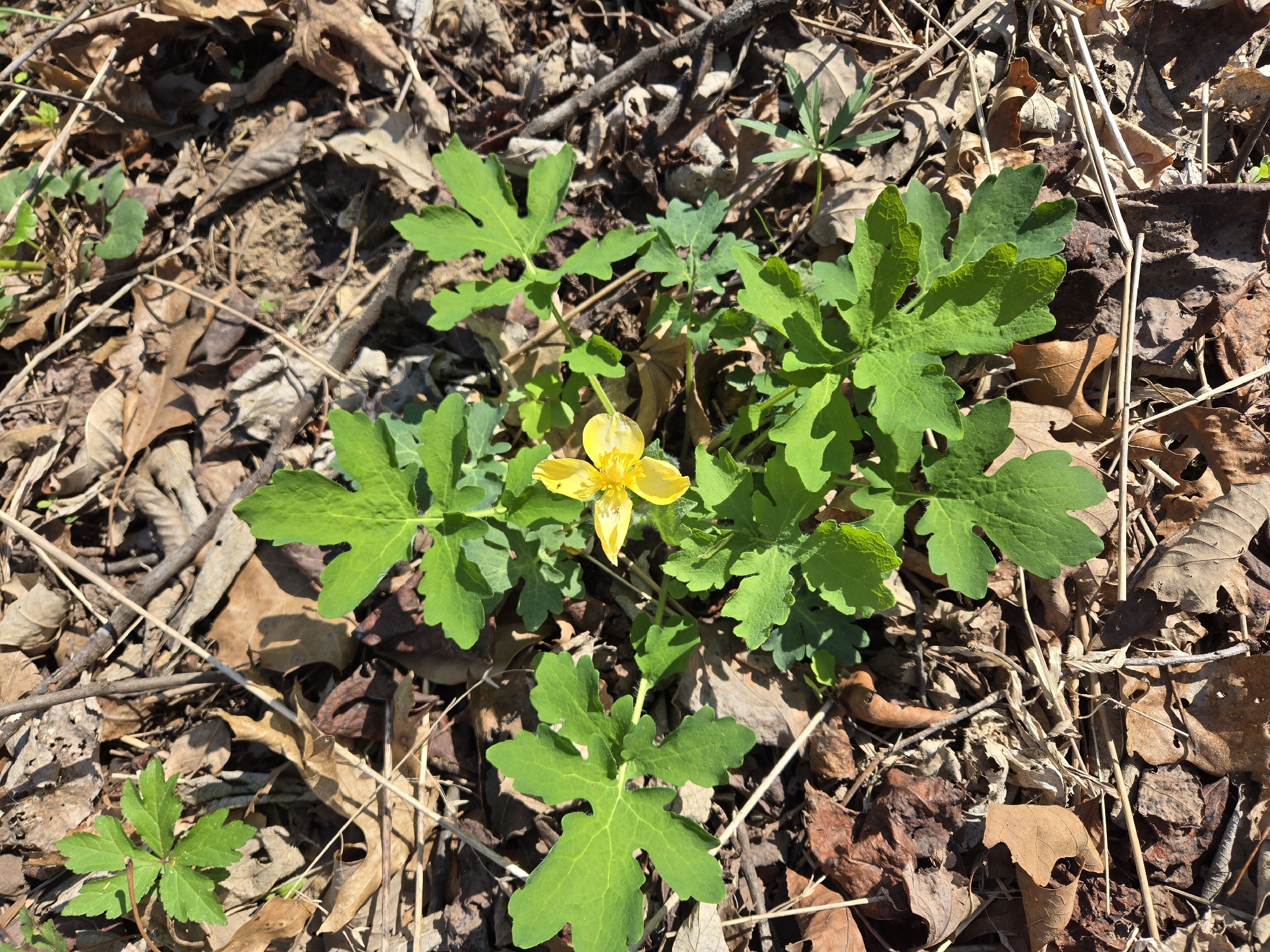
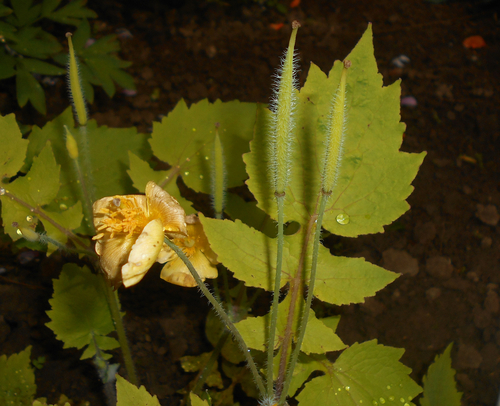
Chelidonium majus, commonly known as greater celandine, is a herbaceous perennial plant belonging to the poppy family, Papaveraceae. It is recognized for its distinctive bright orange sap and its historical use in traditional medicine. This species is native to Europe and western Asia, extending into North Africa. Greater celandine typically grows to a height of 30 to 100 centimeters, forming a somewhat bushy habit. The stems are erect, branched, and sparsely covered with fine hairs. Its leaves are pinnately compound, with three to seven ovate to oblong leaflets that are deeply lobed or toothed, giving them a somewhat fern-like appearance. The upper surface of the leaves is a dull green, while the undersides are paler and often hairy. The plant produces clusters of bright yellow, four-petaled flowers, each about 2 to 3 centimeters in diameter. These flowers bloom from late spring through summer. Following flowering, the plant develops long, slender seed capsules, which are typically 4 to 6 centimeters in length. When mature, these capsules split open to release numerous small, black, glossy seeds. A notable characteristic of Chelidonium majus is its thick, reddish-orange latex, or sap, which is exuded when any part of the plant is broken. In its native range, greater celandine thrives in a variety of habitats, often found in woodlands, hedgerows, disturbed ground, and along roadsides. It prefers moist, well-drained soils and can tolerate partial shade to full sun. While it is not widely cultivated as an ornamental, it can be grown in gardens, particularly in naturalistic settings. Its cultivation requirements are generally straightforward, favoring moist soil and a location that is not excessively dry. Historically, Chelidonium majus has been valued for its medicinal properties, with the bright orange sap being the primary source of its traditional applications. It has been used externally for skin conditions and internally for various ailments, though its use requires caution due to the presence of alkaloids, some of which can be toxic. Scientific research has investigated the phytochemical constituents of greater celandine, identifying various alkaloids and other compounds. Its ecological role is primarily as a component of its native flora, contributing to biodiversity in its natural habitats. It is not typically considered a significant agricultural crop, nor does it have widespread culinary uses. An interesting adaptation of Chelidonium majus is its seed dispersal mechanism. The seeds contain a fleshy appendage called an elaiosome, which is attractive to ants. Ants carry the seeds to their nests, consume the elaiosome, and then discard the seed, thus aiding in its dispersal. The plant's vibrant orange sap, which gives it its common name, is a defense mechanism against herbivores and has been the subject of considerable ethnobotanical and pharmacological interest.

Above information is sourced from Wikipedia

Sunlight

Partial shade to full sun

Watering

Prefers consistently moist soil

Soil

Well-drained

Temperature

Hardy

Fertilizer

Light feeder

Care Requirements

Light

Partial shade to full sun

Prefers morning sun and afternoon shade in hotter climates.

Watering

Prefers consistently moist soil

Water when top 2-3 cm of soil is dry. Avoid waterlogging.

Soil

Well-drained

Temperature

Hardy

Tolerates a wide range of temperatures, including frost.

Fertilizing

Light feeder

Apply balanced fertilizer in early spring if needed.

Plant Overview

Plant Type

Herb

Plant Place Type

Garden, Pot

Lifespan

Perennial

Plant Height

0.3-1.2 m

Spread

0.3-0.6 m

Growth Rate

Moderate

Dormancy

Winter

Leaf Color

Green

Leaf Type

Compound

Flower Size

2-3 cm

Optimal Sunlight Lux

60000

Image Gallery

Flowering & Fruiting Cycles

Monthly activity intensity for bloom and fruit across both hemispheres.

Northern hemisphere

Flowering & fruiting calendar

Peak bloom · JunPeak fruit · Aug
FloweringFruiting
02468JanFebMarAprMayJunJulAugSepOctNovDecActivity intensityMonths87
Southern hemisphere

Flowering & fruiting calendar

Peak bloom · OctPeak fruit · Nov
FloweringFruiting
02468JanFebMarAprMayJunJulAugSepOctNovDecActivity intensityMonths87
Taxonomy
  • kingdomPlantae
  • divisionTracheophyta
  • classMagnoliopsida
  • orderRanunculales
  • familyPapaveraceae
  • genusChelidonium
  • speciesChelidonium majus
Toxicity

Toxic for humans

Yes

Rating: 7/5

Toxic for pets

Yes

Rating: 7/5

Edible

No

Contains alkaloids, is toxic if ingested. Sap can irritate skin and eyes.

Additional Care Tips

Chelidonium majus prefers consistently moist soil, especially during its active growth period. Water thoroughly when the top 2-3 cm of soil feels dry to the touch. Avoid waterlogging, as this can lead to root rot. Reduce watering frequency during dormancy in winter.

Prune back Greater celandine in late spring or early summer after flowering to encourage a bushier habit and potentially a second bloom. Deadheading spent flowers also prevents self-seeding, which can be aggressive. Remove any dead or damaged foliage at any time.

Chelidonium majus readily self-seeds and can be propagated by sowing seeds directly outdoors in autumn or early spring. Division of established clumps in early spring or autumn is also an effective method for increasing plant numbers.

Repotting is generally not necessary for Chelidonium majus as it is often grown as a perennial in the ground. If grown in containers, repot every 2-3 years in early spring before new growth begins, using a well-draining potting mix.

FAQs

Is Greater celandine poisonous?

Yes, Chelidonium majus is considered toxic if ingested. It contains various alkaloids that can cause adverse reactions. The latex sap can also irritate skin and eyes.

What are the characteristic flowers of Greater celandine?

Greater celandine produces delicate, bright yellow flowers with four petals, typically blooming from late spring through summer.

What is the preferred growing condition for Chelidonium majus?

Chelidonium majus prefers moist, well-drained soil and can tolerate partial shade to full sun. It often naturalizes in woodland edges and disturbed areas.

Does Greater celandine spread aggressively?

Yes, Greater celandine can spread readily by seed and rhizomes, and is considered invasive in certain regions. It may require management to prevent over-colonization.

What is the medicinal use of Greater celandine?

Historically, the sap of Chelidonium majus was used in folk medicine for various ailments, particularly skin conditions. However, due to its toxicity, it should be used with extreme caution and under professional guidance.