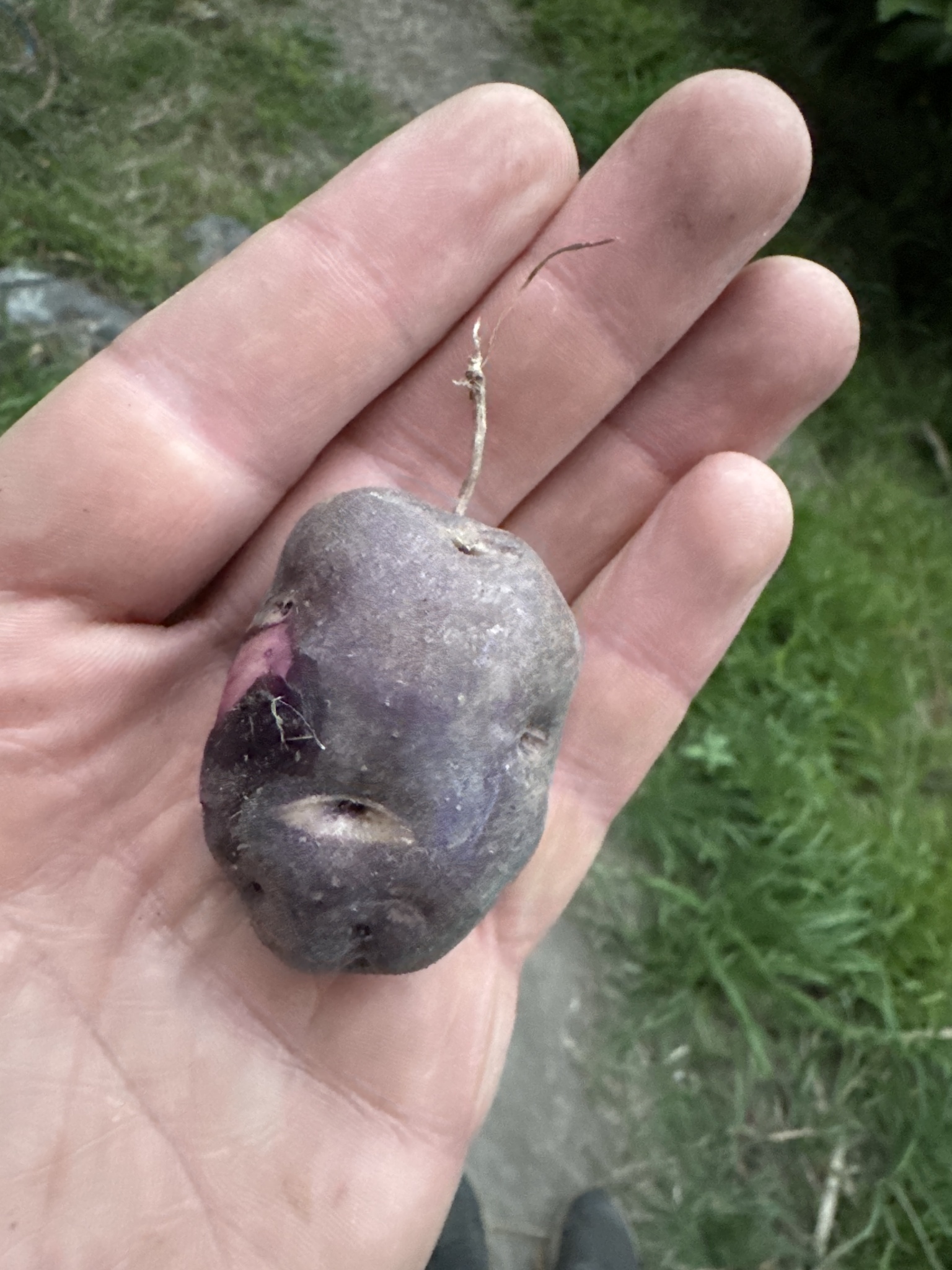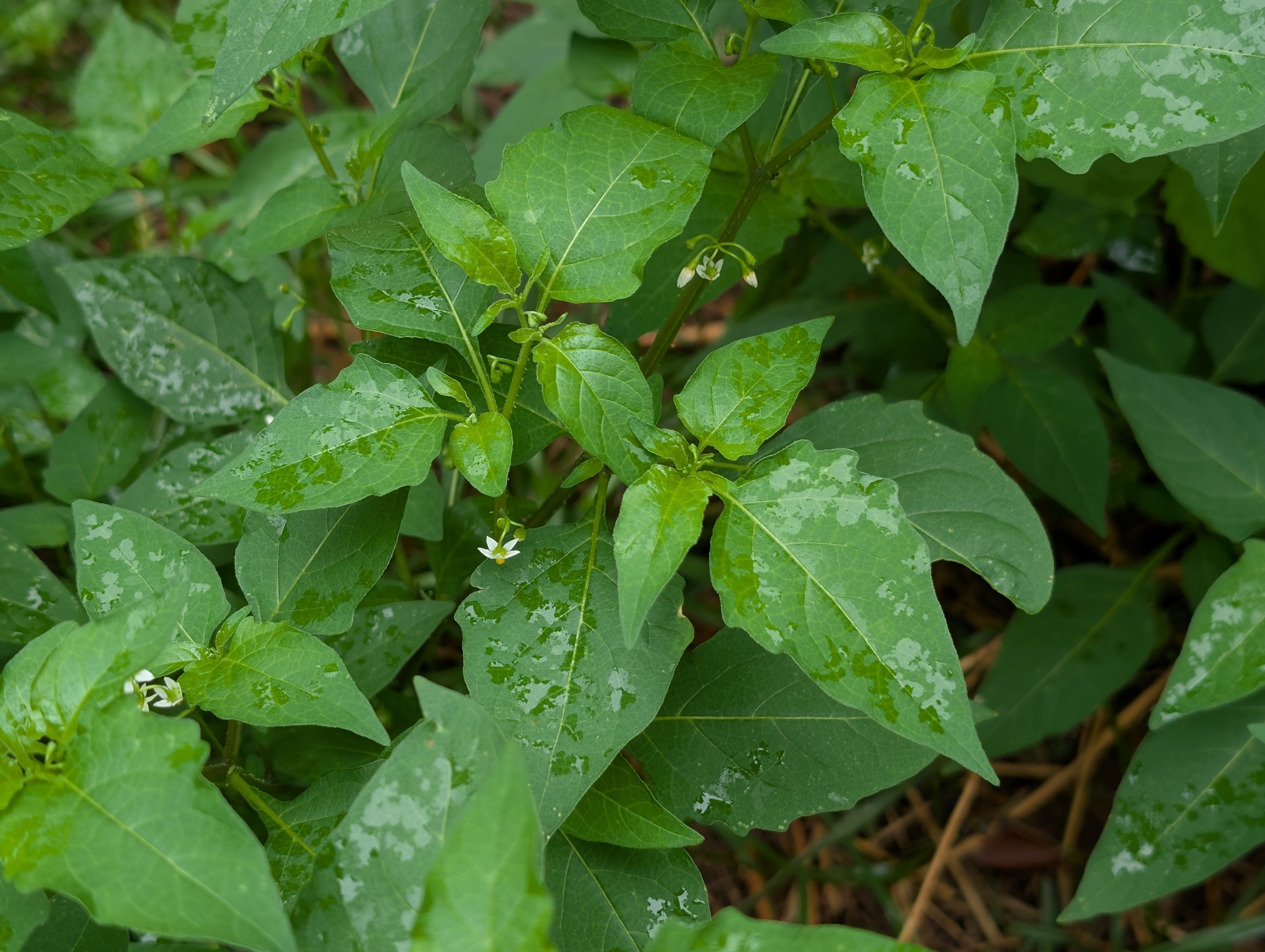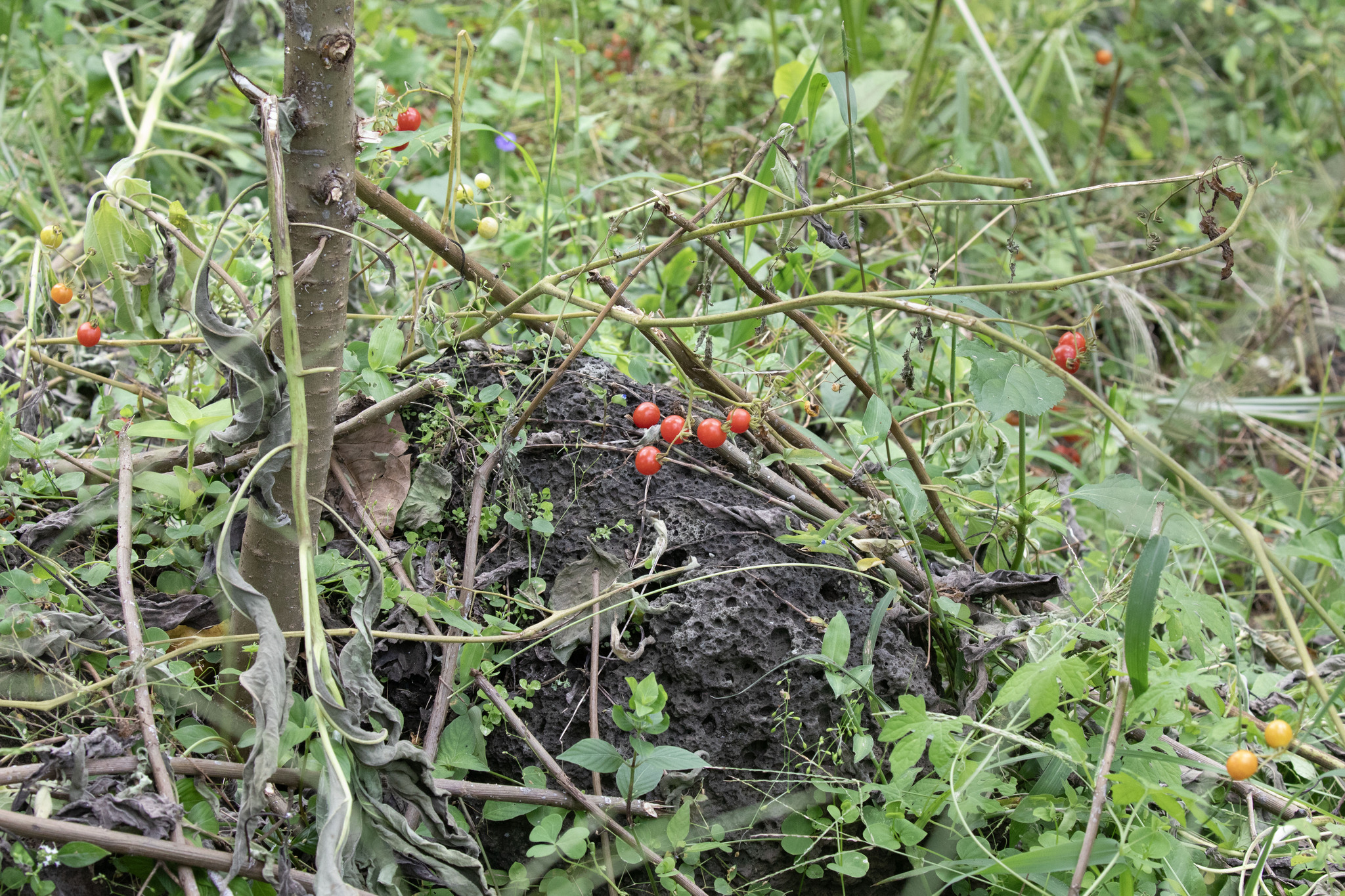
Hoe Nightshade (Solanum nitidibaccatum)

Solanum nitidibaccatum, a species of nightshade, is an herbaceous perennial native to South America, typically found in disturbed areas.

Solanum nitidibaccatum, commonly known as Hoe Nightshade, is a species within the vast Solanum genus, a group of plants that includes familiar crops like the potato and tomato, as well as many wild relatives. This particular species is a herbaceous perennial, typically found growing as a low-lying plant. Its growth habit is generally spreading, forming a somewhat diffuse presence in its natural environment. The plant's overall size is modest, usually not exceeding a foot or so in height, contributing to its unassuming appearance. The leaves of Solanum nitidibaccatum are a key distinguishing feature. They are typically ovate to broadly ovate in shape, with a somewhat wavy or undulate margin. The surface of the leaves is often described as glabrous, meaning it is smooth and hairless, and can appear somewhat glossy, contributing to the specific epithet "nitidibaccatum" which hints at a shining or lustrous quality. The flowers are characteristic of the Solanum genus, usually star-shaped with five petals. They are typically white or pale lavender in color, with prominent yellow anthers at the center. These flowers are borne in small clusters, often appearing along the stems. Following successful pollination, the plant produces fruits, which are small berries. The berries of Solanum nitidibaccatum are typically globose and can range in color from green when immature to a brighter hue, often red or orange, when ripe. The size and exact coloration of the berries can vary. Solanum nitidibaccatum is native to South America, with its distribution primarily documented in regions of Brazil. Within its native range, it is often found in disturbed habitats, such as roadsides, fields, and other areas where the soil has been turned or altered, which aligns with its common name suggesting an association with cultivation or tilled land. It thrives in well-drained soils and generally prefers sunny to partially shaded locations. While not widely cultivated as an ornamental or agricultural crop, its presence in its native habitat is part of the local flora. Ecologically, Solanum nitidibaccatum plays a role in its native ecosystem, providing a food source for certain insects and potentially small animals through its berries. Its adaptations are typical of many herbaceous perennials, allowing it to survive and reproduce in its environment. Further detailed information regarding specific ecological interactions or documented uses, such as medicinal, culinary, or economic importance, for Solanum nitidibaccatum is not extensively established in widely accessible scientific literature, emphasizing the importance of focusing on its botanical characteristics and native distribution. The plant's contribution to biodiversity within its native South American landscapes is its primary recognized significance.

Above information is sourced from Wikipedia

Sunlight

Moderate

Watering

Moderate

Soil

well-drained

Temperature

Moderate

Fertilizer

Moderate

Care Requirements

Light

Moderate

Prefers bright, indirect light. Avoid direct, harsh sunlight.

Water

Moderate

Allow soil to dry slightly between waterings.

Soil

well-drained

Temperature

Moderate

Thrives in temperatures between 18-24°C. Avoid sudden temperature drops.

Fertilizer

Moderate

Feed with a balanced liquid fertilizer during the growing season.

Plant Overview

Plant Type

Herb, Shrub

Plant Place Type

Garden

Lifespan

Perennial

Plant Height

0.5-1.5 m

Spread

0.5-1 m

Growth Rate

moderate

Leaf Color

Green

Leaf Type

simple

Flower Size

small

Optimal Sunlight Lux

60000

Image Gallery

Flowering & Fruiting Cycles

Monthly activity intensity for bloom and fruit across both hemispheres.

Northern hemisphere

Flowering & fruiting calendar

Peak bloom · JulPeak fruit · Aug
FloweringFruiting
02468JanFebMarAprMayJunJulAugSepOctNovDecActivity intensityMonths88
Southern hemisphere

Flowering & fruiting calendar

Peak bloom · MayPeak fruit · Jun
FloweringFruiting
02468JanFebMarAprMayJunJulAugSepOctNovDecActivity intensityMonths88
Synonyms
Bosleria nevadensis A.Nelson
Solanum patagonicum C.V.Morton
Solanum stylesinum Dunal
Taxonomy
  • kingdomPlantae
  • divisionTracheophyta
  • classMagnoliopsida
  • orderSolanales
  • familySolanaceae
  • genusSolanum
  • speciesSolanum nitidibaccatum
Toxicity

Toxic for humans

Yes

Rating: 4/5

Toxic for pets

Yes

Rating: 4/5

Edible

No

All parts of the plant are toxic.

Additional Care Tips

Water thoroughly when the top 2-3 cm of soil feels dry. Avoid waterlogging, as this can lead to root rot. Reduce watering frequency during winter months when the plant's growth slows down. Ensure good drainage in the pot to prevent excess moisture accumulation.

Prune to maintain shape and encourage bushier growth. Remove any dead, damaged, or crossing branches. Light pruning can be done at any time, but heavier pruning is best done in late winter or early spring before new growth emerges. This helps to invigorate the plant.

Propagate primarily through stem cuttings taken in spring or summer. Select healthy, non-flowering shoots and root them in moist potting mix or water. Alternatively, seeds can be sown in spring, but germination may be slower and less reliable for this species.

Repot every 2-3 years or when the plant becomes root-bound. Choose a pot that is only slightly larger than the current one. Use a well-draining potting mix. Repotting is best done in spring, just as new growth begins to appear, to minimize transplant shock.

FAQs

What is the native range of Solanum nitidibaccatum?

Solanum nitidibaccatum is native to South America.

Is Solanum nitidibaccatum a common garden plant?

No, Solanum nitidibaccatum is not commonly cultivated and is often considered a weed.

What type of plant is Solanum nitidibaccatum?

Solanum nitidibaccatum is an herbaceous perennial.

Where is Solanum nitidibaccatum typically found?

It is typically found in disturbed areas.

What is the scientific classification of Hoe Nightshade?

Hoe Nightshade belongs to the genus Solanum and its scientific name is Solanum nitidibaccatum.