Detailed description not available.
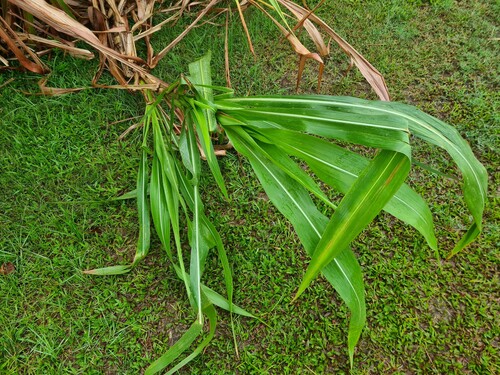
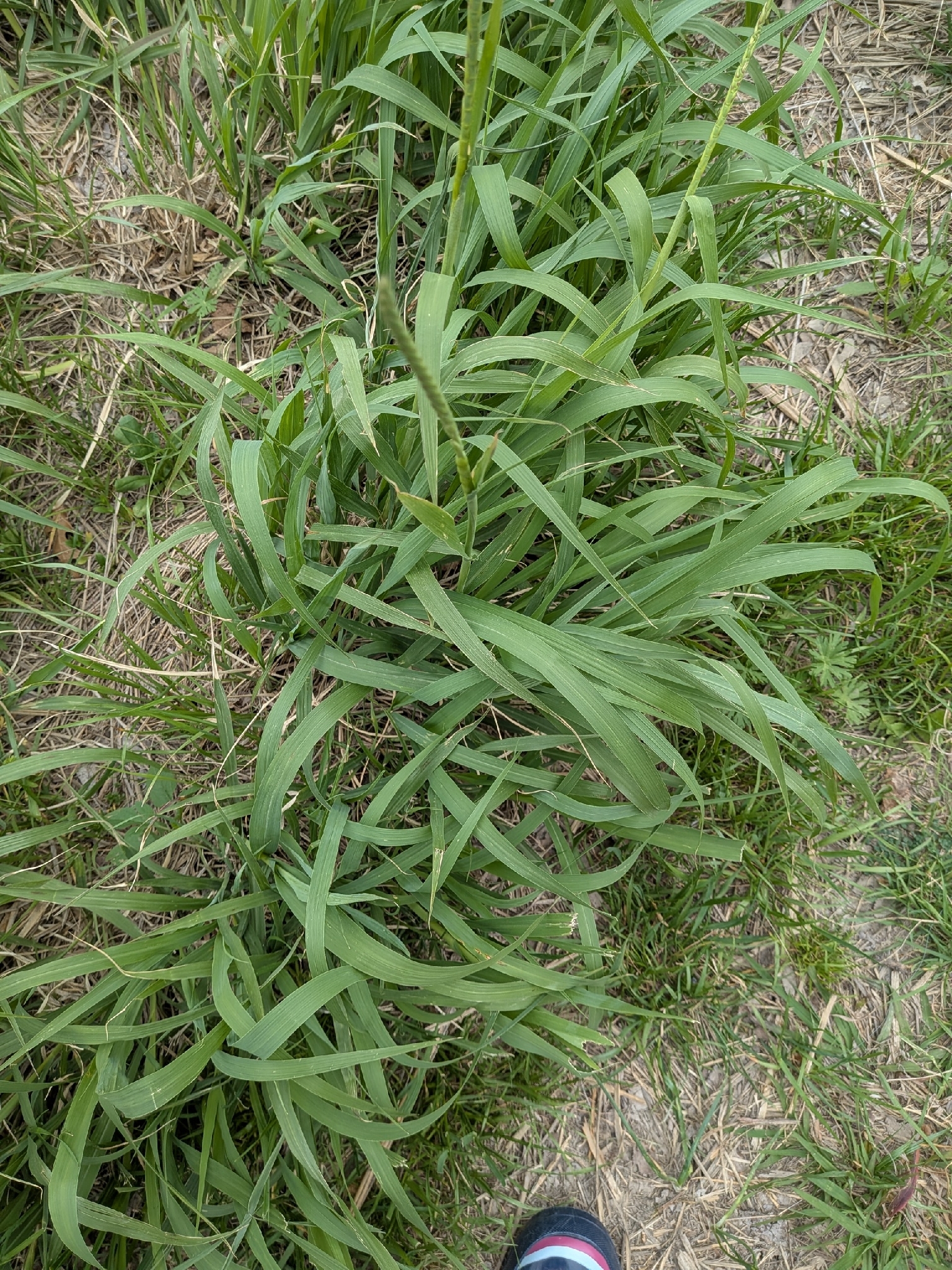
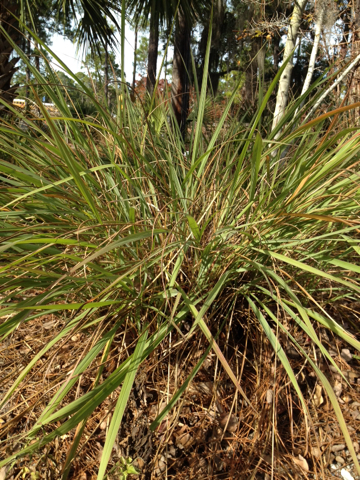
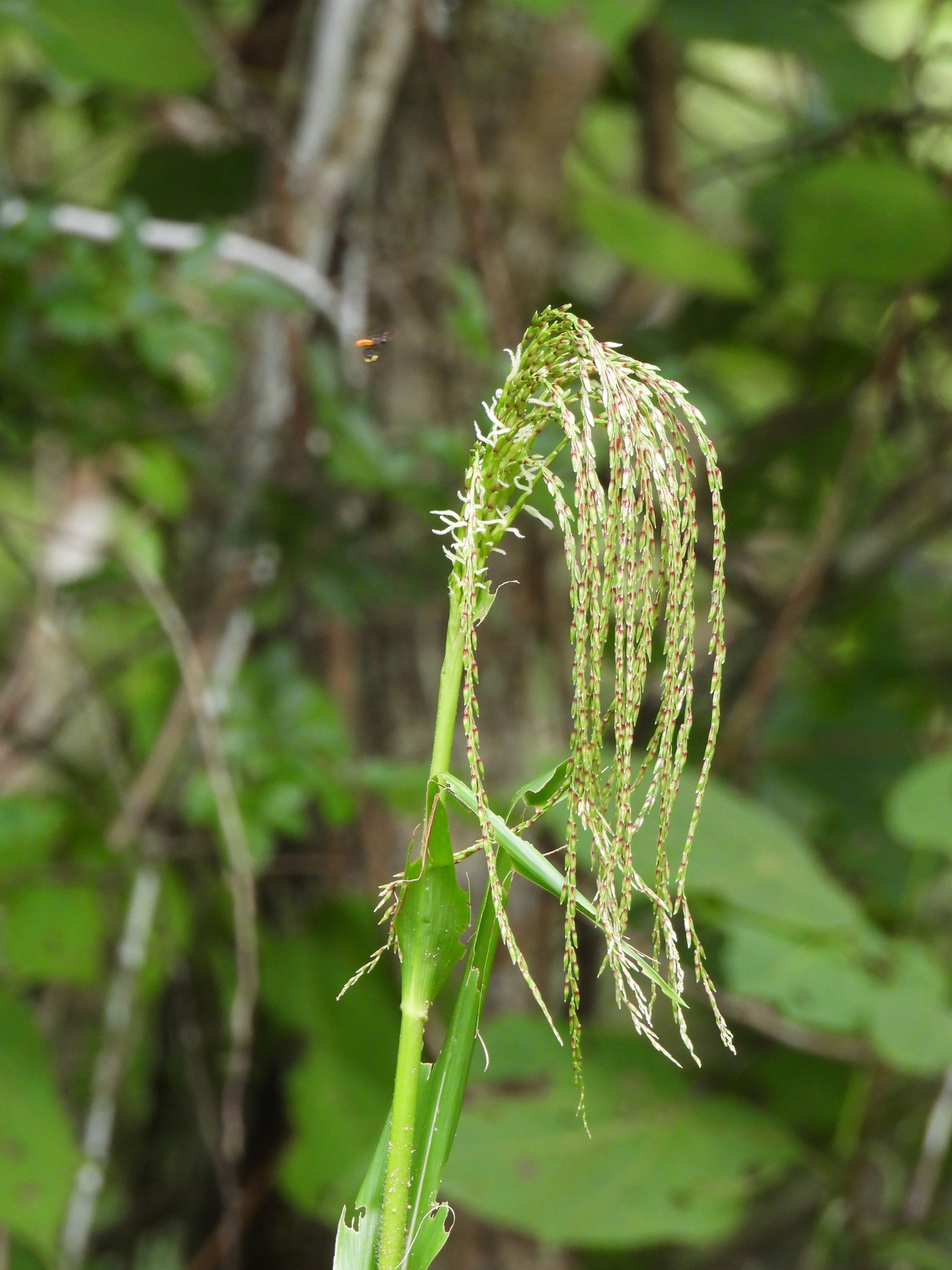
Tripsacum laxum, commonly known as Grama-Guatemala, is a robust perennial grass native to the tropical regions of the Americas. It is a significant forage grass in many tropical countries due to its high biomass production and palatability for livestock. This species is a member of the Poaceae family, which includes many important agricultural grasses. Grama-Guatemala is characterized by its vigorous, clump-forming growth habit, often reaching heights of 2 to 4 meters, and sometimes even taller under optimal conditions. The stems are thick and erect, forming dense tussocks. Its leaves are long, broad, and strap-like, typically measuring up to 1 meter in length and several centimeters in width. The leaf margins can be somewhat rough. The inflorescence is a terminal panicle, often appearing somewhat open and spreading, bearing both male and female flowers. The male spikelets are typically located at the upper part of the inflorescence branches, while the female spikelets are found at the base. The seeds are relatively large and enclosed within a hardened involucre, a characteristic feature of the Tripsacum genus. The native range of Tripsacum laxum extends across Mexico, Central America, and into South America, where it thrives in warm, humid environments. It is commonly found in savannas, open woodlands, and along riverbanks, often in areas with fertile, well-drained soils. While it prefers moist conditions, it can tolerate some degree of drought once established. Grama-Guatemala is widely cultivated in tropical and subtropical regions worldwide as a valuable pasture grass, particularly in areas with high rainfall. It is well-adapted to tropical climates and is a key component of many improved pastures for cattle grazing. The primary importance of Tripsacum laxum lies in its agricultural utility as a forage crop. It produces a large volume of nutritious biomass, making it an excellent feed for grazing animals. Its ability to withstand heavy grazing pressure and its rapid regrowth after defoliation contribute to its widespread adoption in livestock production systems. Beyond its forage value, it can also play a role in soil conservation due to its extensive root system, which helps to prevent erosion. There is limited documented evidence regarding its medicinal, culinary, or ornamental uses. An interesting characteristic of Tripsacum laxum is its adaptation to tropical environments, where it can produce substantial forage even in challenging conditions. Its robust nature and high productivity make it a cornerstone species for sustainable livestock farming in many tropical landscapes. The large seed size and the protective involucre are adaptations that aid in seed dispersal and protection.