Graptopetalum amethystinum is a succulent with pale pink to lavender-tinged rosettes, often forming dense mats. It is ornamental.
Graptopetalum amethystinum is a captivating succulent species recognized for its distinctive rosette-forming growth habit and its unique foliage coloration. This plant belongs to the Crassulaceae family, a diverse group known for its members' water-storing capabilities. The scientific name, Graptopetalum amethystinum, directly refers to its characteristic amethystine or purplish hue, particularly when exposed to adequate sunlight. It is a relatively small, herbaceous perennial that typically forms low-growing clumps.
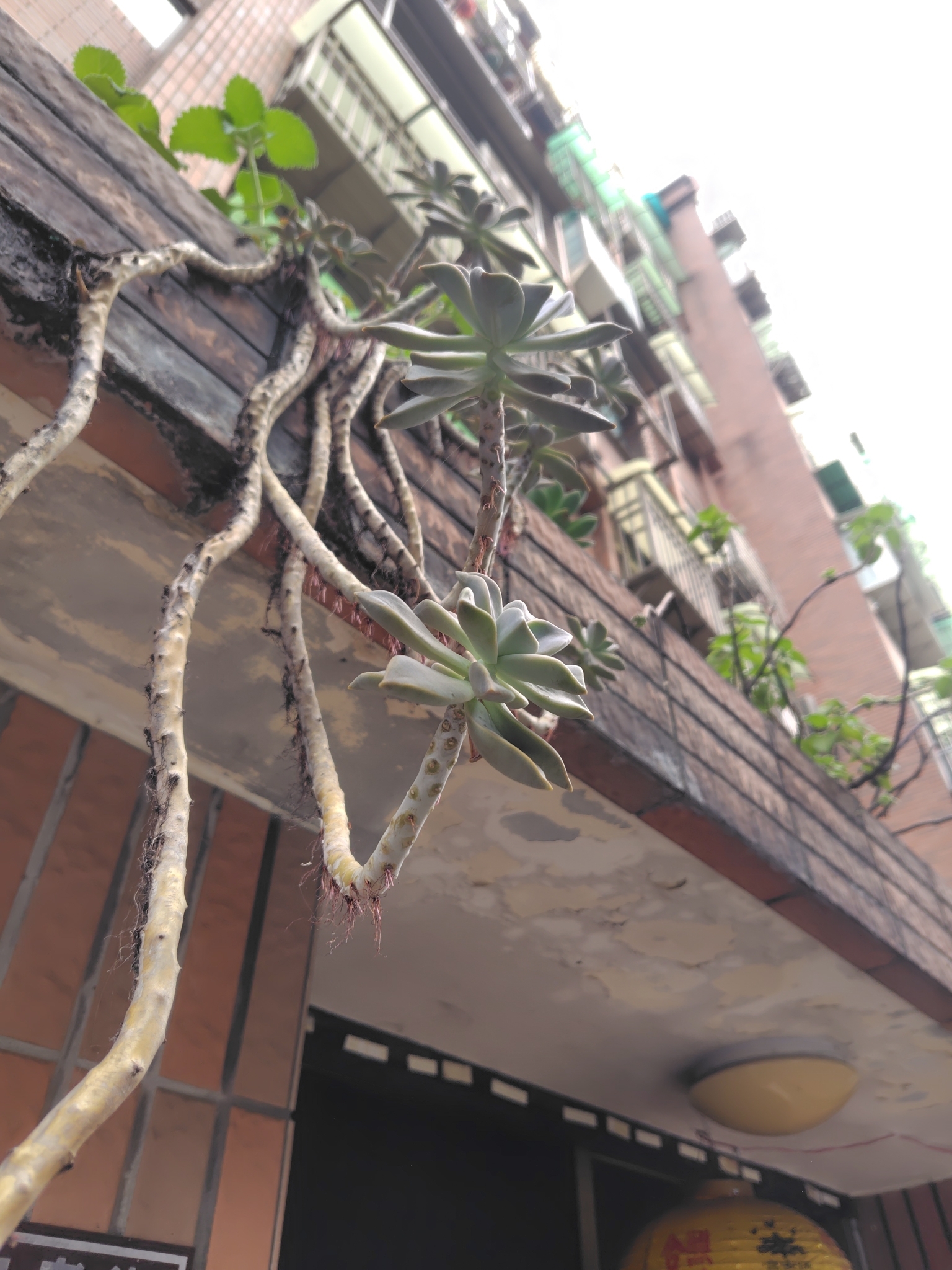
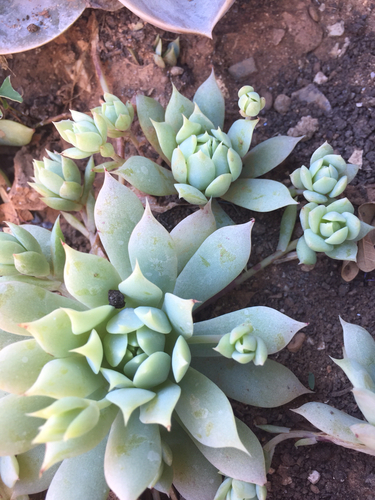
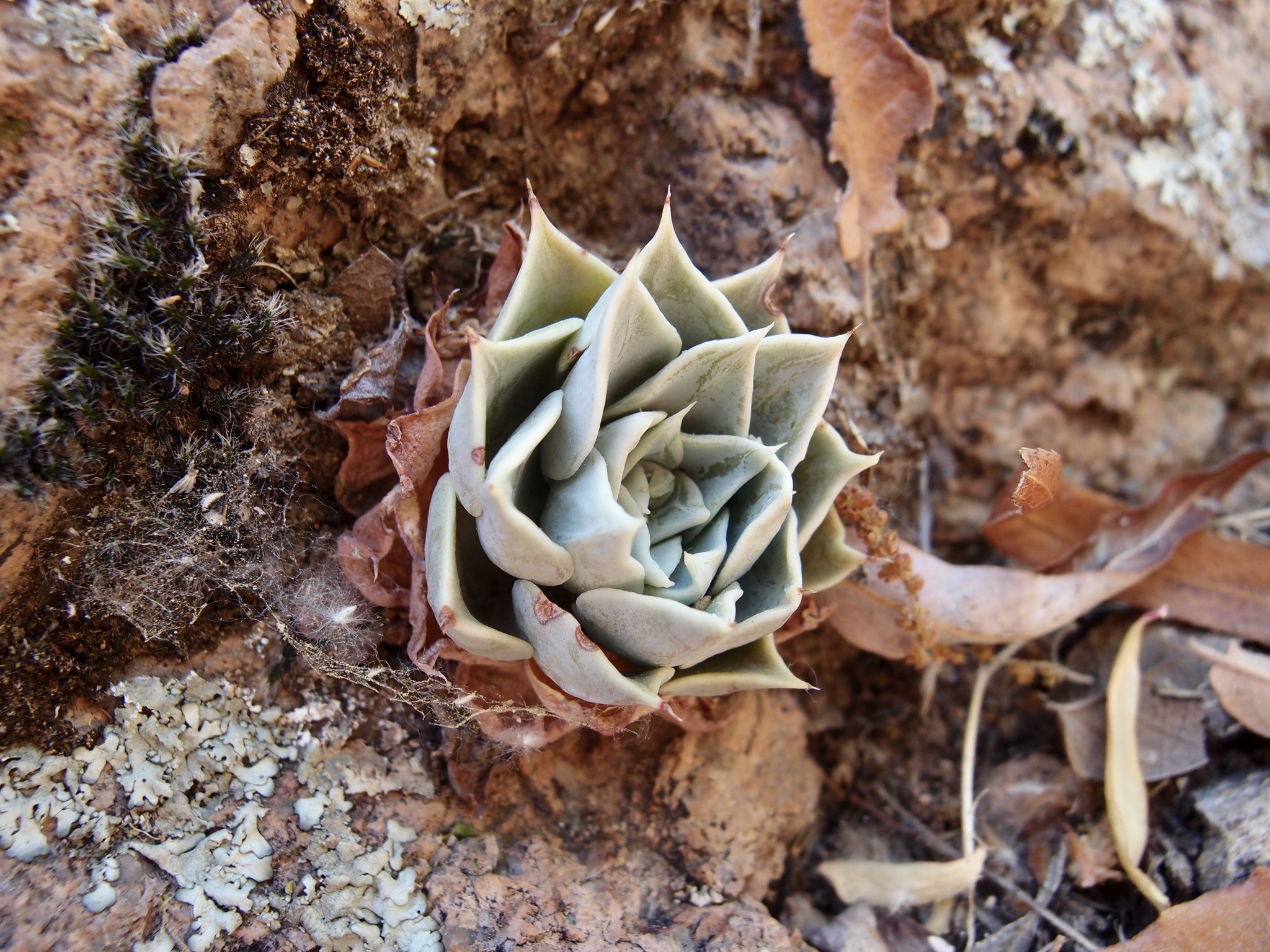
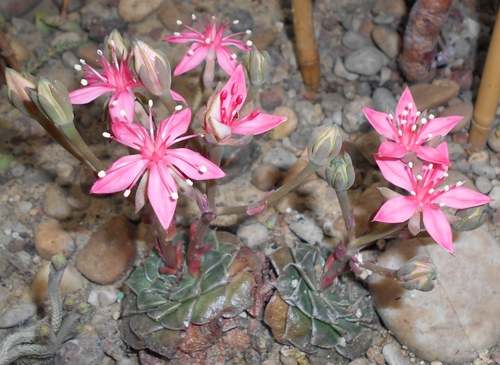
The physical characteristics of Graptopetalum amethystinum are central to its appeal. It produces fleshy, obovate to spatulate leaves that are arranged in tight rosettes, often reaching diameters of up to 10 centimeters. The leaves are smooth, somewhat flattened, and taper to a point. Their color is a primary distinguishing feature, ranging from pale green to a dusty lavender or amethyst, with the intensity of the purple often deepening under stress from sunlight or cooler temperatures. During the spring and summer months, Graptopetalum amethystinum produces inflorescences that arise from the center of the rosettes. These are typically slender, arching stems bearing small, star-shaped flowers. The flowers are usually white or pale pink, often with red or purplish markings on the petals, and possess a delicate, subtle fragrance. The plant does not have prominent bark or significant woody structures. Reproduction occurs through seeds and vegetative means, with offsets readily forming at the base of mature plants.
Graptopetalum amethystinum is native to Mexico, specifically found in the states of Oaxaca and Puebla. In its natural habitat, it typically grows in arid or semi-arid regions, often found on rocky slopes, in crevices of cliffs, or as an epiphyte on trees, favoring well-drained substrates. Its cultivation requirements are straightforward, making it a popular choice for succulent enthusiasts. It thrives in bright, indirect sunlight, though prolonged, intense direct sun can cause leaf burn. Well-draining soil is paramount; a gritty cactus or succulent mix is ideal. Overwatering is the most common cause of problems, so allowing the soil to dry out completely between waterings is essential. It is moderately drought-tolerant once established. Graptopetalum amethystinum prefers warm temperatures but can tolerate cooler conditions, though it is not frost-hardy and should be protected from freezing.
The primary importance of Graptopetalum amethystinum lies in its ornamental value. Its striking coloration and compact rosette form make it an attractive addition to rock gardens, succulent arrangements, and containers. It is also appreciated for its ease of propagation, allowing enthusiasts to readily share and expand their collections. While not widely recognized for medicinal, culinary, or significant economic uses, its ecological role in its native arid environments involves contributing to ground cover and providing a habitat for small invertebrates. An interesting adaptation of Graptopetalum amethystinum, common to many succulents, is its ability to store water in its fleshy leaves, enabling it to survive extended periods of drought. The development of its characteristic amethystine coloration is a physiological response, often triggered by environmental factors such as increased light intensity or temperature fluctuations, serving as a protective mechanism against excessive solar radiation.
Bright, indirect light is ideal. Can tolerate some direct sun.
Watering
Allow soil to dry out between waterings. Reduce in winter.
Soil
Well-draining succulent or cactus mix is essential to prevent root rot.
Temperature
Prefers warm temperatures during the growing season.
Habitat
Indoor, Outdoor, Greenhouse
Fertilizer
Feed sparingly during the growing season.
Care Requirements
Light
Bright, indirect light is ideal. Can tolerate some direct sun.
Protect from intense afternoon sun.
Water
Allow soil to dry out between waterings. Reduce in winter.
Soil
Well-draining succulent or cactus mix is essential to prevent root rot.
Temperature
Prefers warm temperatures during the growing season.
Avoid frost; protect from freezing.
Habitat
Indoor, Outdoor, Greenhouse
Fertilizer
Feed sparingly during the growing season.
Use diluted succulent fertilizer.
Plant Overview
Plant Type
Succulent
Plant Category
Ornamental
Plant Place Type
Pot, Hanging, Groundcover
Plant Environment
Indoor, Outdoor, Greenhouse
Lifespan
Perennials
Plant Height
10-15 cm
Spread
30-60 cm
Growth Rate
Slow
Dormancy
None
Leaf Color
Green, Pink, Purple
Leaf Type
Fleshy, Rosette-forming
Flower Size
0.5-1 cm
Optimal Sunlight Lux
50000
Image Gallery
Flowering & Fruiting Cycles
Monthly activity intensity for bloom and fruit across both hemispheres.
Northern hemisphere
Flowering & fruiting calendar
Peak bloom · AprPeak fruit · Jun
FloweringFruiting
Southern hemisphere
Flowering & fruiting calendar
Peak bloom · AugPeak fruit · Aug
FloweringFruiting
Synonyms
Echeveria amethystina Poelln.
Pachyphytum amethystinum Rose
Taxonomy
kingdomPlantae
divisionTracheophyta
classMagnoliopsida
orderSaxifragales
familyCrassulaceae
genusGraptopetalum
speciesGraptopetalum amethystinum
Toxicity
Toxic for humans
No
Rating: 0/5
Toxic for pets
No
Rating: 0/5
Edible
No
Additional Care Tips
Allow the soil to dry out completely between waterings. Overwatering is the most common cause of problems. Reduce watering significantly during the winter dormancy period.
Pruning is generally not required. Remove any dead or dried leaves at the base of the plant to maintain tidiness and prevent pests. You can also trim leggy growth to encourage a more compact form.
Easily propagated from stem cuttings or offsets. Allow cuttings to callus over for a few days before planting in well-draining soil. Offsets can be gently removed and potted up once they have developed roots.
Repot every 2-3 years or when the plant becomes root-bound. Use a pot with drainage holes and fresh succulent/cactus mix. Repot in spring before the active growing season begins.
FAQs
Why are the leaves of my Graptopetalum amethystinum turning purple?
The purple or amethystine hue is a natural response to stress, often caused by increased sunlight exposure or cooler temperatures. It's a sign the plant is healthy and adapting.
How often should I water Graptopetalum amethystinum?
Water thoroughly only when the soil has completely dried out. Overwatering is detrimental. Reduce watering significantly in cooler months.
What kind of soil is best for Graptopetalum amethystinum?
A well-draining succulent or cactus mix is crucial. This ensures excess water can escape quickly, preventing root rot which is common in succulents.
Can Graptopetalum amethystinum be grown outdoors?
Yes, it can be grown outdoors in USDA hardiness zones 9-11 where temperatures do not drop below freezing. In colder climates, it should be grown as a houseplant or in a greenhouse.
How do I propagate Graptopetalum amethystinum?
Propagation is easy from stem cuttings or offsets. Allow cuttings to dry and form a callus for a few days before planting in well-draining soil.