Homalomena Rubescens (Homalomena rubescens) – Benefits, Growing Guide & Care | ePlant AI
Homalomena Rubescens (Homalomena rubescens)
Homalomena rubescens is a tropical perennial valued for its heart-shaped leaves and striking red stems, popular as an indoor houseplant.
Homalomena rubescens is a fascinating herbaceous perennial belonging to the Araceae family, commonly known as the Arum family. This species is recognized for its attractive foliage and its role within its native ecosystems. As a member of the genus Homalomena, it shares characteristics with other aroids, often found in humid, shaded environments.
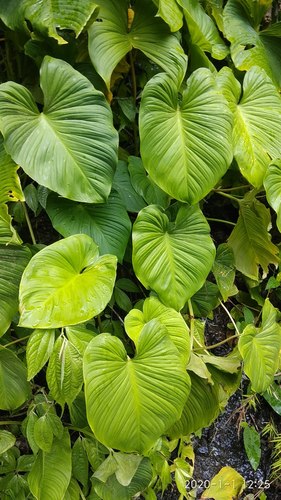
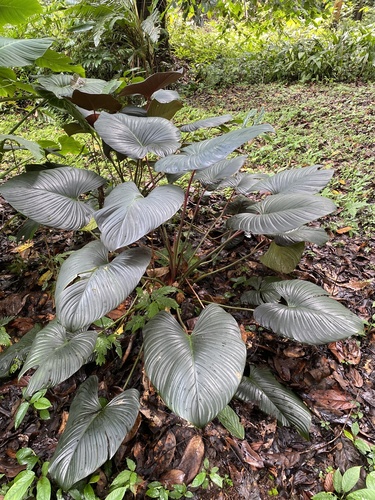
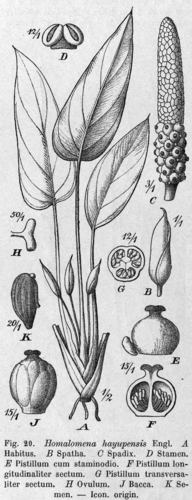
The physical characteristics of Homalomena rubescens are primarily defined by its leaves, which are its most prominent feature. Typically, the plant forms a clump of basal leaves arising from a rhizomatous rootstock. The leaves are often ovate to broadly ovate in shape, with a glossy surface that can range in color from deep green to sometimes exhibiting reddish or purplish undersides, depending on specific ecotypes or cultivation conditions. The texture of the leaves is generally smooth and somewhat leathery. The petioles, or leaf stalks, can be quite long, supporting the broad leaf blades and contributing to the plant's overall lush appearance. Inflorescences are characteristic of the Araceae family, consisting of a spathe and a spadix, though these are often inconspicuous and borne close to the ground, making them less of a prominent ornamental feature compared to the leaves. The flowers themselves are small and typically greenish or yellowish, enclosed within the spathe. Following pollination, small berries may develop. The rhizome is fleshy and creeping, allowing the plant to spread gradually.
Homalomena rubescens is native to the tropical rainforests of Southeast Asia, particularly found in regions such as Malaysia and Indonesia. It thrives in its natural habitat in the understory of dense forests, where it receives filtered sunlight and high humidity. The soil in these environments is typically rich in organic matter, moist, and well-draining. In cultivation, these conditions are replicated to ensure healthy growth. It prefers warm temperatures and consistent moisture, making it well-suited for tropical and subtropical climates or as a houseplant in cooler regions. It requires protection from direct sunlight, which can scorch its leaves, and benefits from a humid atmosphere. Well-draining potting mixes, often incorporating peat moss or coco coir, are ideal for container cultivation.
While Homalomena rubescens is not widely cultivated for agricultural or culinary purposes, its ornamental value is significant. Its striking foliage makes it a popular choice for tropical gardens, shaded borders, and as an indoor plant, adding a touch of lushness and exotic appeal to any setting. Its ecological role in its native habitat involves contributing to ground cover and providing habitat for small invertebrates. There are no widely documented medicinal, culinary, or economic uses for this specific species that are scientifically established.
An interesting characteristic of Homalomena rubescens, common to many aroids, is its ability to adapt to low-light conditions, a crucial adaptation for survival in the shaded understory of its native rainforests. The glossy surface of its leaves may also play a role in water management or deterring herbivores, though specific research on this species is limited. Its rhizomatous growth habit allows it to colonize suitable areas and persist through seasonal changes in its natural environment.
Prefers bright, indirect light. Protect from direct sun, which can cause leaf scorch.
Watering
Keep soil consistently moist, but avoid waterlogging. Allow the top inch of soil to dry slightly between waterings.
Soil
Well-draining potting mix, rich in organic matter.
Temperature
Ideal temperatures range from 18-24°C. Avoid cold drafts and sudden temperature fluctuations.
Habitat
House Plant, Indoor
Fertilizer
Feed with a balanced liquid fertilizer diluted to half strength every 4-6 weeks during the growing season.
Care Requirements
Light
Prefers bright, indirect light. Protect from direct sun, which can cause leaf scorch.
Water
Keep soil consistently moist, but avoid waterlogging. Allow the top inch of soil to dry slightly between waterings.
Soil
Well-draining potting mix, rich in organic matter.
Temperature
Ideal temperatures range from 18-24°C. Avoid cold drafts and sudden temperature fluctuations.
Habitat
House Plant, Indoor
Fertilizer
Feed with a balanced liquid fertilizer diluted to half strength every 4-6 weeks during the growing season.
Plant Overview
Plant Type
Herb
Plant Category
Foliage, Ornamental
Plant Place Type
Pot
Plant Environment
House Plant, Indoor
Lifespan
Perennials
Plant Height
0.3-0.6 m
Spread
0.3-0.6 m
Growth Rate
Moderate
Dormancy
None
Leaf Color
Green
Leaf Type
Simple, Heart-shaped
Flower Size
1-2 cm
Image Gallery
Flowering & Fruiting Cycles
Monthly activity intensity for bloom and fruit across both hemispheres.
Northern hemisphere
Flowering & fruiting calendar
Peak bloom · JulPeak fruit · Aug
FloweringFruiting
Southern hemisphere
Flowering & fruiting calendar
Peak bloom · JunPeak fruit · May
FloweringFruiting
Synonyms
Calla rubescens Roxb.
Chamaecladon rubens W.Bull
Chamaecladon rubescens (Roxb.) Schott
Zantedeschia rubens K.Koch
Taxonomy
kingdomPlantae
divisionTracheophyta
classLiliopsida
orderAlismatales
familyAraceae
genusHomalomena
speciesHomalomena rubescens
Toxicity
Toxic for humans
Yes
Rating: 3/5
Toxic for pets
Yes
Rating: 4/5
Edible
No
Additional Care Tips
Water thoroughly when the top inch of soil feels dry. Reduce watering slightly in cooler months but do not let the soil dry out completely.
Prune to maintain shape and remove any yellow or dead leaves. Pinch back leggy stems to encourage bushier growth. This helps keep the plant looking tidy and healthy.
Easily propagated by stem cuttings or division of rhizomes. Cuttings should be placed in water or moist soil and kept warm and humid until roots form.
Repot every 1-2 years in spring when the plant becomes root-bound. Use a pot that is only slightly larger than the current one, with fresh, well-draining potting mix.
FAQs
Why are my Homalomena rubescens leaves turning yellow?
Yellowing leaves can indicate overwatering, underwatering, or insufficient light. Check soil moisture and ensure the plant receives adequate bright, indirect light.
How often should I water Homalomena rubescens?
Water when the top inch of soil feels dry. This typically means watering once a week, but adjust based on humidity and temperature.
Is Homalomena rubescens toxic to cats and dogs?
Yes, Homalomena rubescens contains calcium oxalate crystals, which can cause oral irritation, drooling, vomiting, and difficulty swallowing if ingested by pets.
What kind of soil is best for Homalomena rubescens?
A well-draining potting mix rich in organic matter is ideal. A mix containing peat moss, perlite, and compost works well.
How can I increase humidity for my Homalomena rubescens?
Increase humidity by misting the leaves regularly, placing the pot on a pebble tray filled with water, or using a room humidifier.