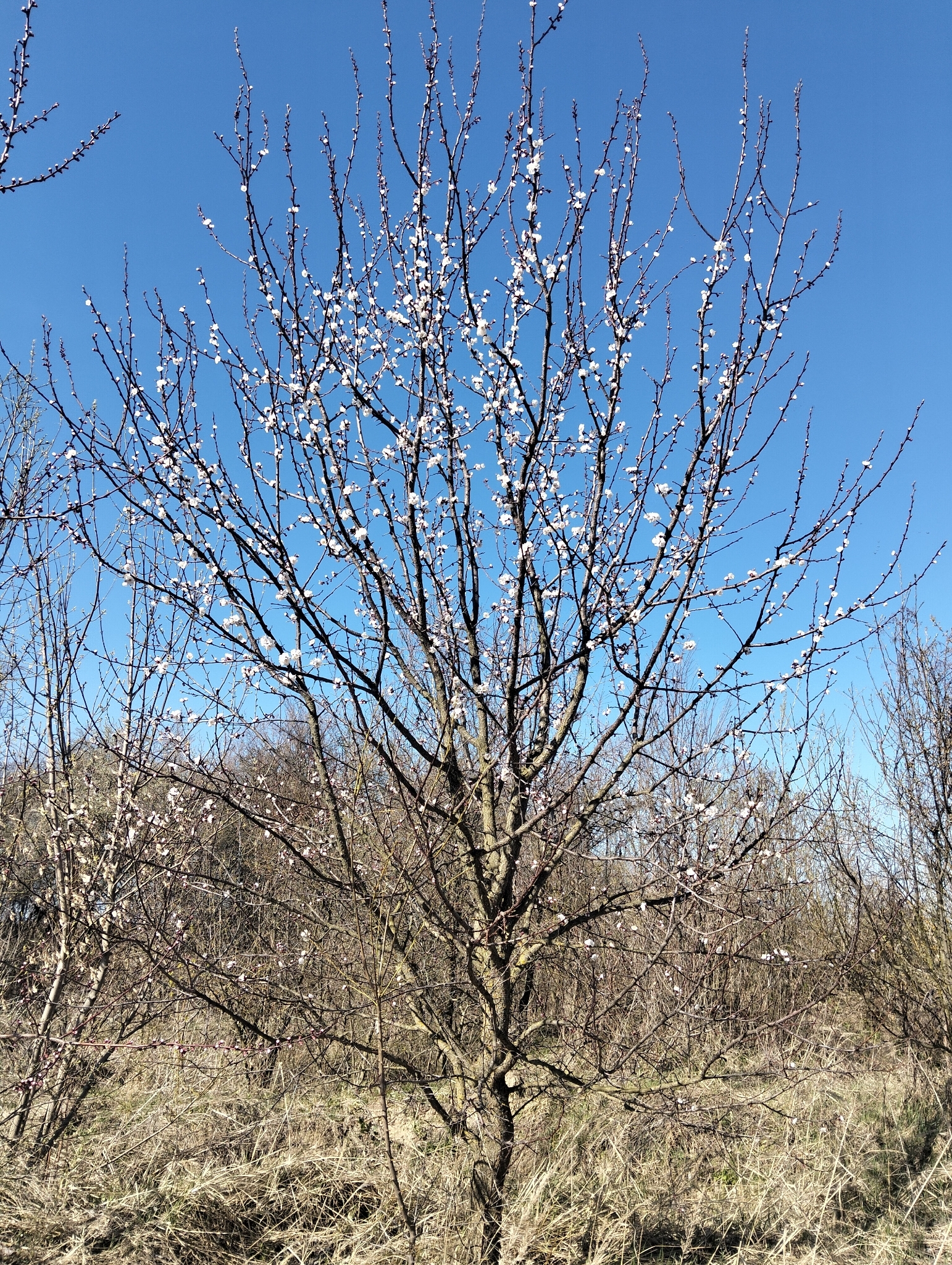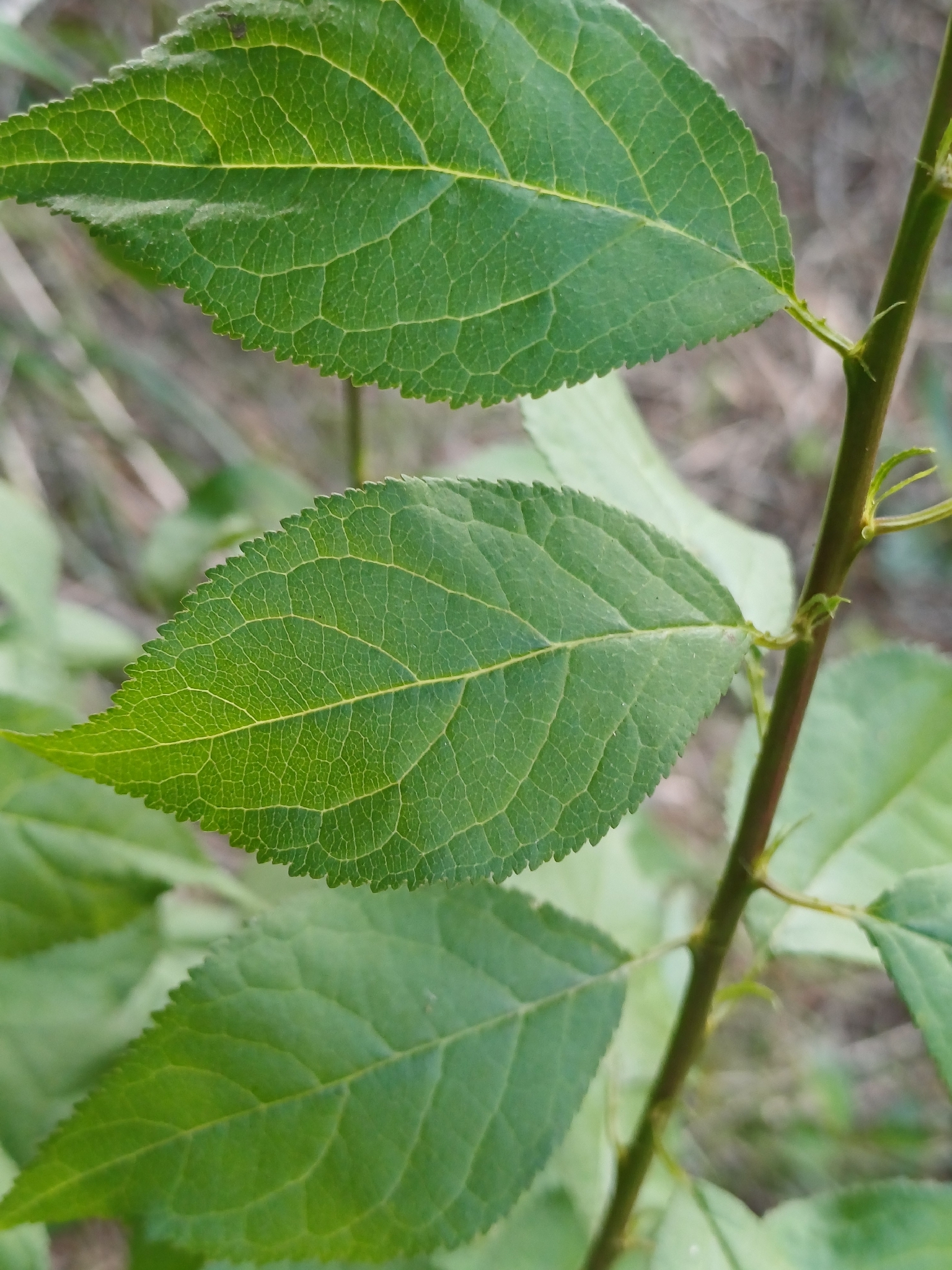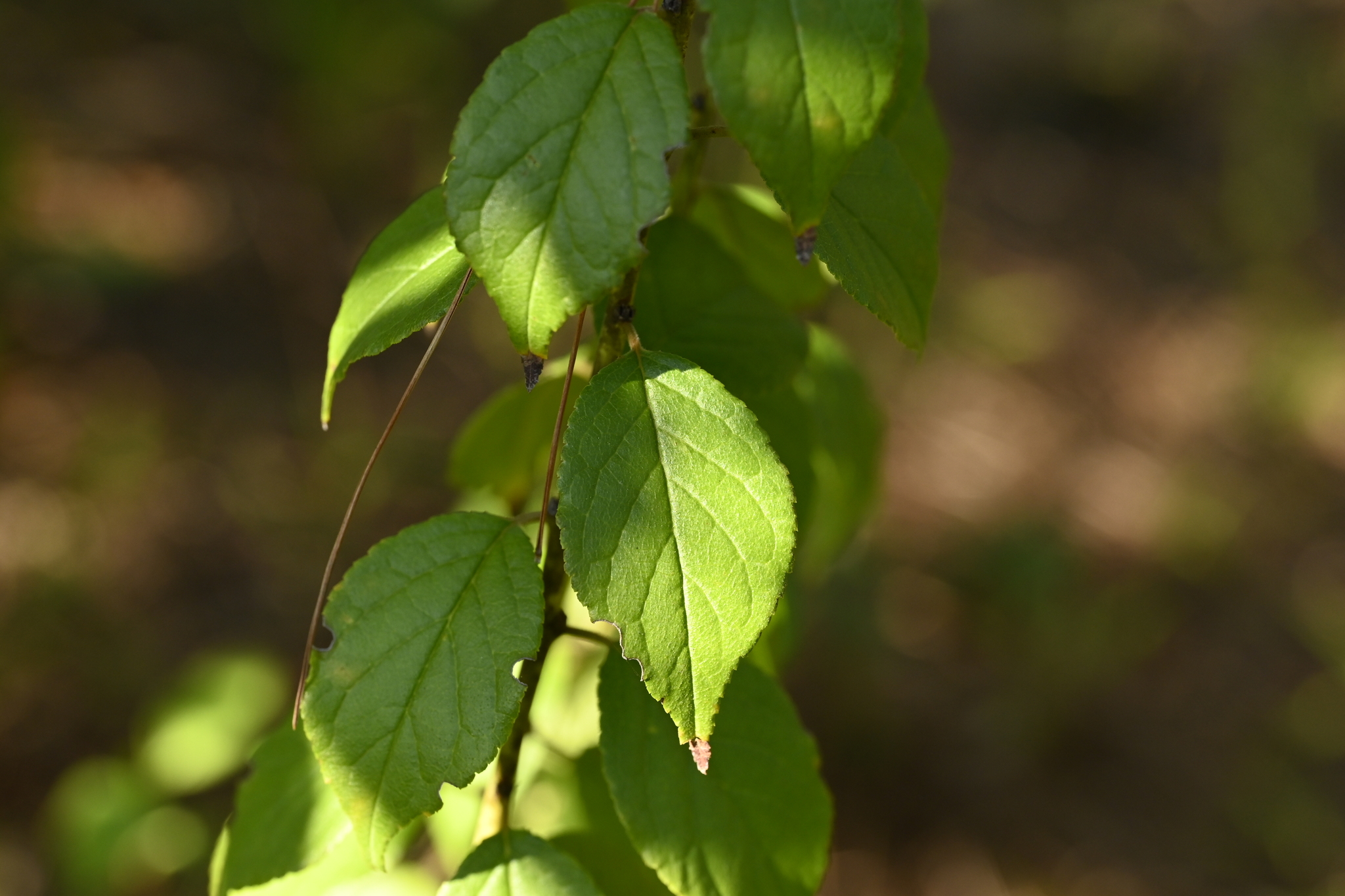
St Lucie Cherry (Prunus mahaleb) is a small, ornamental tree or large shrub producing fragrant white flowers followed by small, bitter black fruits.
Prunus mahaleb, commonly known as the St. Lucie Cherry or Mahaleb Cherry, is a deciduous shrub or small tree belonging to the Rosaceae family. It is recognized for its distinctive aromatic qualities and its role in various traditional uses. This species is native to southern Europe, North Africa, and southwestern Asia, where it typically thrives in open woodlands, scrublands, and along rocky slopes.
Physically, Prunus mahaleb is characterized by its often multi-stemmed growth habit, reaching heights of 2 to 8 meters, though occasionally taller. Its leaves are ovate to elliptical, measuring 3 to 8 cm in length, with serrated margins and a glossy, dark green upper surface. A notable feature of the foliage is its pleasant, somewhat bitter almond-like fragrance when crushed. In spring, the plant produces abundant clusters of small, white, fragrant flowers, typically 1 to 1.5 cm in diameter, each with five petals. These flowers are a significant nectar source for pollinators. Following flowering, small, globose drupes develop. The fruit is initially red, maturing to a dark purple or black when ripe, and is approximately 1 cm in diameter. The flesh of the fruit is thin and often bitter, though it is edible. The bark is smooth and grayish-brown on younger stems, becoming rougher and darker with age. The seeds, contained within a hard stone, are also aromatic and have been historically utilized.
Cultivation requirements for Prunus mahaleb generally favor well-drained soils and full sun to partial shade. It is known for its drought tolerance once established and its adaptability to a range of soil types, including calcareous soils. The plant is hardy in many temperate regions.
Historically, Prunus mahaleb has held significance beyond its ornamental appeal. The aromatic seeds have been ground and used as a spice, particularly in Middle Eastern and Mediterranean cuisines, imparting a distinct flavor to baked goods and beverages. In traditional medicine, various parts of the plant have been employed for their purported properties. Ecologically, it serves as a food source for some wildlife and provides habitat. It is also sometimes used as rootstock for other cherry varieties due to its hardiness and adaptability. An interesting characteristic is the strong, sweet fragrance emitted by both the flowers and the crushed leaves, a trait that contributes to its common name and historical uses.
At-a-glance light, water, soil, and growing conditions from plant data
Light
Full Sun
100% intensity
Prefers at least 6 hours of direct sunlight daily.
Watering
Moderate
50% intensity
Allow soil to dry slightly between waterings. Ensure good drainage.
Soil
Well-drained
50% intensity
Temperature
Moderate
50% intensity
Hardy in USDA zones 4-8. Tolerates a range of temperatures.
Habitat
Outdoor
50% intensity
Fertilizer
Low
25% intensity
Light feeding in spring with balanced fertilizer.
St Lucie Cherry Toxicity
Safety information from plant toxicity data
Toxicity details for St Lucie Cherry
Attribute
Value
Toxic for humans
Yes
2/5 intensity
Toxic for pets
Yes
2/5 intensity
Edible
No
The seeds and leaves contain cyanogenic glycosides, which can be toxic if ingested.
St Lucie Cherry Quick Facts
Key traits and growing stats from plant data
Plant Type
Tree
Plant Category
Fruit
Plant Place Type
Garden, Pot
Plant Environment
Outdoor
Lifespan
Perennial
Plant Height
3-6 m
Spread
3-5 m
Growth Rate
Medium
Dormancy
Yes
Leaf Color
Green
Leaf Type
Simple
Flower Size
1-1.5 cm
Optimal Sunlight Lux
64500
Care guide for St Lucie Cherry
Watering, pruning, propagation, and repotting details from plant data
Water
Water regularly during establishment and dry periods, ensuring good drainage. Allow the top few centimeters of soil to dry out between waterings. Avoid waterlogged conditions, which can lead to root rot.
Mature trees are relatively drought-tolerant.
Pruning
Prune in late winter or early spring before new growth begins. Remove dead, damaged, or crossing branches to maintain the tree's shape and health. Light shaping can be done after flowering to encourage bushier growth.
Avoid heavy pruning.
Propagation
Propagate by seed, which requires stratification (a period of cold treatment) to break dormancy. Semi-hardwood cuttings taken in summer can also be rooted under mist with rooting hormone.
Grafting is also a common method for specific cultivars.
Repotting
Repot young trees every 2-3 years in early spring before new growth starts. Use a well-draining potting mix.
For mature trees, repotting is generally not necessary unless they are container-grown and showing signs of being root-bound, such as slowed growth.
Identify plants like this with ePlant
Snap a photo to get care tips and match similar species on the go.
Monthly activity intensity for bloom and fruit across both hemispheres.
Northern hemisphere
Flowering & fruiting calendar
Peak bloom · MayPeak fruit · Aug
FloweringFruiting
Southern hemisphere
Flowering & fruiting calendar
Peak bloom · NovPeak fruit · Jul
FloweringFruiting
Image Gallery
Photos of St Lucie Cherry (Prunus mahaleb)
St Lucie Cherry Names & Synonyms
Common names and botanical synonyms
Common Names
Cherry Tree
Gandhi Cherry
Mahaleb Cherry
Perfumed Cherry
Rock Cherry
Saint Lucie Cherry
St Lucie Cherry
St Lucie's Cherry
St. Lucie Cherry
St. Lucie's Cherry
Synonyms
Cerasus mahaleb (L.) Mill.
Mahaleb vulgaris Takht.
Padellus mahaleb (L.) Vassilcz.
Padus mahaleb (L.) Borkh.
St Lucie Cherry Taxonomy
Botanical classification
Taxonomic classification of St Lucie Cherry
Rank
Name
kingdom
Plantae
division
Tracheophyta
class
Magnoliopsida
order
Rosales
family
Rosaceae
genus
Prunus
species
Prunus mahaleb
St Lucie Cherry FAQs
Answers based on plant encyclopedia data
What are the fruit of Prunus mahaleb used for?
The small, black fruits of Prunus mahaleb are edible but are very bitter. They are sometimes used for flavoring liqueurs, in traditional medicines, or as a component in jams and jellies, often combined with sweeter fruits.
Is Prunus mahaleb drought tolerant?
Yes, Prunus mahaleb is known for its good drought tolerance once established, making it suitable for drier garden situations.
What kind of soil does St Lucie Cherry prefer?
St Lucie Cherry prefers well-drained soils and can tolerate a range of soil types, including alkaline conditions. It does not perform well in waterlogged soils.
When does Prunus mahaleb bloom?
Prunus mahaleb typically blooms in spring, producing clusters of fragrant, white flowers.
Can Prunus mahaleb be used as a rootstock?
Yes, Prunus mahaleb is commonly used as a rootstock for various sweet and sour cherry (Prunus avium and Prunus cerasus) cultivars, particularly in drier climates due to its vigor and adaptability.