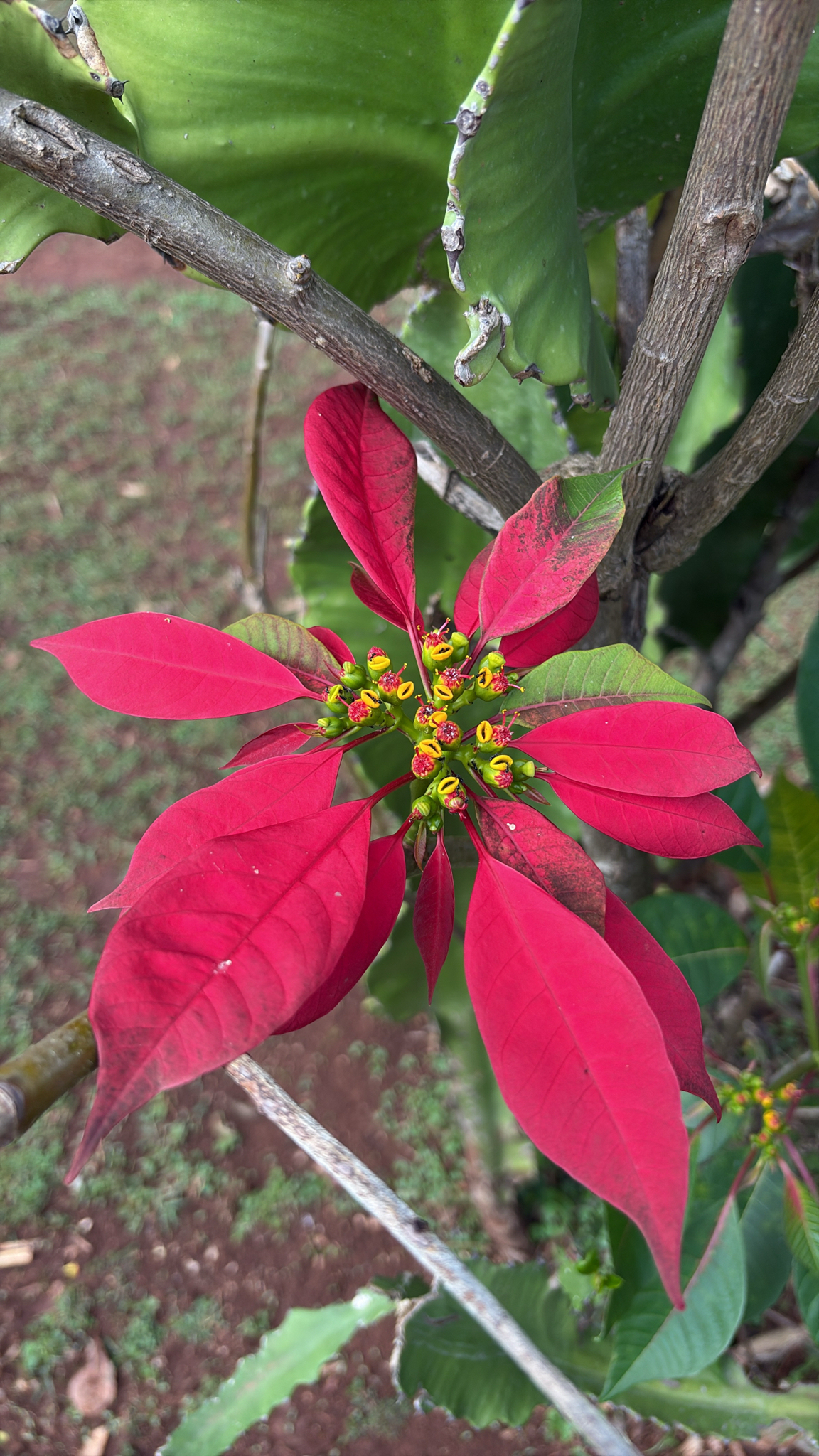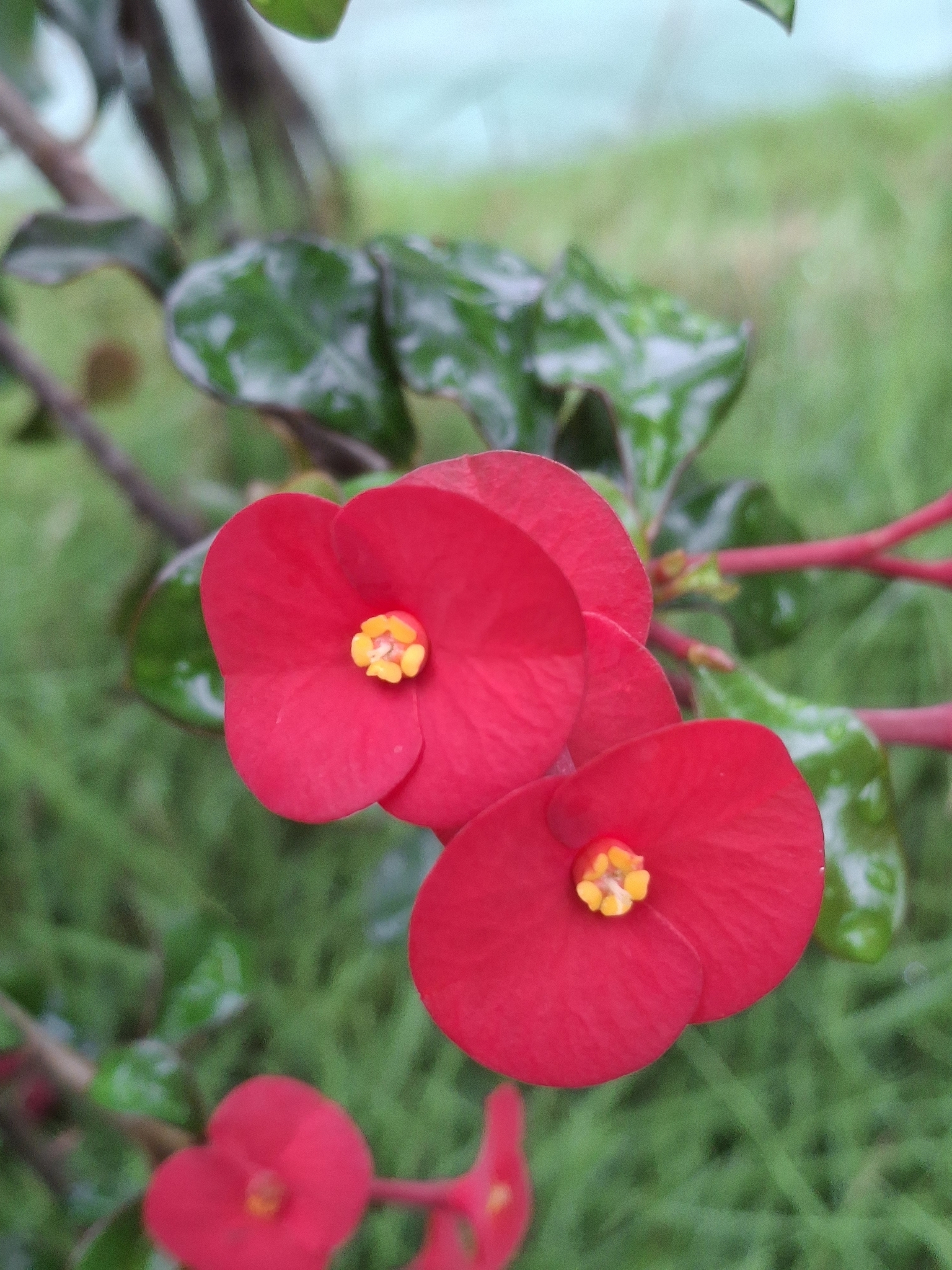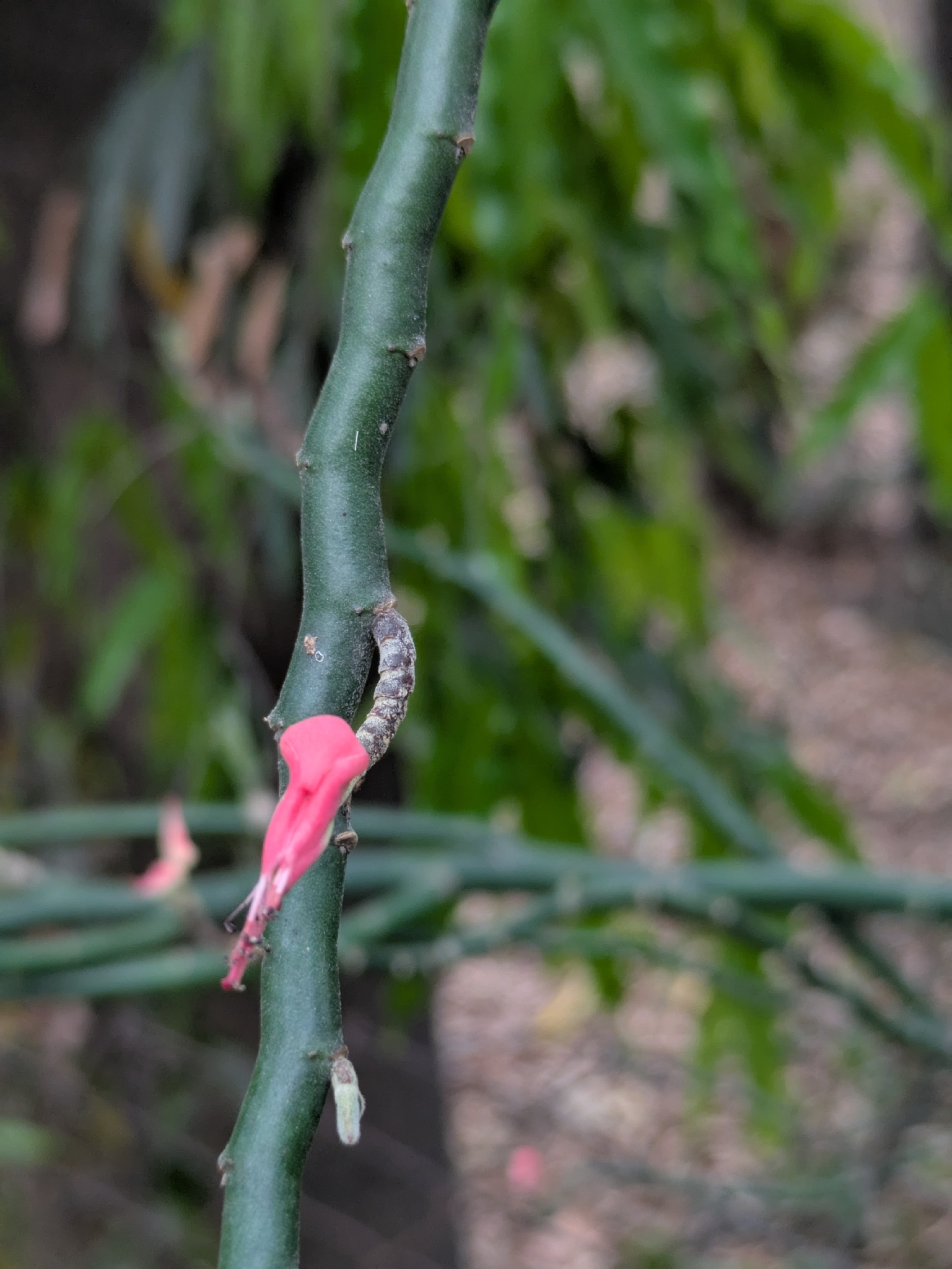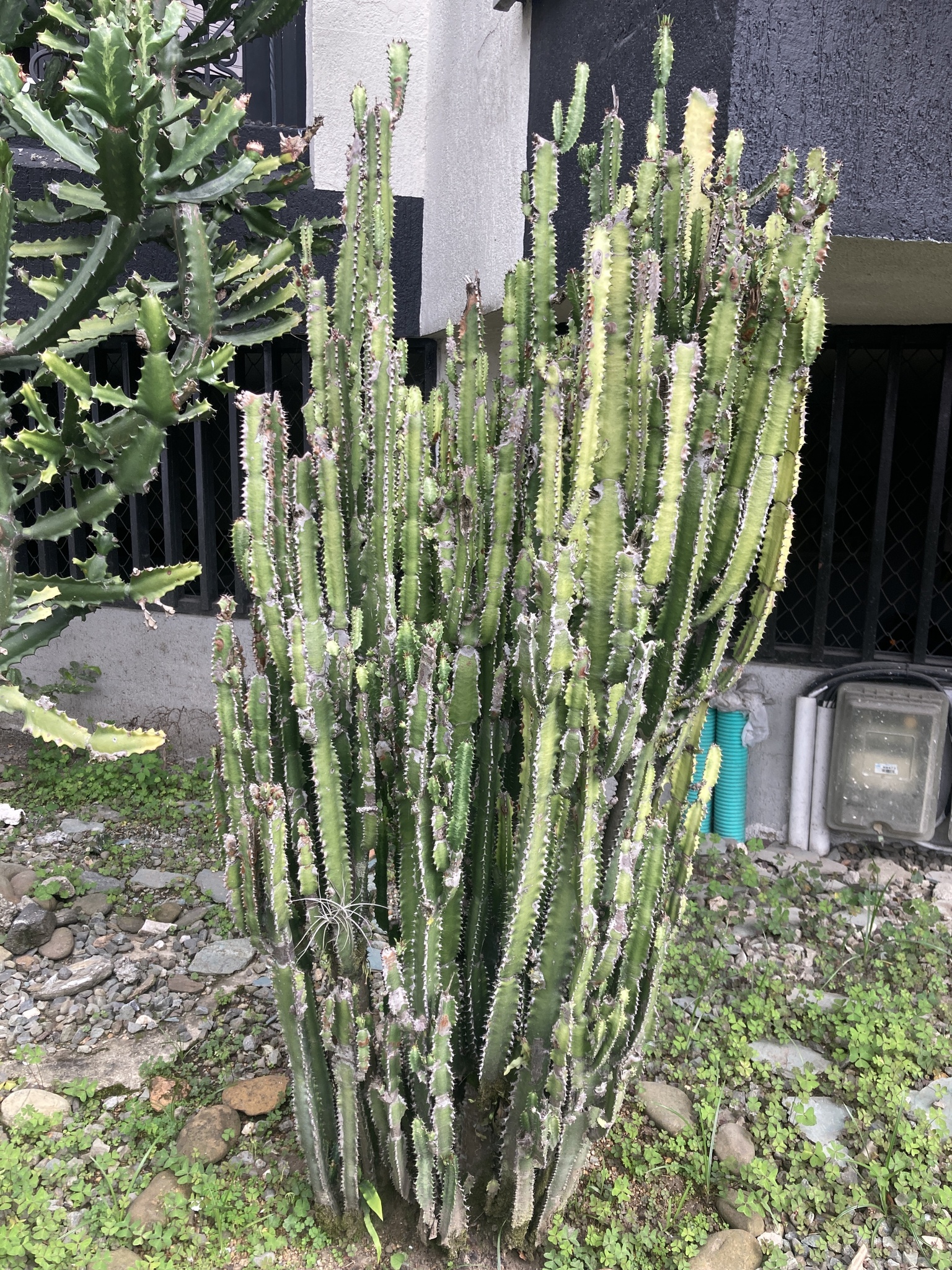
Myrtle Spurge (Euphorbia myrsinites)

Myrtle Spurge (Euphorbia myrsinites) is a low-growing, evergreen succulent groundcover with attractive blue-green foliage and yellow spring flowers.

Euphorbia myrsinites, commonly known as Myrtle Spurge, is a distinctive succulent perennial that adds a unique architectural element to gardens. Its significance lies in its drought tolerance and striking appearance, making it a valuable plant for xeriscaping and rock gardens. This plant exhibits a prostrate, spreading growth habit, forming dense mats that can reach up to two feet in width but typically remain under a foot in height. The stems are fleshy and succulent, often tinged with red or purple, and are densely covered with spirally arranged leaves. The leaves themselves are ovate to obovate, fleshy, and glaucous, appearing bluish-green. They are arranged in a tight, imbricate fashion along the stems, resembling those of myrtle, which contributes to its common name. The inflorescences, known as cyathia, are characteristic of the Euphorbia genus. These are not true flowers but rather modified structures. In Euphorbia myrsinites, the cyathia are borne in terminal cymes, typically appearing in late spring to early summer. They are small and yellowish-green, subtended by prominent, heart-shaped, yellowish bracts that are often mistaken for petals. Following flowering, small, three-lobed capsules develop, which split open to release small seeds. The root system is typically fibrous and well-developed, contributing to its stability and drought resistance. Euphorbia myrsinites is native to southeastern Europe and southwestern Asia, with its natural distribution encompassing regions from the Balkans to Turkey and Iran. It thrives in arid and semi-arid environments, typically found growing in rocky, well-drained soils, often on slopes and in open, sunny habitats. Its cultivation requirements are straightforward, emphasizing excellent drainage and ample sunlight. It is highly drought-tolerant once established and prefers lean, gritty soils, making it an ideal candidate for rock gardens, gravel beds, and containers where waterlogging can be avoided. It is hardy in USDA zones 5-9, tolerating a range of temperatures but requiring protection from prolonged freezing in colder climates. The primary importance of Euphorbia myrsinites is ornamental, valued for its architectural form, attractive foliage, and long-lasting spring blooms. Its succulent nature makes it a low-maintenance choice for water-wise gardening. While some Euphorbia species possess medicinal properties or are used in traditional remedies, specific, scientifically documented uses for Euphorbia myrsinites are not widely established or recognized in mainstream ethnobotany or pharmacology. It is important to note that the milky white sap exuded from the stems and leaves of Euphorbia species, including Euphorbia myrsinites, can be a skin irritant and is toxic if ingested, necessitating caution during handling. A notable characteristic of Euphorbia myrsinites is its remarkable adaptation to arid conditions. The fleshy leaves and stems store water, allowing the plant to survive long periods of drought. The glaucous coating on the leaves may also serve to reduce water loss by reflecting sunlight and minimizing transpiration. The dense, mat-forming habit helps to shade the soil, further conserving moisture and suppressing weed growth. The cyathia, with their bright bracts, are adapted to attract pollinators, ensuring successful reproduction in its native, often challenging, environment.

Above information is sourced from Wikipedia

Sunlight

Full Sun

Watering

Drought Tolerant

Soil

Well-drained, sandy, or gravelly soil

Temperature

Adaptable

Fertilizer

Low Feeding

Care Requirements

Light

Full Sun

Prefers at least 6 hours of direct sunlight daily for best growth and flowering.

Watering

Drought Tolerant

Allow soil to dry completely between waterings. Reduce significantly in winter.

Soil

Well-drained, sandy, or gravelly soil

Temperature

Adaptable

Tolerates a wide range of temperatures but prefers moderate warmth. Protect from hard frost.

Fertilizer

Low Feeding

Fertilize sparingly in spring with a diluted balanced fertilizer. Avoid over-fertilization.

Plant Overview

Plant Type

Shrub, Succulent

Plant Category

Ornamental

Plant Place Type

Garden, Pot

Lifespan

Perennial

Plant Height

0.1-0.3 m

Spread

0.3-0.6 m

Growth Rate

Moderate

Dormancy

Evergreen

Leaf Color

Glaucous green

Leaf Type

Succulent

Flower Size

Small

Optimal Sunlight Lux

75000

Weed Status

Yes

Image Gallery

Flowering & Fruiting Cycles

Monthly activity intensity for bloom and fruit across both hemispheres.

Northern hemisphere

Flowering & fruiting calendar

Peak bloom · MayPeak fruit · Jun
FloweringFruiting
02468JanFebMarAprMayJunJulAugSepOctNovDecActivity intensityMonths87
Southern hemisphere

Flowering & fruiting calendar

Peak bloom · AugPeak fruit · Sep
FloweringFruiting
02468JanFebMarAprMayJunJulAugSepOctNovDecActivity intensityMonths87
Synonyms
Endoisila myrsinites (L.) Raf.
Euphorbion myrsinitum (L.) St.-Lag.
Galarhoeus myrsinites (L.) Haw.
Murtekias myrsinites (L.) Raf.
Tithymalus myrsinites (L.) Hill
Taxonomy
  • kingdomPlantae
  • divisionTracheophyta
  • classMagnoliopsida
  • orderMalpighiales
  • familyEuphorbiaceae
  • genusEuphorbia
  • speciesEuphorbia myrsinites
Toxicity

Toxic for humans

Yes

Rating: 4/5

Toxic for pets

Yes

Rating: 4/5

Edible

No

Sap is an irritant and can cause blistering. Ingestion can cause gastrointestinal upset.

Additional Care Tips

Allow soil to dry out completely between waterings. Overwatering is the most common cause of root rot. Water thoroughly when dry, ensuring good drainage. Reduce watering significantly during the dormant winter months, especially in cooler climates.

Prune after flowering to maintain shape and remove spent flower stalks. Cut back stems to the desired length to encourage bushier growth. Remove any dead or damaged stems at any time. Be cautious of the milky sap, which can be irritating.

Propagate from seed sown in spring, or from stem cuttings taken in late spring or early summer. Allow cuttings to callus for a few days before planting in well-draining soil. Seeds may require stratification. Use gloves when handling sap.

Repot only when necessary, typically every 2-3 years, or when the plant becomes root-bound. Use a well-draining potting mix, such as a cactus or succulent blend. Repot in spring, before new growth begins. Ensure the new pot has drainage holes.

FAQs

Is Myrtle Spurge invasive?

In some regions, Myrtle Spurge can be invasive due to its ability to spread easily and outcompete native plants.

What are the soil requirements for Euphorbia myrsinites?

It thrives in well-drained soil, preferably lean or sandy. It does not tolerate waterlogged conditions.

How much sun does Myrtle Spurge need?

Full sun is ideal for optimal growth and flowering.

Is the sap of Myrtle Spurge dangerous?

The milky sap can cause skin irritation or a rash in some individuals. Wear gloves when handling the plant.

How do I propagate Myrtle Spurge?

Propagation is typically done by seed or stem cuttings. Seeds can be sown in spring, and cuttings can be taken in late spring or early summer.