Hoary Rock-Rose (Cistus creticus) – Benefits, Care & Growing Guide | ePlant AI
Hoary Rock-Rose (Cistus creticus)
Cretan Rockrose
Grey Cistus
Hoary Rock-Rose
Pink Rockrose
White-Leaved Rockrose
Hoary Rock-Rose (Cistus creticus) is a Mediterranean shrub with showy pink to purple flowers and aromatic foliage, thriving in hot, dry conditions.
Cistus creticus, commonly known as the Hoary Rock-Rose, is a captivating evergreen shrub native to the Mediterranean region. This species is a member of the Cistaceae family, often referred to as the rock-rose family, and is recognized for its attractive foliage and ephemeral, yet vibrant, flowers. Its significance lies in its ecological role within its native arid and rocky habitats and its historical use in traditional practices.
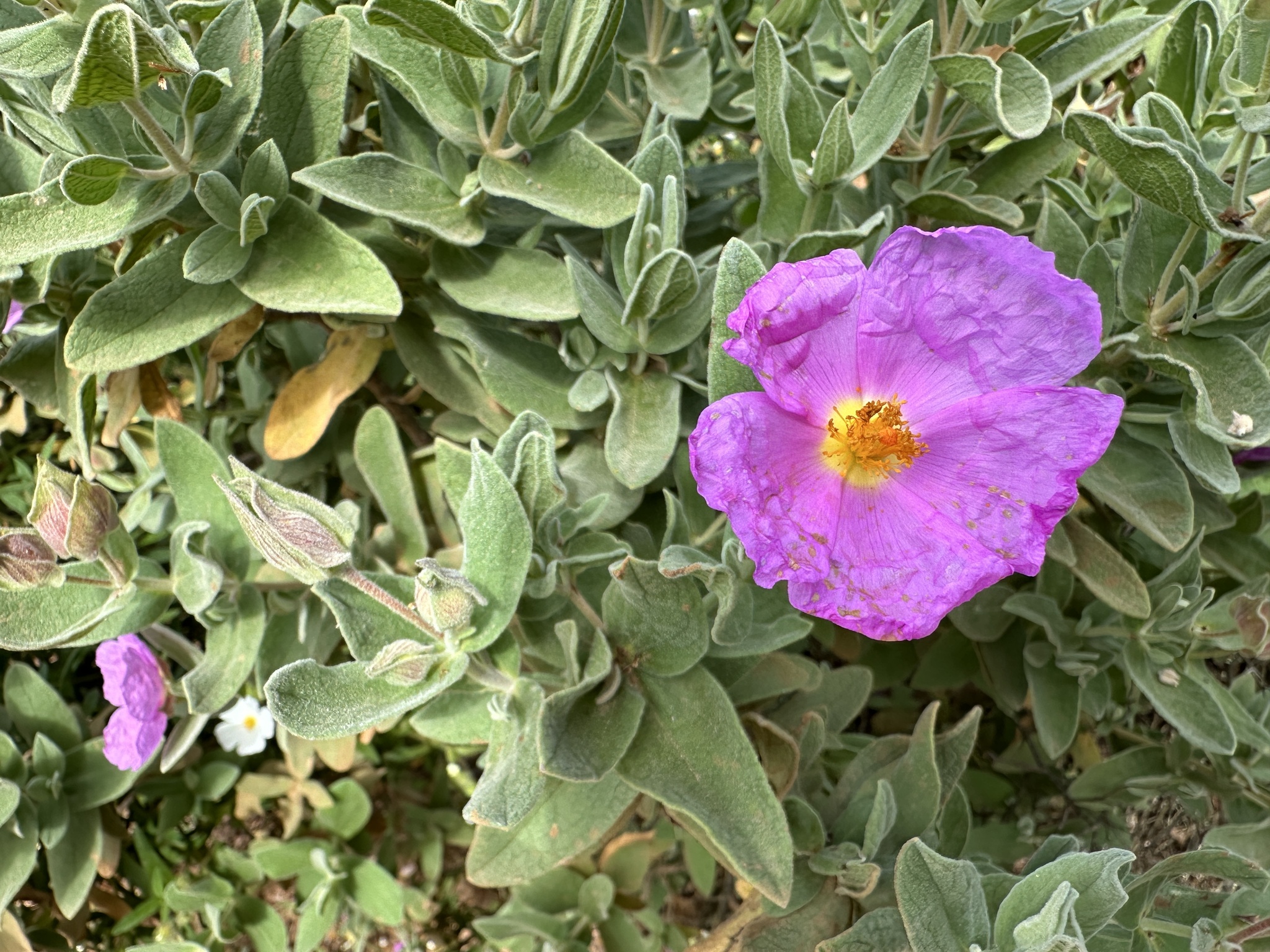
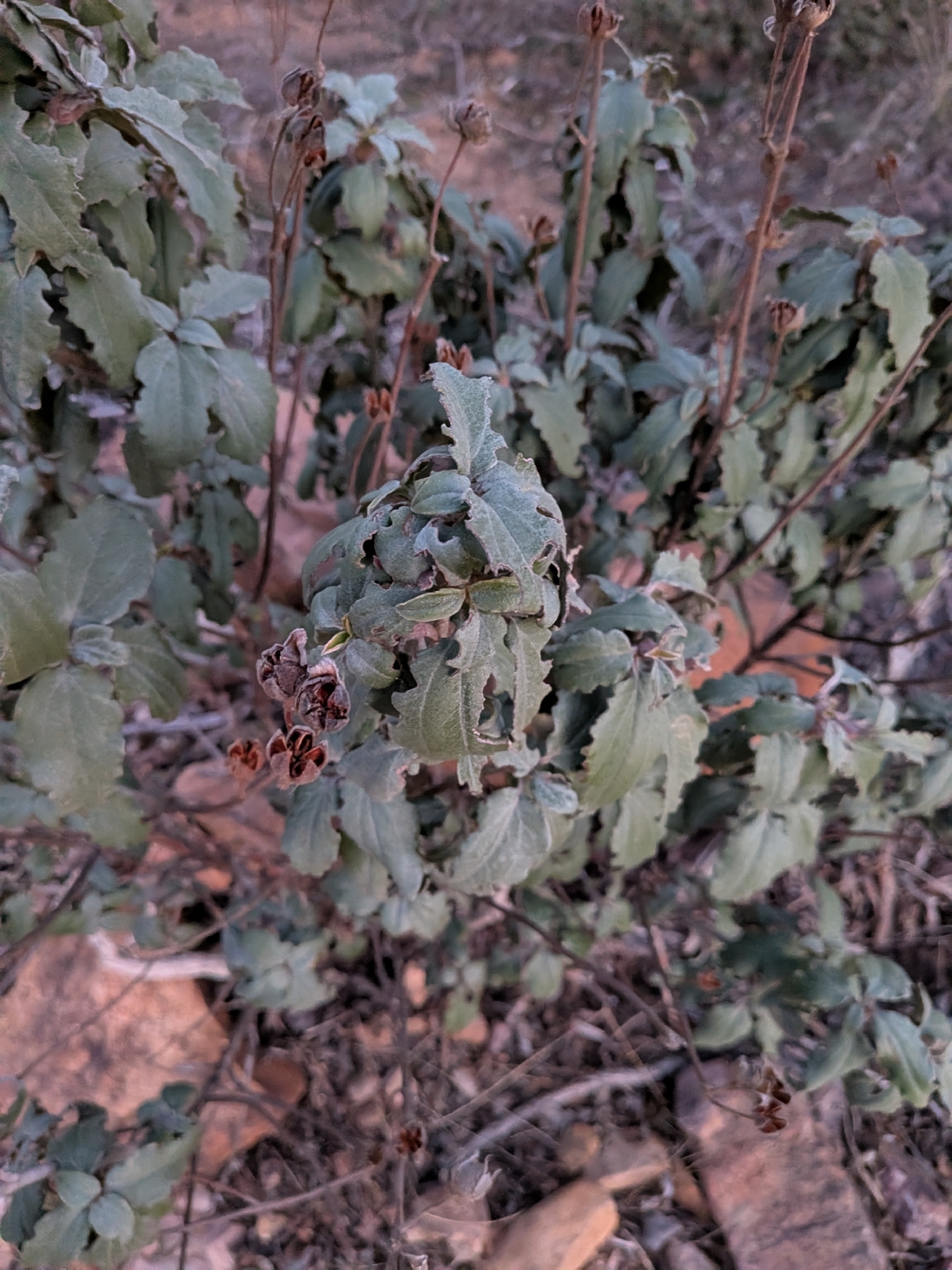
The Hoary Rock-Rose typically presents a bushy, spreading growth habit, reaching a mature height and spread of approximately 1 to 1.5 meters. Its most distinctive feature is its foliage. The leaves are ovate to elliptical, measuring around 3 to 7 centimeters in length, and are covered in a dense layer of grayish-white hairs, giving the plant its characteristic "hoary" appearance. This indumentum helps to reduce water loss and reflect intense sunlight, adaptations crucial for survival in its native environment. The stems are often somewhat woody and can become gnarled with age.
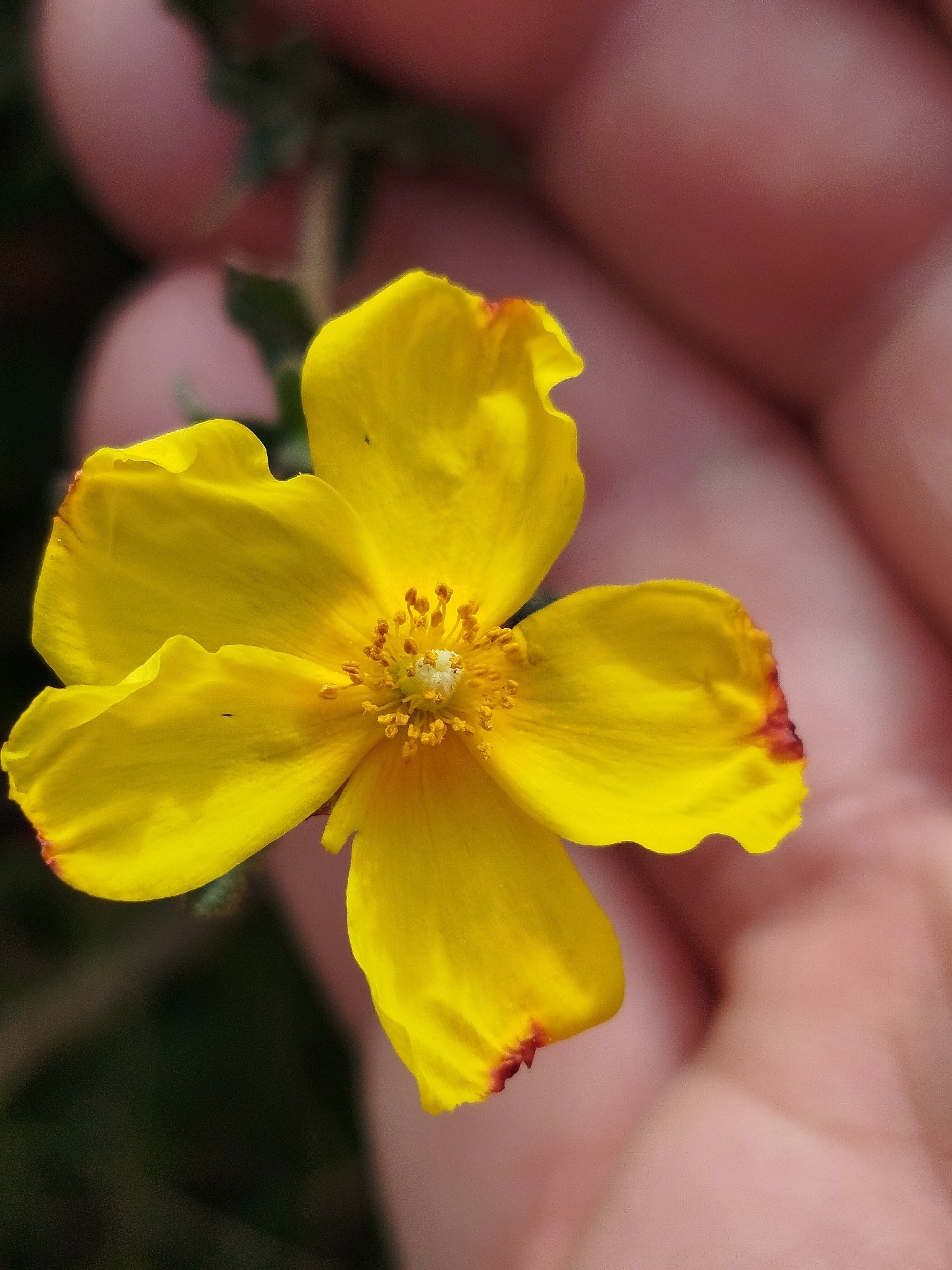
The flowers of Cistus creticus are borne singly or in small clusters at the tips of branches. They are typically large, reaching up to 8 centimeters in diameter, and possess five delicate, crinkled petals. The color of the petals can vary, commonly appearing in shades of pink to rose-pink, often with a darker blotch at the base of each petal. These blossoms are short-lived, usually lasting only a day, but their profusion during the flowering season, which typically occurs from late spring through summer, creates a spectacular display. Following flowering, the plant produces small, capsule-like fruits that split open to release numerous tiny seeds.
Cistus creticus is indigenous to the eastern Mediterranean, with its natural distribution encompassing parts of Greece, Turkey, and Cyprus. It thrives in dry, well-drained soils and is commonly found in garrigue, maquis shrubland, rocky slopes, and open woodlands. This species is remarkably drought-tolerant once established and prefers full sun exposure. It is well-suited to Mediterranean climates and can withstand coastal conditions. In cultivation, it is valued for its resilience and low maintenance requirements, provided it is planted in a location with excellent drainage and ample sunlight.
Historically, Cistus species, including Cistus creticus, have been associated with the production of labdanum, a resin obtained from the glandular hairs of the plant. This aromatic resin has been used for centuries in perfumery, incense, and traditional medicine. While specific medicinal uses for Cistus creticus are documented in ethnobotanical records, scientific validation of these applications requires careful consideration of peer-reviewed research. The plant's ability to thrive in harsh, nutrient-poor conditions highlights its ecological resilience and its role in stabilizing soil on rocky terrains. Its ornamental appeal, characterized by its silvery foliage and showy pink flowers, makes it a popular choice for xeriscaping and Mediterranean-style gardens.
Requires full sun for optimal flowering and growth.
Watering
Drought tolerant once established. Water sparingly.
Soil
Well-drained soil is crucial; prefers sandy or gravelly conditions.
Temperature
Prefers warm temperatures.
Habitat
Outdoor, Greenhouse
Fertilizer
Low feeder. Fertilize sparingly.
Care Requirements
Light
Requires full sun for optimal flowering and growth.
At least 6-8 hours of direct sunlight daily.
Water
Drought tolerant once established. Water sparingly.
Allow soil to dry out between waterings.
Soil
Well-drained soil is crucial; prefers sandy or gravelly conditions.
Temperature
Prefers warm temperatures.
Ideal growing range is 15-25°C.
Habitat
Outdoor, Greenhouse
Fertilizer
Low feeder. Fertilize sparingly.
Light feeding in early spring if needed.
Plant Overview
Plant Type
Shrub
Plant Category
Flowering, Ornamental
Plant Place Type
Ground, Garden, Pot
Plant Environment
Outdoor, Greenhouse
Lifespan
Perennials
Plant Height
0.5-1 m
Spread
1-1.5 m
Growth Rate
Moderate
Dormancy
Semi-dormant in winter
Leaf Color
Green, Gray-Green
Leaf Type
Simple
Flower Size
5-7 cm
Image Gallery
Flowering & Fruiting Cycles
Monthly activity intensity for bloom and fruit across both hemispheres.
Northern hemisphere
Flowering & fruiting calendar
Peak bloom · JunPeak fruit · Aug
FloweringFruiting
Southern hemisphere
Flowering & fruiting calendar
Peak bloom · MayPeak fruit · Jul
FloweringFruiting
Taxonomy
kingdomPlantae
divisionTracheophyta
classMagnoliopsida
orderMalvales
familyCistaceae
genusCistus
speciesCistus creticus
Toxicity
Toxic for humans
No
Rating: 0/5
Toxic for pets
No
Rating: 0/5
Edible
No
Additional Care Tips
Water regularly during the first year to establish roots. Once mature, it is highly drought-tolerant and requires minimal watering, especially in its native Mediterranean climate. Allow the soil to dry out completely between waterings.
Prune lightly after flowering to maintain shape and encourage bushier growth. Remove dead or damaged branches anytime. Avoid heavy pruning, as it can stimulate excessive vegetative growth at the expense of flowers.
Easily propagated from semi-hardwood cuttings taken in summer or from seed sown in autumn or spring. Seeds may require stratification. Cuttings root best in well-draining compost with bottom heat.
Young plants may need repotting annually or biennially into slightly larger pots. Mature plants in the ground rarely need repotting. Use a well-draining potting mix, such as a cactus or succulent mix, for container-grown specimens.
FAQs
How often should I water Cistus creticus?
Water regularly during the first year to establish roots. Once mature, it is very drought-tolerant and requires minimal watering, only when the soil is completely dry.
What kind of soil does Hoary Rock-Rose prefer?
It thrives in well-drained soil, ideally sandy, gravelly, or rocky conditions. Poor drainage is detrimental to its health.
When is the best time to prune Cistus creticus?
Prune lightly immediately after flowering to shape the plant and encourage a bushier habit. Avoid heavy pruning.
Can Cistus creticus be grown in containers?
Yes, it can be grown in containers, provided they have excellent drainage. Use a gritty, well-draining potting mix and avoid overwatering.
Is Cistus creticus suitable for hot, dry climates?
Absolutely. Cistus creticus is native to the Mediterranean region and is exceptionally well-suited for hot, dry, sunny conditions and is highly drought-tolerant.