Milky Mangrove (Excoecaria agallocha) – Care, Growing Guide & Benefits | ePlant AI
Milky Mangrove (Excoecaria agallocha)
Blind-Your-Eye
Blind-Your-Eye Mangrove
Blind-Your-Eyes Tree
Blind-Your-Eyes-Tree
Blindingtree
Excoecaria agallocha is a mangrove plant common in tropical and subtropical coastal areas. Its toxic white latex causes severe irritation and temporary blindness upon.
Excoecaria agallocha, commonly known as the milky mangrove, is a species of flowering plant in the spurge family, Euphorbiaceae. It is a significant component of mangrove ecosystems in its native range, playing a crucial role in coastal stabilization and providing habitat for diverse wildlife. This species is characterized by its distinctive milky latex, which is a notable feature of many plants in the Euphorbiaceae family.
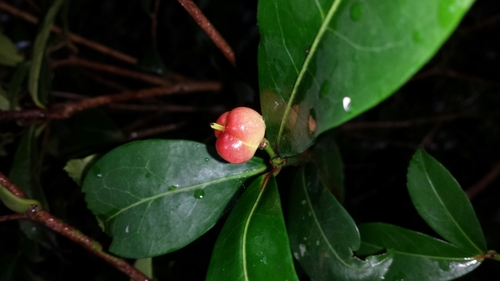
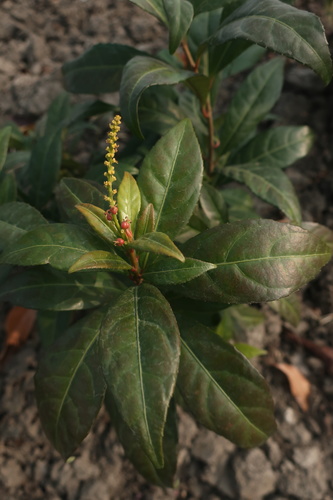
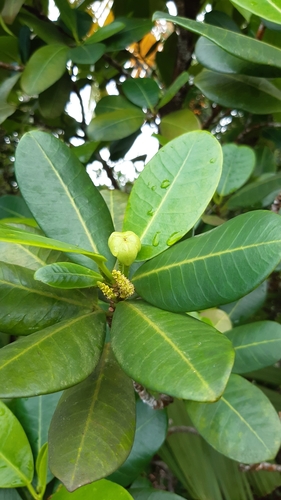
The milky mangrove is a shrub or small tree that typically grows to a height of 1 to 8 meters, though it can occasionally reach up to 15 meters in favorable conditions. Its growth habit is often bushy, with a dense canopy. The leaves are simple, opposite, and ovate to elliptic in shape, measuring about 5 to 12 centimeters in length and 2 to 5 centimeters in width. They are glossy green, with a pointed apex and a rounded or cuneate base, and possess a leathery texture. The margins of the leaves are entire or finely serrated. When the leaves or stems are broken, they exude a copious amount of white, milky latex, which is characteristic of the species and gives it its common name. The flowers are small and inconspicuous, borne in axillary or terminal racemes. They are unisexual, with male and female flowers on the same plant (monoecious). The fruits are small, globose capsules, about 5 to 7 millimeters in diameter, which split open when mature to release the seeds.
Excoecaria agallocha is widely distributed along the coastlines of tropical and subtropical regions of the Indo-Pacific. Its native range extends from East Africa and Madagascar, across the Indian subcontinent and Southeast Asia, to northern Australia and the Pacific Islands. It thrives in intertidal zones, typically found in brackish or saltwater environments, often forming dense stands in the seaward fringe of mangrove forests or along tidal creeks and estuaries. It prefers sandy or muddy substrates and is tolerant of saline conditions. Cultivation requirements outside its native range are not widely documented, as it is primarily a wild species of ecological importance rather than a cultivated ornamental or agricultural crop.
The milky mangrove holds ecological significance as a primary producer and habitat provider within mangrove ecosystems. Its dense root systems help to trap sediment, stabilize shorelines, and protect coastlines from erosion and storm surges. The plant provides shelter and food for a variety of marine and terrestrial organisms, including fish, crustaceans, birds, and insects. While the milky latex is a notable characteristic, it is also known to be toxic and can cause irritation to skin and eyes, a characteristic shared by other members of the Excoecaria genus. Historically, some indigenous communities have utilized parts of the plant for medicinal purposes, though such uses are not universally documented or scientifically validated for widespread application. Its economic importance is primarily linked to its role in maintaining healthy coastal environments, which indirectly support fisheries and other coastal industries.
An interesting adaptation of Excoecaria agallocha is its ability to thrive in the challenging, waterlogged, and saline conditions of mangrove environments. The plant's tolerance to salt and its capacity to grow in anaerobic soils are key to its survival and ecological success. The dispersal of its seeds is often facilitated by water, allowing it to colonize new areas along the coast.