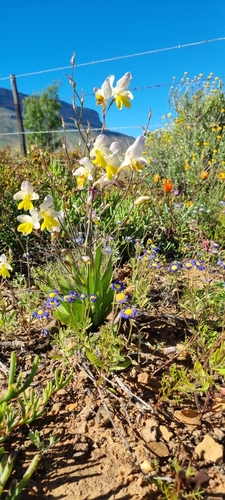
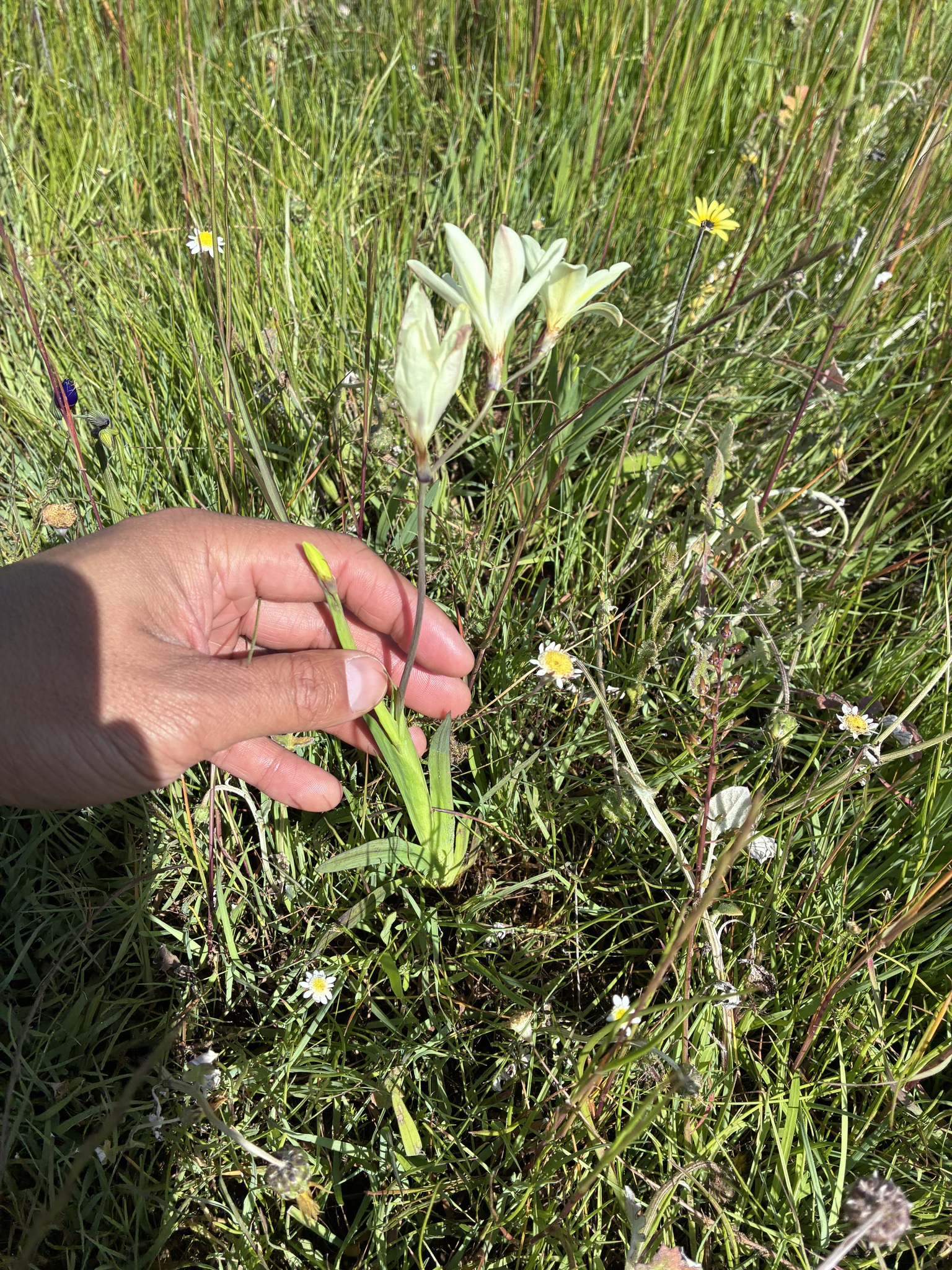
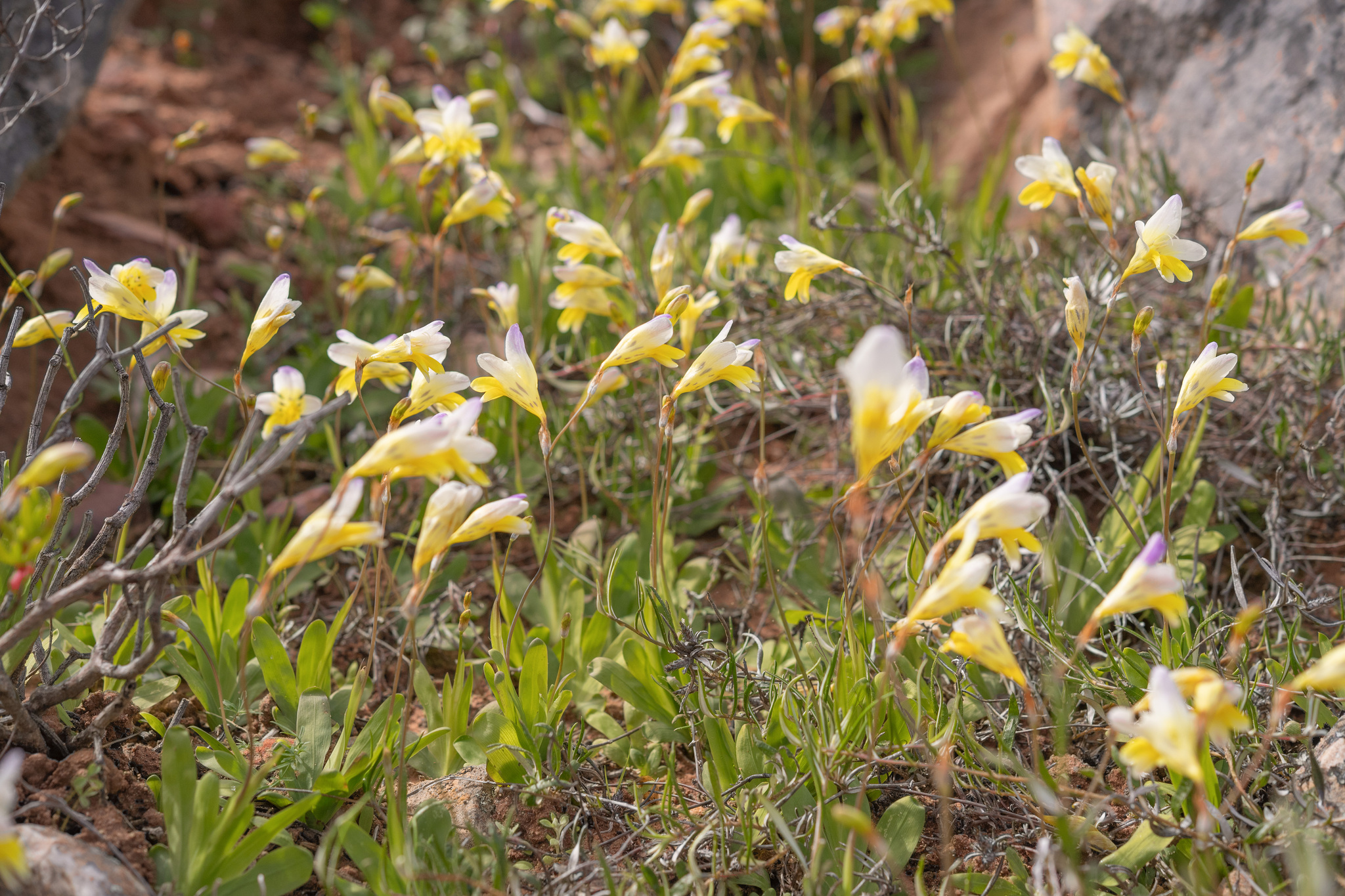
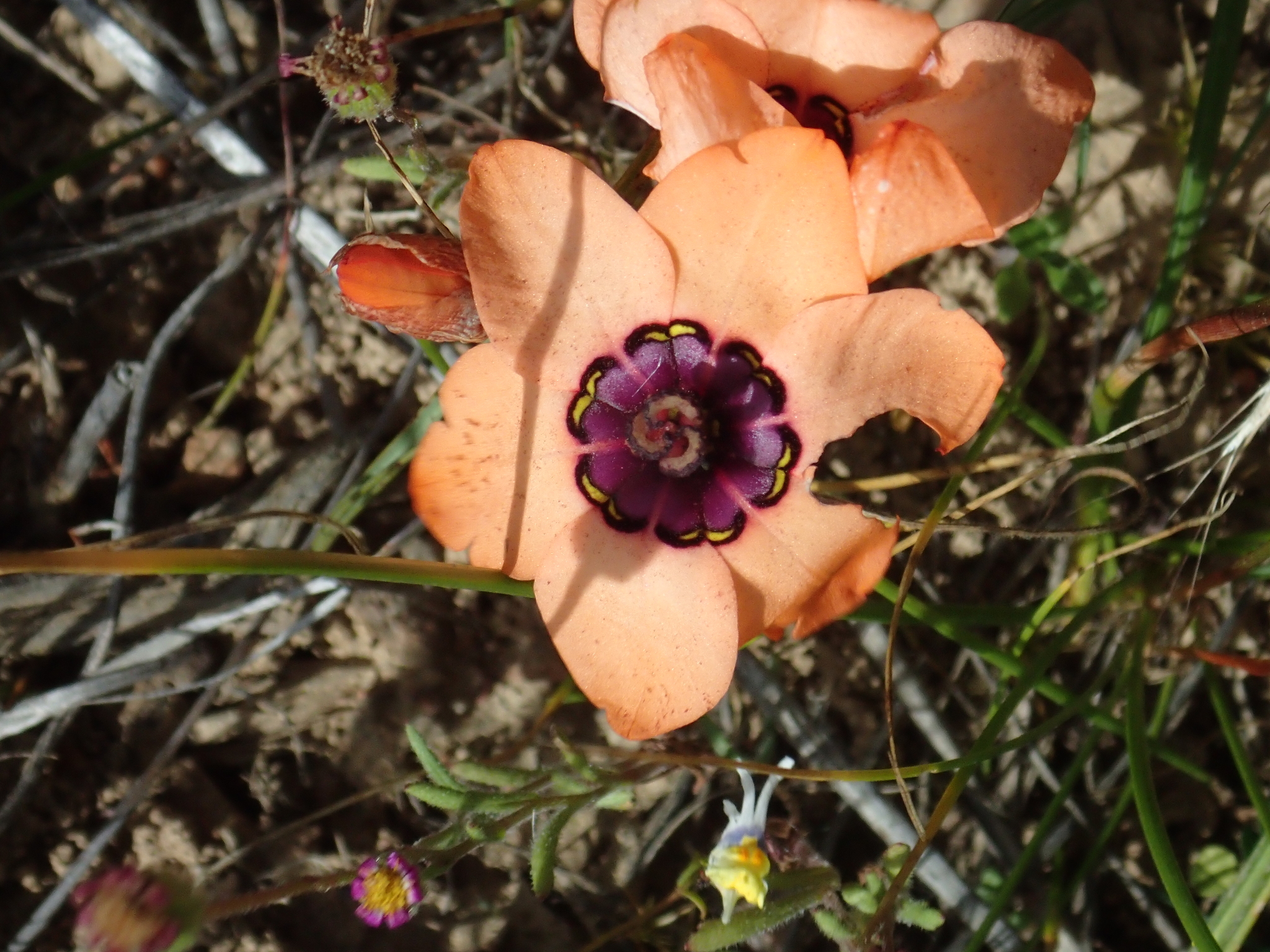
Sparaxis calcicola, commonly known as the Lime Silklily, is a captivating geophyte native to the Western Cape province of South Africa. This species belongs to the Iridaceae family, a diverse group of flowering plants renowned for their striking and often intricate floral displays. The Lime Silklily is particularly noted for its delicate yet vibrant flowers and its specific habitat preferences, making it a subject of interest for botanists and horticulturalists alike.
Physically, Sparaxis calcicola is a small, herbaceous perennial that grows from a corm, a bulb-like underground stem. The plant typically reaches a height of about 15 to 30 centimeters. Its leaves are linear to ensiform, meaning they are long and sword-shaped, and are usually arranged in a basal rosette or along the lower part of the stem. These leaves are typically green and somewhat leathery in texture. The most distinguishing feature of the Lime Silklily is its inflorescence, which bears several flowers. The flowers are zygomorphic, meaning they are bilaterally symmetrical, and possess a unique coloration. They are typically a pale, almost translucent lime-green to yellowish-green, often with darker markings or veins on the petals. The perianth segments, which form the showy part of the flower, are spreading and delicate. Following successful pollination, the plant produces a small, dry capsule containing seeds.
The native distribution of Sparaxis calcicola is restricted to specific areas within the Western Cape, South Africa. It is often found in rocky outcrops and slopes, particularly in areas with calcareous soils, which is reflected in its scientific epithet "calcicola," meaning "lime-dweller." This preference for alkaline or chalky substrates distinguishes it from many other members of the genus Sparaxis, which often favor more acidic or neutral soils. Its natural habitat is typically characterized by Mediterranean-type climates, with hot, dry summers and cool, wet winters. For successful cultivation, Sparaxis calcicola requires well-drained soil, preferably with a slightly alkaline pH, and a sunny to partially shaded position. It is important to provide a dry period during its summer dormancy to mimic its natural conditions.
Sparaxis calcicola holds ecological significance as part of the unique fynbos biome, contributing to its biodiversity. While not widely cultivated on a commercial scale, its ornamental value is appreciated by specialist growers and collectors of South African bulbs. Its striking, unusual flower color and form make it a desirable addition to rock gardens or containers where its specific soil and drainage needs can be met. There is no established record of significant medicinal, culinary, or economic uses for this species.
An interesting characteristic of Sparaxis calcicola is its adaptation to its specific calcareous habitat. The ability to thrive in soils that might be unsuitable for many other plants highlights its specialized niche within the fynbos ecosystem. The delicate structure of its flowers suggests a reliance on specific pollinators, likely small insects, which are attracted to its subtle coloration and form. Understanding these adaptations provides insight into the intricate ecological relationships within its native environment.