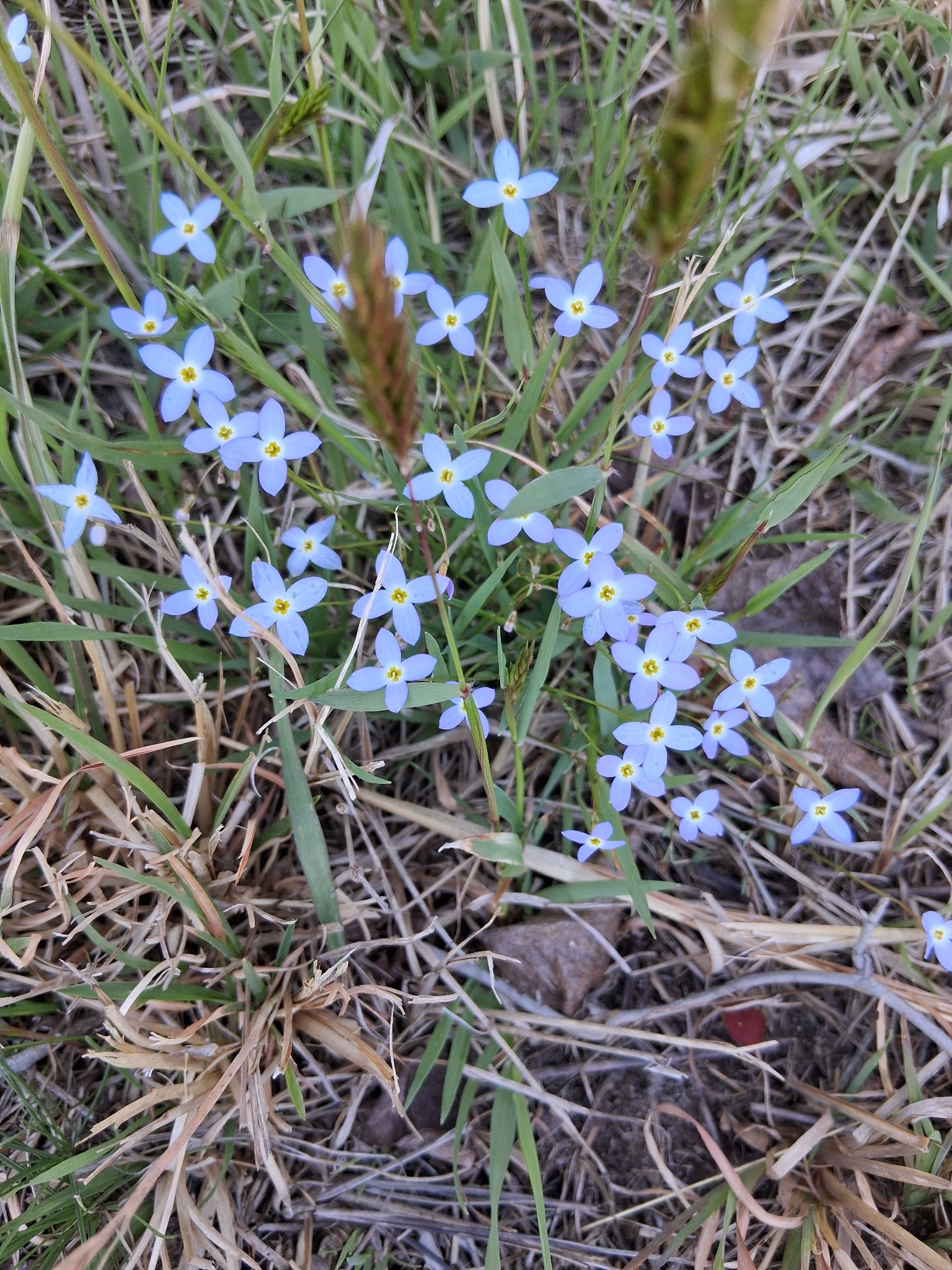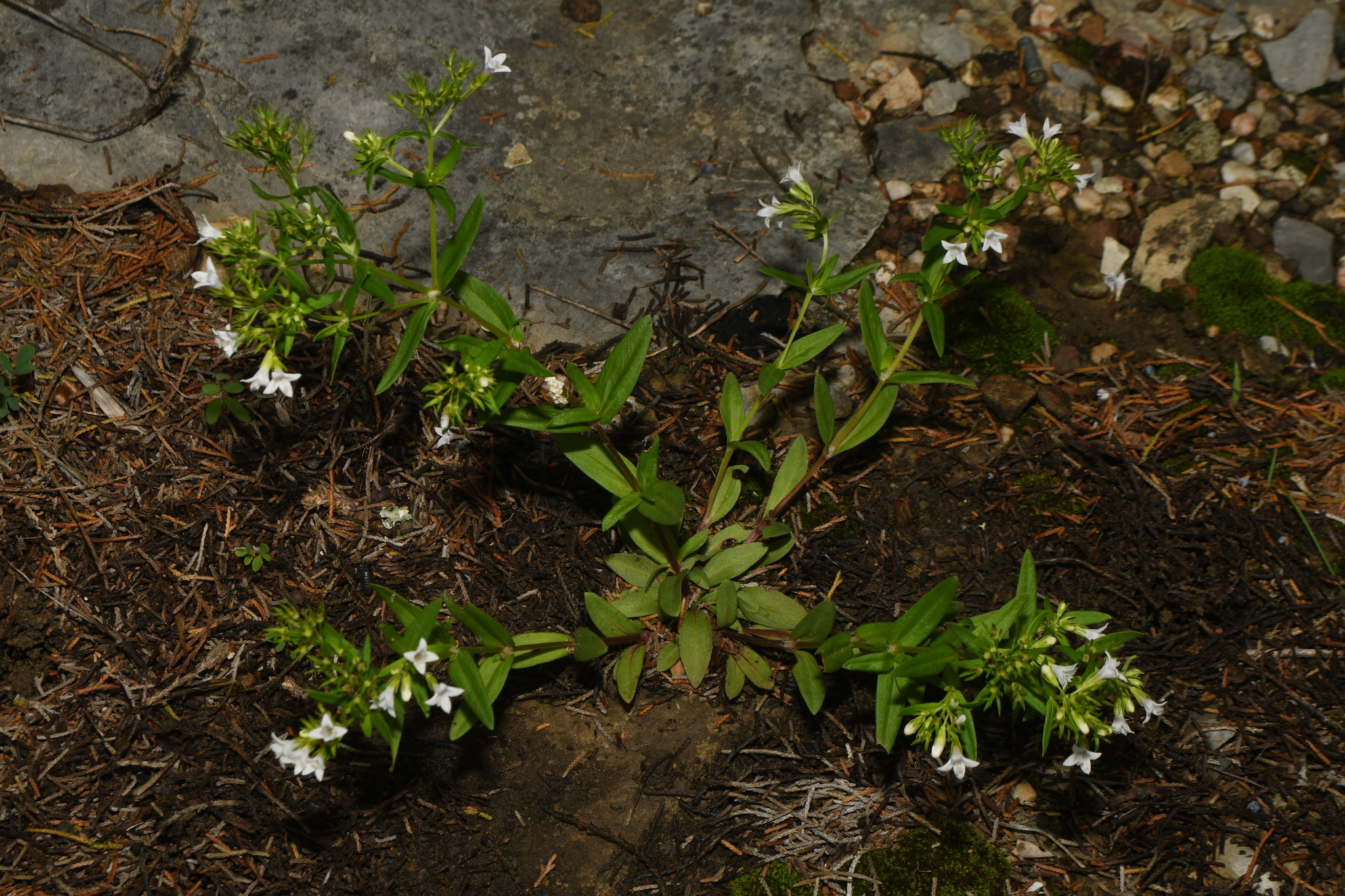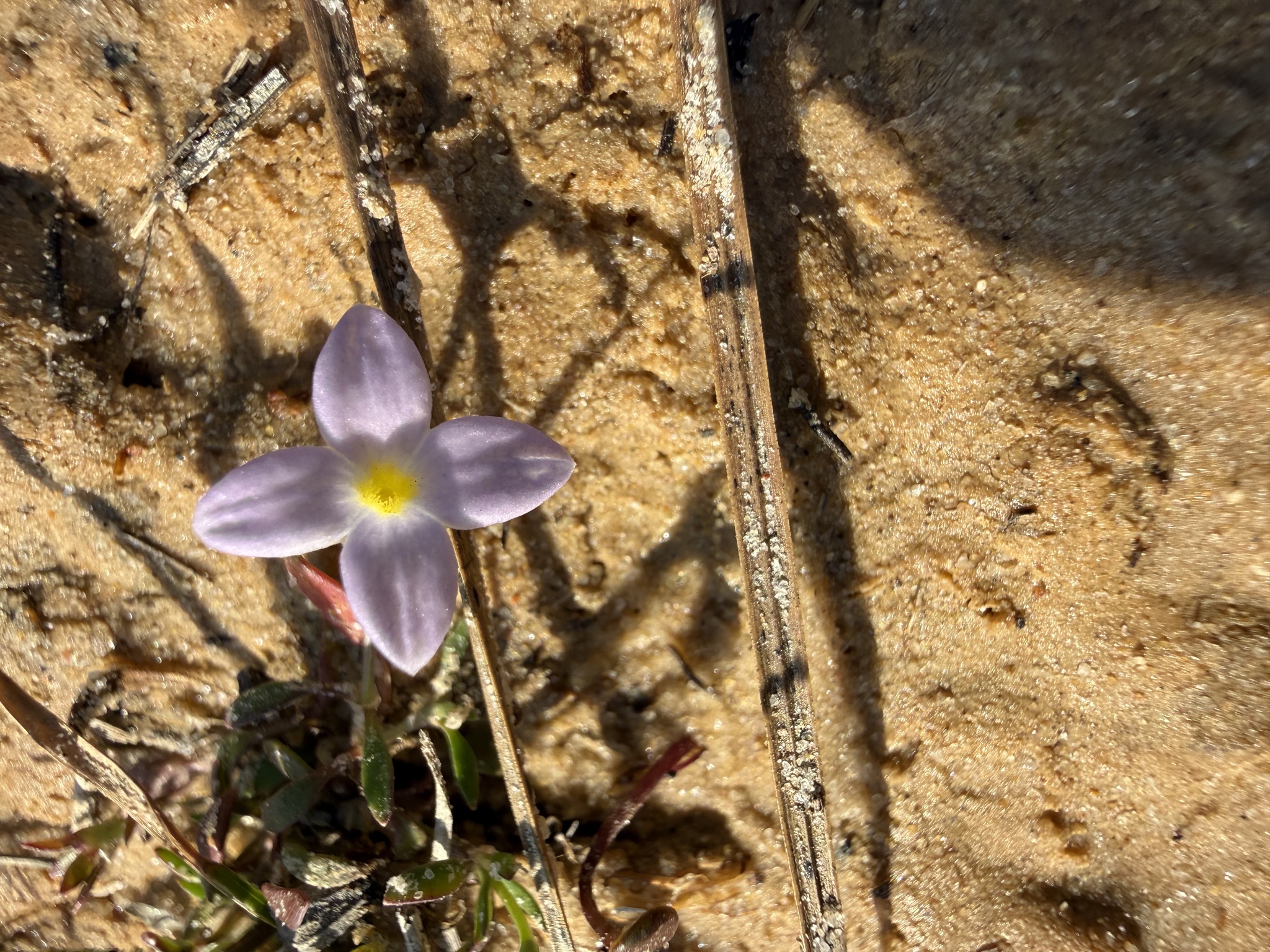
Houstonia pusilla is a delicate annual native to eastern and central North America. It produces tiny, four-petaled flowers, typically light blue to white with a yellow.
Houstonia pusilla, commonly known as tiny bluet, is a delicate and diminutive flowering plant native to North America. This species is a member of the Rubiaceae family, which also includes coffee and gardenia, and is characterized by its small stature and charming, star-shaped flowers. Tiny bluet plays a role in its native ecosystems as a groundcover and a food source for small insects.
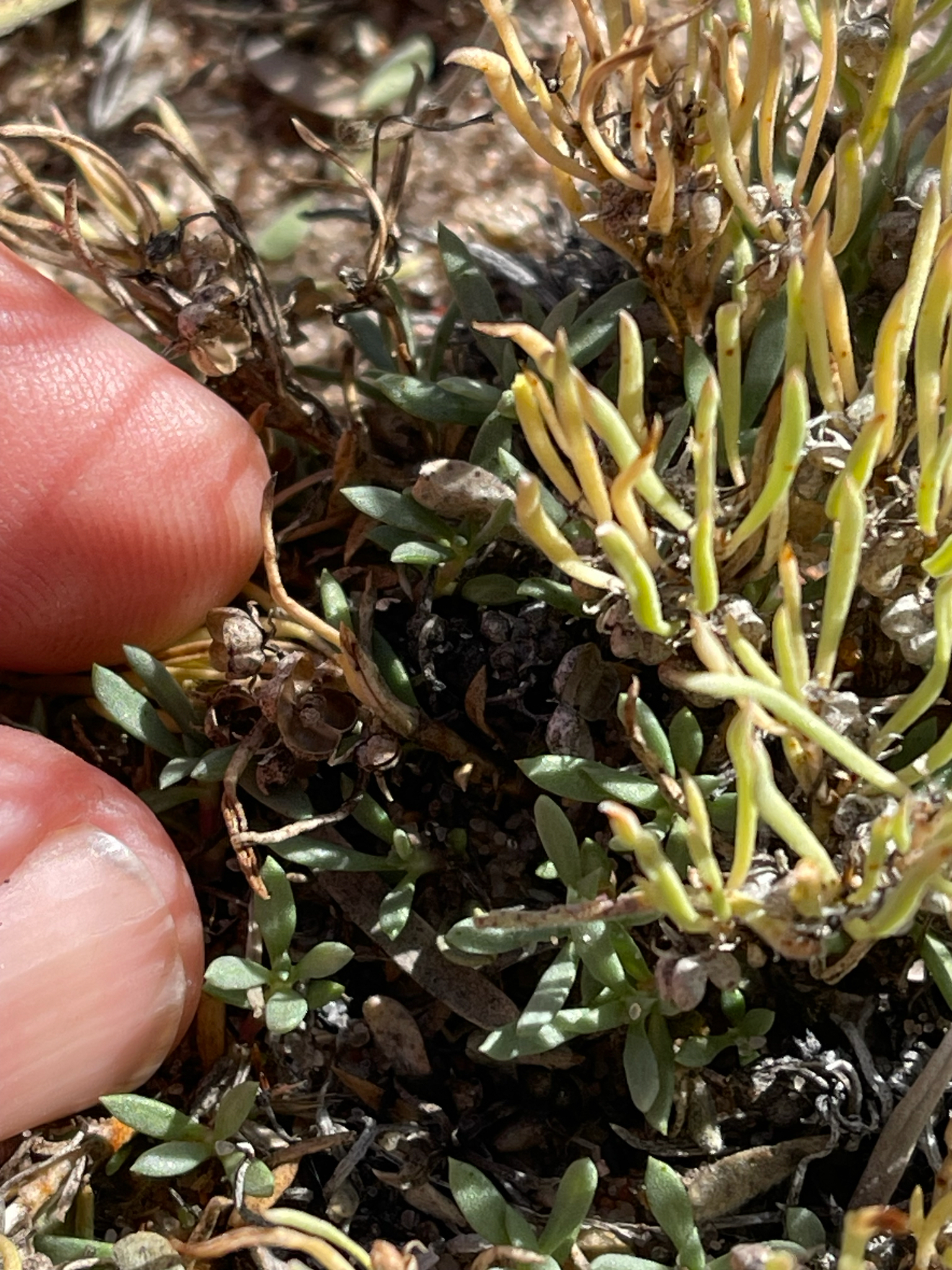
This annual herb typically grows to a height of only 2 to 6 inches, forming a low-lying mat or tuft. Its growth habit is often described as caespitose, meaning it grows in dense clumps. The leaves are small, spatulate to oblanceolate in shape, and arranged in basal rosettes. They are typically smooth and can be somewhat fleshy. The most striking feature of Houstonia pusilla is its inflorescence, which consists of solitary, delicate flowers borne on slender, erect stems. The flowers are typically pale blue to lavender, though white variations can occur, and possess four petals that are fused at the base, forming a distinct star shape. Each flower measures about 0.25 to 0.5 inches in diameter. Following flowering, the plant produces small, inconspicuous capsules that contain numerous tiny seeds, facilitating its propagation.
The native range of Houstonia pusilla extends across a significant portion of the eastern and central United States, from the Atlantic coast westward to the Great Plains and south into parts of Mexico. It thrives in a variety of open, well-drained habitats. Common environments include dry, sandy soils, open woodlands, prairies, savannas, and even disturbed areas like roadsides and lawns. It often colonizes areas with sparse vegetation where it can receive ample sunlight. While it prefers moist conditions during its establishment and flowering phases, it is adapted to tolerate periods of drought once established, particularly in its native grassland habitats. Cultivation requirements are generally minimal; it prefers full sun to partial shade and well-drained soil. It is often found growing in association with mosses and other low-growing herbaceous plants.
Houstonia pusilla holds ecological significance as a nectar source for various pollinators, including small bees and butterflies. Its ephemeral nature and early spring bloom make it an important early-season resource. While not widely cultivated for ornamental purposes due to its small size, its charming appearance and ease of growth in suitable conditions make it an attractive addition to rock gardens, fairy gardens, or naturalized areas where its delicate beauty can be appreciated. There are no widely recognized culinary, medicinal, or significant economic uses documented for this species.
An interesting characteristic of Houstonia pusilla is its ability to thrive in nutrient-poor and dry conditions, a testament to its adaptation to challenging environments. Its rapid life cycle, from germination to seed production, allows it to complete its life within a single growing season, often capitalizing on early spring moisture before summer drought sets in. The plant's diminutive size and prolific flowering contribute to its charm, creating a carpet of color in its preferred habitats.