Skip to plant details

Phlomis RusselianaPhlomis russeliana

Also known as Jerusalem Sage · Russel's Golden Phlomis · Russel's Jerusalem Sage

  • Category: Flowering, Ornamental
  • Type: Shrub
  • Sunlight: Full sun to partial shade.
  • Water: Moderate, allow soil to dry slightly between waterings.
  • Temperature: Prefers average room temperatures.
  • Habitat: Outdoor

Phlomis russeliana, Jerusalem Sage, is a perennial with whorls of soft pink flowers and textured, grey-green foliage, forming a bushy clump.

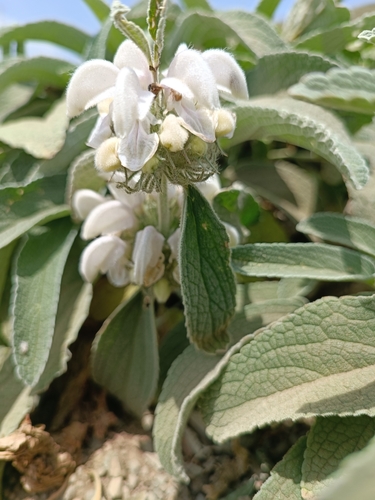
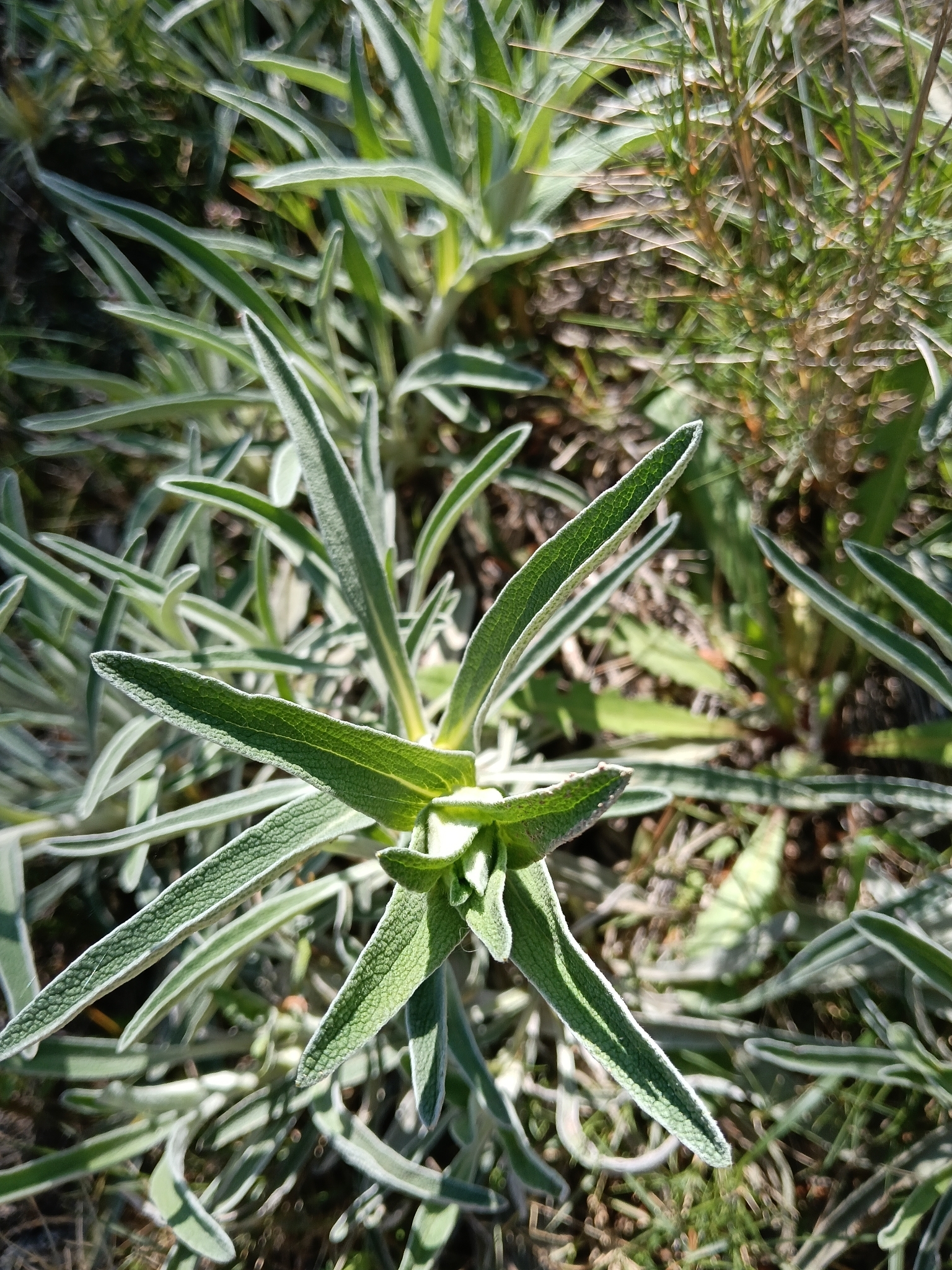
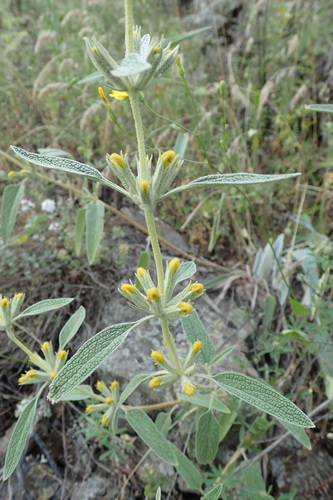
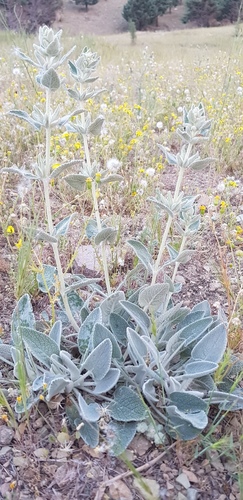
Phlomis russeliana is a striking perennial herb recognized for its architectural form and attractive foliage and flowers. This species belongs to the Lamiaceae family, commonly known as the mint family, and is native to the eastern Mediterranean region. Its significance in horticulture stems from its drought tolerance, long blooming period, and suitability for various garden settings, particularly those seeking low-maintenance, visually appealing plants. The growth habit of Phlomis russeliana is upright and bushy, typically reaching heights of 0.6 to 1.2 meters (2 to 4 feet) with a similar spread. The plant forms dense clumps of basal leaves that are ovate to broadly ovate, measuring up to 20 cm (8 inches) long and 10 cm (4 inches) wide. These leaves are deeply wrinkled or puckered (rugose), with a soft, woolly texture on the underside, giving them a greyish-green appearance. The leaf margins are typically crenate or toothed. The stems are stout and square in cross-section, a characteristic feature of the Lamiaceae family, and are covered in fine hairs. During the summer months, Phlomis russeliana produces distinctive whorls of flowers arranged in tiers along the upper parts of the stems. Each flower is tubular, with a prominent upper lip and a lower lip, and is typically a soft, pale yellow to creamy white color. The calyx, which encloses the base of the flower, is also noteworthy, often being a pale green or yellowish hue and persistent after flowering. Following successful pollination, small, nutlet-like fruits develop. The plant's structure, with its upright stems and whorled flower clusters, provides visual interest even after the blooms have faded, as the dried flower heads and seed structures remain attractive through winter. Phlomis russeliana is naturally found in rocky, open habitats, often on slopes and in scrubland, in its native range which includes parts of Turkey and Cyprus. It thrives in well-drained soil and prefers full sun to partial shade. Its adaptation to arid conditions makes it an excellent choice for xeriscaping and water-wise gardens. In cultivation, it is generally hardy and requires minimal care once established, benefiting from occasional pruning to maintain its shape and encourage new growth. It is not known to be susceptible to many pests or diseases, further contributing to its ease of cultivation. While Phlomis russeliana is primarily valued for its ornamental qualities, its ecological role involves providing nectar for pollinators. There is no widespread documented use in traditional medicine, culinary applications, or significant economic importance beyond its horticultural trade. An interesting characteristic of this plant is its ability to form dense mats of foliage that can help suppress weeds and its resilience to dry conditions, making it a valuable component in sustainable landscaping. The unique structure of its flower whorls and the tactile quality of its leaves contribute to its distinct appeal in botanical collections and garden designs.

Photograph © kleedham · CC-BY-NC

Phlomis Russeliana Care Summary

At-a-glance light, water, soil, and growing conditions from plant data

Light

Full sun to partial shade.

80% intensity

Prefers at least 6 hours of direct sunlight.

Water

Moderate, allow soil to dry slightly between waterings.

60% intensity

Reduce in winter. Drought tolerant once established.

Soil

Well-drained soil is crucial. Prefers sandy, loamy, or chalky soils. Tolerates poor, dry soils.

50% intensity

Temperature

Prefers average room temperatures.

70% intensity

Tolerates heat and moderate cold.

Habitat

Outdoor

50% intensity

Fertilizer

Feed sparingly.

20% intensity

A light application of balanced fertilizer in spring is usually sufficient.

Phlomis Russeliana Toxicity

Safety information from plant toxicity data

Toxicity details for Phlomis Russeliana
AttributeValue
Toxic for humansNo

0/5 intensity

Toxic for petsNo

0/5 intensity

EdibleNo

Phlomis Russeliana Quick Facts

Key traits and growing stats from plant data

Plant Type
Shrub
Plant Category
Flowering, Ornamental
Plant Place Type
Ground, Garden, Pot
Plant Environment
Outdoor
Lifespan
Perennials
Plant Height
0.6-1.2 m
Spread
0.6-1.2 m
Growth Rate
Moderate
Dormancy
Deciduous to semi-evergreen in milder climates
Leaf Color
Green, Grey-green
Leaf Type
Simple, ovate to oblong, textured
Flower Size
2-3 cm

Care guide for Phlomis Russeliana

Watering, pruning, propagation, and repotting details from plant data

Water

Water moderately during the growing season, allowing the soil to dry out between waterings. Drought tolerant once established.

Pruning

Prune back dead flower stalks in autumn or early spring. Cut back hard in early spring to encourage bushy growth and abundant flowering.

Propagation

Easily propagated from seed sown in spring or autumn, or from semi-ripe cuttings taken in summer. Division of clumps in spring is also effective.

Repotting

For container-grown plants, repot every 2-3 years in spring into fresh, well-draining compost. Ensure the new pot has adequate drainage holes.

Identify plants like this with ePlant

Snap a photo to get care tips and match similar species on the go.

Try for Free

Flowering & Fruiting Cycles

Monthly activity intensity for bloom and fruit across both hemispheres.

Northern hemisphere

Flowering & fruiting calendar

Peak bloom · JulPeak fruit · Sep
FloweringFruiting
02468JanFebMarAprMayJunJulAugSepOctNovDecActivity intensityMonths86
Southern hemisphere

Flowering & fruiting calendar

Peak bloom · JunPeak fruit · Aug
FloweringFruiting
02468JanFebMarAprMayJunJulAugSepOctNovDecActivity intensityMonths86

Phlomis Russeliana Names & Synonyms

Common names and botanical synonyms

Common Names

  • Jerusalem Sage
  • Russel's Golden Phlomis
  • Russel's Jerusalem Sage
  • Russel's Phlomis
  • Russel's Sage
  • Russel's Yellow Sage
  • Turkish Sage

Phlomis Russeliana Taxonomy

Botanical classification

Taxonomic classification of Phlomis Russeliana
RankName
kingdomPlantae
divisionTracheophyta
classMagnoliopsida
orderLamiales
familyLamiaceae
genusPhlomis
speciesPhlomis russeliana

Phlomis Russeliana FAQs

Answers based on plant encyclopedia data

How much sun does Phlomis russeliana need?

Phlomis russeliana thrives in full sun to partial shade, requiring at least six hours of direct sunlight daily for optimal flowering and growth.

What kind of soil is best for Jerusalem Sage?

This plant prefers well-drained soil. Sandy, loamy, or chalky soils are ideal, and it tolerates poor, dry conditions well.

When should I prune Phlomis russeliana?

Prune back dead flower stalks in autumn or early spring. A harder prune in early spring will encourage bushier growth and more flowers.

Is Phlomis russeliana drought tolerant?

Yes, once established, Phlomis russeliana is quite drought tolerant and requires reduced watering during dry periods.

Can Jerusalem Sage be grown in containers?

Yes, Phlomis russeliana can be grown in containers, provided they have good drainage and are repotted every 2-3 years.