
About the author
Maya Chen
Houseplant Care Editor
Maya has spent twelve years writing about indoor gardening and troubleshooting houseplants for beginners. She tests care routines on her own collection of pothos, ferns, and philodendrons before publishing guides.
"Succulents are among the easiest plants to propagate. A single leaf or stem cutting can grow into a new plant with minimal equipment - just patience and the right conditions.
This guide covers leaf and stem propagation, the tools you need, the best succulents to start with, how long rooting takes, and how to avoid common mistakes. Once your new plants are growing, use the ePlant AI identifier to confirm the species and get care tips from our encyclopedia. For more on general care, see our beginner's guide to plant care.
Extension resources such as University of Nevada Extension and the RHS propagation guide offer additional detail on succulent and general plant propagation.
Tools and Materials You Need
You don't need much. Gather these before you start:
- Clean, sharp knife or scissors - Blunt tools crush tissue and invite rot. Wipe blades with rubbing alcohol between plants to avoid spreading disease.
- Cactus or succulent potting mix - Well-draining is essential. Use a commercial cactus mix or make your own with potting soil, perlite, and coarse sand.
- Small pots or trays - Shallow is fine for leaves; 2-3 in (5-8 cm) pots work for stem cuttings.
- Optional: rooting hormone - Not required for most succulents but can speed up stem cuttings. Skip it for leaf propagation.
For species-specific advice, identify your succulent with ePlant AI and check our encyclopedia for care notes.
Best Succulents for Propagation
Some succulents root faster and more reliably than others. Great choices for beginners include:
- Echeveria - Leaves pop off easily and form new rosettes. One of the most satisfying for leaf propagation.
- Jade plant (Crassula ovata) - Both leaves and stem cuttings work. Very forgiving. See our jade plant guide for care.
- Sedum - Stems root quickly; many species also propagate from leaves.
- Kalanchoe - Produces plantlets on leaf margins; stem cuttings also root well.
- Haworthia and Gasteria - Often propagated by offsets (pups), but leaf propagation is possible with patience.
If you're not sure what you have, snap a photo and use ePlant AI's free plant ID to get the exact species and tailored tips.

Method 1: Leaf Propagation
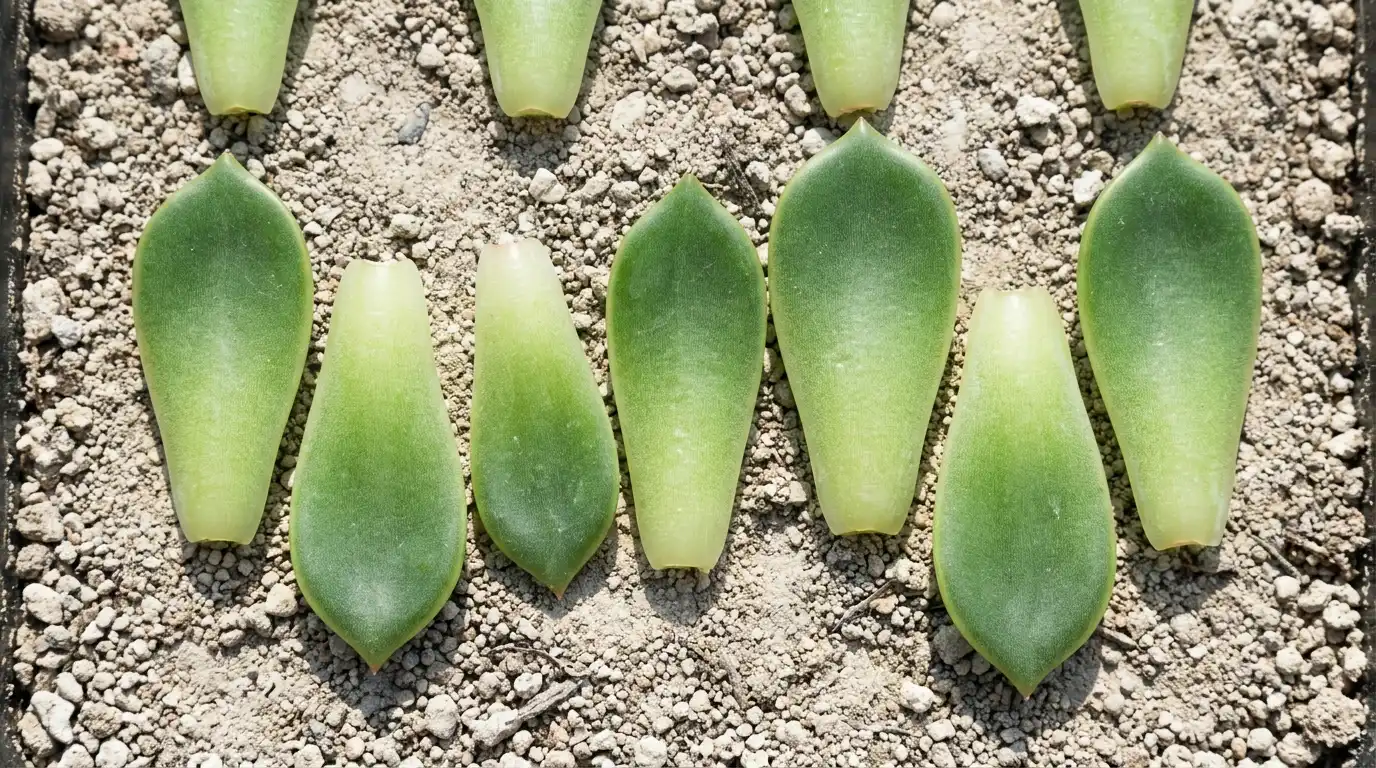
Many succulents (e.g. echeverias, sedums, jade) can grow from a single healthy leaf. Choose plump, undamaged leaves and gently twist from the stem so you get a clean break at the base. Don't cut or tear - a clean break at the joint gives the best result. Let the end callus over for 1-3 days on a dry surface out of direct sun, then place the leaf on top of barely moist cactus/succulent mix. Don't bury the leaf. Mist the soil lightly only when the top has dried; avoid wetting the leaf itself. In 2-6 weeks, roots and a tiny rosette should appear. Keep the original leaf attached until it withers; then you can remove it and treat the baby as a new plant.
Not every leaf will succeed - use several to increase your odds. For species-specific tips, identify your succulent with ePlant AI first.
Method 2: Stem Cuttings
For leggy or branching succulents, stem cuttings work well. Use a clean, sharp knife or scissors to take a 2-4 in (5-10 cm) tip or section. Remove the lower leaves so you have a bare stem. Let the cut end callus for 1-3 days in a dry, shaded spot, then insert the stem into barely moist cactus/succulent mix. Support the cutting so it doesn't fall over. Do not water until you see signs of roots (usually 2-4 weeks); then water sparingly when the soil is dry. Provide bright indirect light and good airflow to reduce rot.
The ePlant AI app can remind you when to check and water new cuttings.
How Long Does Rooting Take?
Timing depends on method, species, and conditions:
- Leaf propagation - First roots often in 2-4 weeks; a small plant may take 1-3 months. The parent leaf will shrivel as the new plant draws from it.
- Stem cuttings - Roots usually appear in 2-4 weeks. Once you feel resistance when giving a gentle tug, the cutting has rooted.
Warmer, brighter conditions (without scorching) speed things up; winter or low light slows them down. Be patient and avoid overwatering - that is the number one cause of failure.
Signs Propagation Is Succeeding (or Failing)
Success: tiny roots appearing from the callus or base of the leaf; a small rosette or shoots emerging; the original leaf or cutting staying firm, not mushy. Failure: the leaf or stem turns mushy, black, or translucent (rot); no roots or growth after many weeks in good conditions (sometimes the cutting was weak or the medium too wet). If a leaf or cutting rots, remove it so it doesn't spread; adjust your watering and ensure the medium is well-draining and the cut had callused before planting.
For more on what can go wrong, see the troubleshooting section below.
When to Water (and When Not To)
Before roots form, keep the medium only barely moist - a light mist when the surface is dry is enough. Do not soak the soil or water on a schedule. Once roots are present, you can water a bit more normally: water when the top inch of soil is dry, then let it drain. Never leave cuttings or new propagations sitting in water. Good airflow and fast-drying mix are your friends.
Overwatering is the main reason leaves and cuttings rot. When in doubt, water less.
Aftercare: Once Your Cuttings Have Rooted
When you see roots and new growth, treat the new plant like a small succulent: bright indirect light, well-draining soil, and water only when the soil is dry. Avoid strong midday sun until the plant is established. You can repot when the roots fill the small container; use the same cactus/succulent mix. Hold off fertilizing for the first few months - the medium usually has enough nutrients for a young plant.
For repotting steps, see our guide to repotting houseplants. Use ePlant AI to confirm the species and get long-term care from our encyclopedia.
Common Mistakes to Avoid
- Planting before callusing - Always let leaf and stem wounds dry 1-3 days before placing on or in soil. Skipping this invites rot.
- Overwatering - Soggy soil kills succulent cuttings. Use well-draining mix and water very lightly until roots form.
- Burying leaves - Leaves should sit on top of the soil, not be buried. Only the callused end may touch the medium.
- Using damaged or weak leaves - Choose plump, healthy leaves; avoid those that are wilted, yellowed, or torn.
- Too much sun too soon - Bright indirect light is best for new cuttings; direct hot sun can scorch or stress them.
Extension guides like University of Nevada and the RHS stress clean cuts, good medium, and moisture control.
Quick Troubleshooting
- Leaf/cutting turned mushy or black - Rot. Remove it; improve airflow and drainage; next time let the cut callus and water less.
- No roots after many weeks - Check that the medium is not too wet or too compact. Ensure the cutting had callused. Some species are slower; try a different leaf or stem.
- Leaf shrivels with no growth - It may have been too weak or damaged. Use healthier leaves and ensure minimal water until roots appear.
- Cutting falls over - Support it with a small stake or deeper planting (only the callused part in the soil). Avoid watering until roots form so it anchors itself.
For more propagation mistakes and fixes across plant types, read our 10 propagation mistakes and fixes.
Pro Tip
The best time to propagate is during active growth (spring and early summer). Avoid taking cuttings in the middle of winter when growth is slow. Label every cutting with the plant name and date so you know what you have and when to expect roots.
Identify Your Succulents
Use ePlant AI to name your succulent and get care and propagation tips for that species.
Identify with ePlant AIFrequently Asked Questions
How long does succulent propagation take?
Roots often appear in 2-4 weeks for both leaves and stem cuttings; a small plant from a leaf may take 1-3 months. Timing depends on species, season, and conditions. Be patient and avoid overwatering.
Why did my leaf or cutting rot?
Rot is usually from too much moisture or planting before the cut has callused. Let cuttings and leaves dry at the wound for 1-3 days, use well-draining mix, and water very lightly until roots form.
Which succulents are easiest to propagate from leaves?
Echeveria, jade plant (Crassula ovata), and many Sedum species are among the easiest. Choose plump, healthy leaves and let them callus before placing on barely moist soil.