Water
Keep substrate consistently moist but not waterlogged. Water thoroughly when the top layer of substrate feels dry. Reduce watering slightly during cooler, less active periods to prevent root rot.
Ensure good air circulation to aid drying.
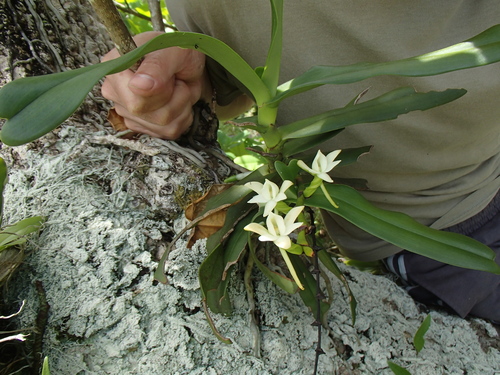
Angraecum triangulifolium is a small, epiphytic orchid from Madagascar, known for its triangular leaves and delicate white flowers.
At-a-glance light, water, soil, and growing conditions from plant data
Bright, indirect light
75% intensity
Avoid direct sun which can scorch leaves. East or west-facing windows are ideal.
Keep moist, avoid waterlogging
50% intensity
Water when top layer is dry, reduce in cooler months.
Orchid bark mix, sphagnum moss
50% intensity
Warm to intermediate
50% intensity
Daytime: 20-27°C. Nighttime: 15-18°C. Avoid drafts and extreme fluctuations.
Regular feeding during growth
50% intensity
Diluted orchid fertilizer every two weeks during active growth; reduce in winter.
Safety information from plant toxicity data
| Attribute | Value |
|---|---|
| Toxic for humans | No 0/5 intensity |
| Toxic for pets | No 0/5 intensity |
| Edible | No |
Key traits and growing stats from plant data
Watering, pruning, propagation, and repotting details from plant data
Keep substrate consistently moist but not waterlogged. Water thoroughly when the top layer of substrate feels dry. Reduce watering slightly during cooler, less active periods to prevent root rot.
Ensure good air circulation to aid drying.
Pruning is generally minimal for Angraecum triangulifolium. Remove any dead or yellowing leaves or flower spikes close to the base of the plant. This helps maintain a tidy appearance and prevents potential disease.
Propagation is typically done through division. When the plant becomes overcrowded, carefully divide it into smaller sections during repotting, ensuring each division has healthy roots and at least a few pseudobulbs.
Allow cuts to callus before replanting.
Repot every 2-3 years or when the potting medium begins to break down. Use a well-draining orchid mix, such as bark and sphagnum moss. Repot after flowering, typically in spring, to minimize stress on the plant.
Identify plants like this with ePlant AI
Snap a photo to get care tips and match similar species on the go.
Monthly activity intensity for bloom and fruit across both hemispheres.
Flowering & fruiting calendar
Flowering & fruiting calendar
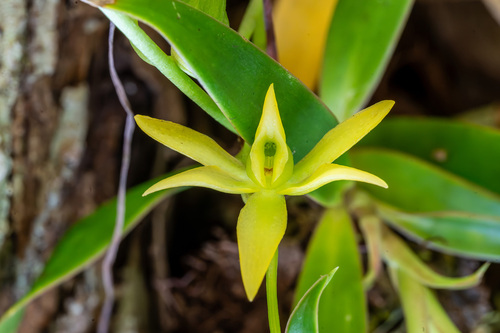
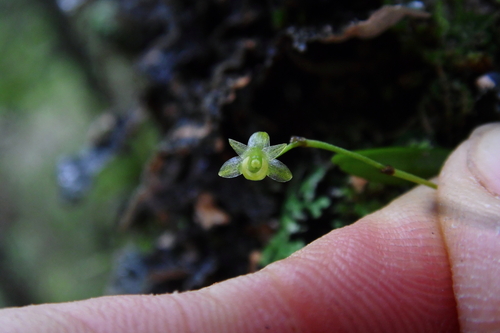
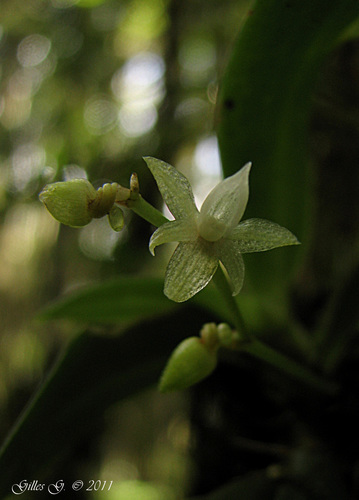
Photos of Angraecum Triangulifolium (Angraecum triangulifolium)
Where Angraecum Triangulifolium (Angraecum triangulifolium) is found

Density
Tap map to explore
Common names and botanical synonyms
Botanical classification
| Rank | Name |
|---|---|
| Kingdom | Plantae |
| Division | Tracheophyta |
| Class | Liliopsida |
| Order | Asparagales |
| Family | Orchidaceae |
| Genus | Angraecum |
| Species | Angraecum triangulifolium |
Similar in genus Angraecum
Answers based on plant encyclopedia data