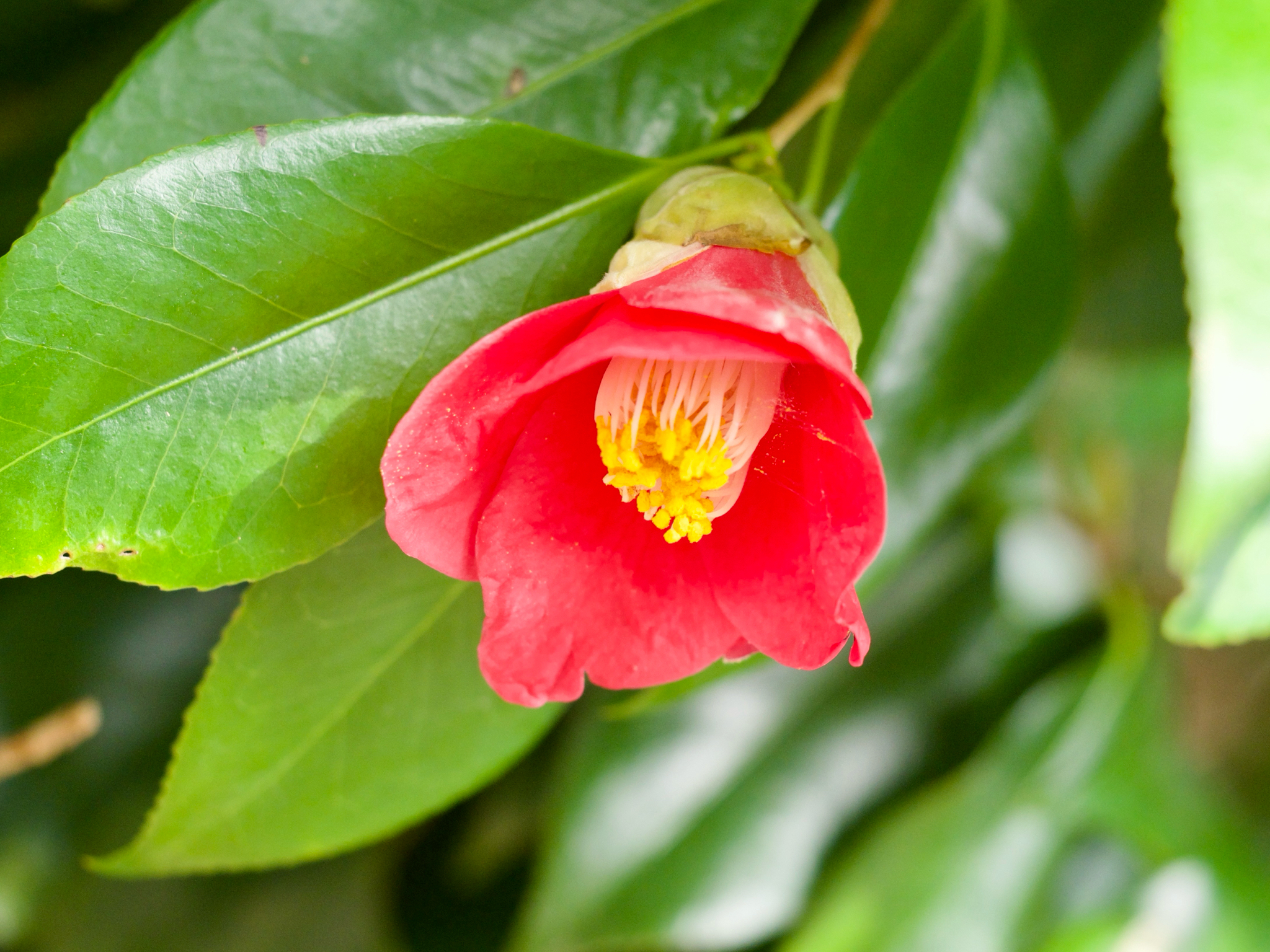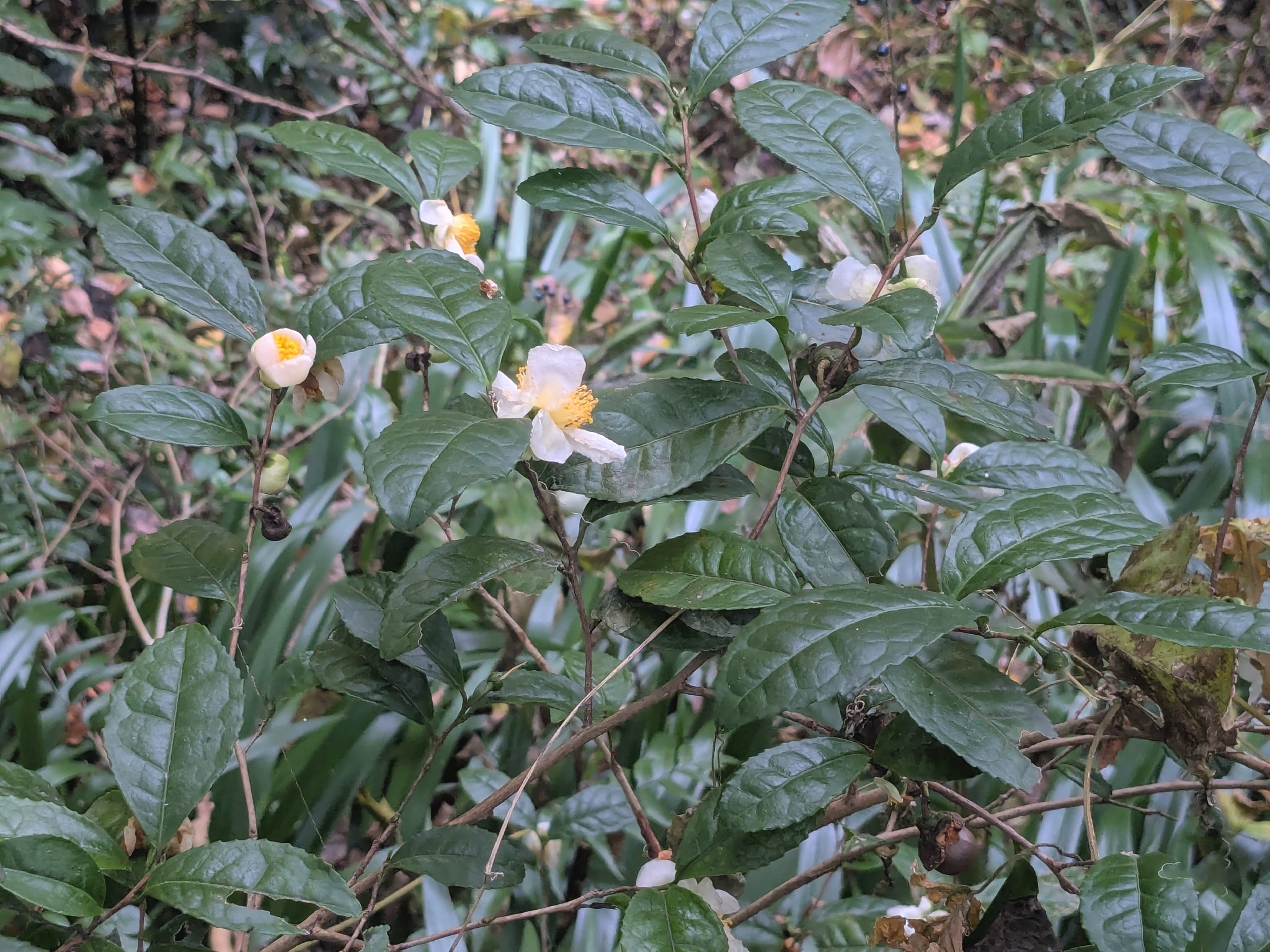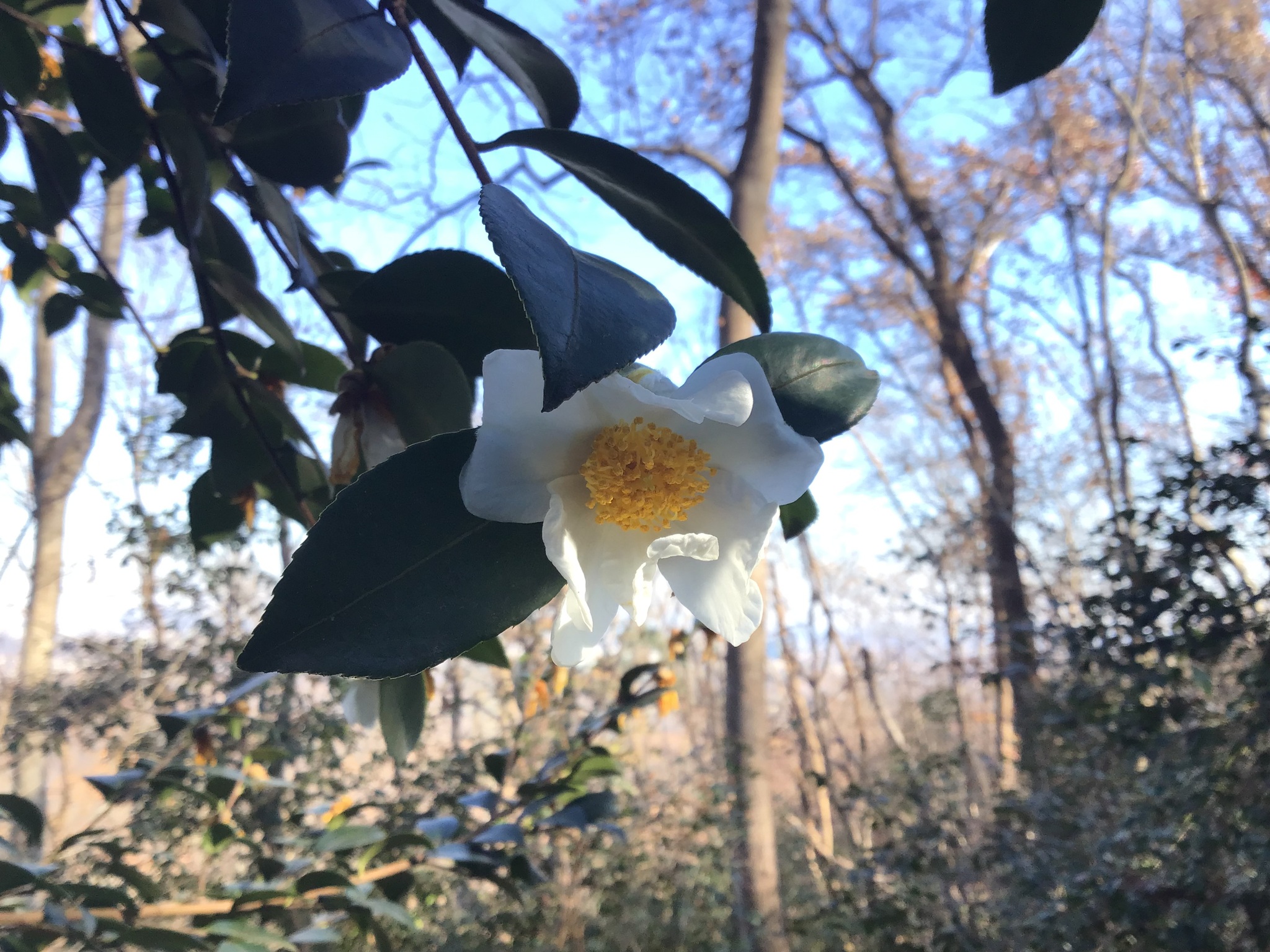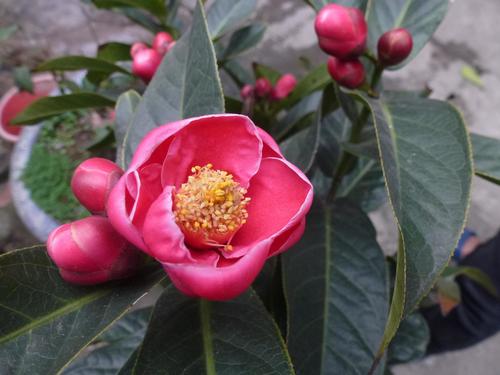
Sasanqua Camellia (Camellia sasanqua) is an evergreen shrub or small tree known for its abundant, often fragrant, autumn to early winter flowers. It features glossy green
Above information is sourced from Wikipedia
Sunlight
Thrives in partial shade, particularly protection from harsh afternoon sun. Can tolerate full sun in cooler regions, but may require more water.
Watering
Keep soil consistently moist but not waterlogged, especially during dry spells and flowering. Reduce watering in winter. Ensure good drainage to prevent root rot.
Soil
Well-draining, acidic soil (pH 5.5-6.5) rich in organic matter. Loamy or sandy loam is ideal.
Temperature
Prefers mild temperatures, ideally between 7°C and 29°C. Protect from severe frosts, though established plants are hardy to about -12°C.
Habitat
Outdoor
Fertilizer
Fertilize in early spring after flowering with a slow-release, acid-forming fertilizer formulated for camellias or acid-loving plants. Avoid fertilizing in late summer.
Thrives in partial shade, particularly protection from harsh afternoon sun. Can tolerate full sun in cooler regions, but may require more water.
Keep soil consistently moist but not waterlogged, especially during dry spells and flowering. Reduce watering in winter. Ensure good drainage to prevent root rot.
Well-draining, acidic soil (pH 5.5-6.5) rich in organic matter. Loamy or sandy loam is ideal.
Prefers mild temperatures, ideally between 7°C and 29°C. Protect from severe frosts, though established plants are hardy to about -12°C.
Outdoor
Fertilize in early spring after flowering with a slow-release, acid-forming fertilizer formulated for camellias or acid-loving plants. Avoid fertilizing in late summer.
Plant Type
Shrub, Tree
Plant Category
Flowering, Ornamental
Plant Place Type
Ground, Garden, Pot
Plant Environment
Outdoor
Lifespan
Perennials
Plant Height
1.5-4.5 m
Spread
1.5-3 m
Growth Rate
Moderate
Leaf Color
Dark Green
Leaf Type
Simple, evergreen
Flower Size
5-8 cm
Optimal Sunlight Lux
50000
Toxic for humans
No
Rating: 0/5
Toxic for pets
No
Rating: 0/5
Edible
No
All parts of Camellia sasanqua are considered non-toxic to humans and pets.