Water
Water deeply but infrequently, allowing the soil to dry out completely between waterings. Overwatering is a common cause of root rot.
Reduce watering significantly during cooler, dormant periods to prevent fungal diseases.
Safety note: This plant may be toxic to humans and pets. See toxicity details.
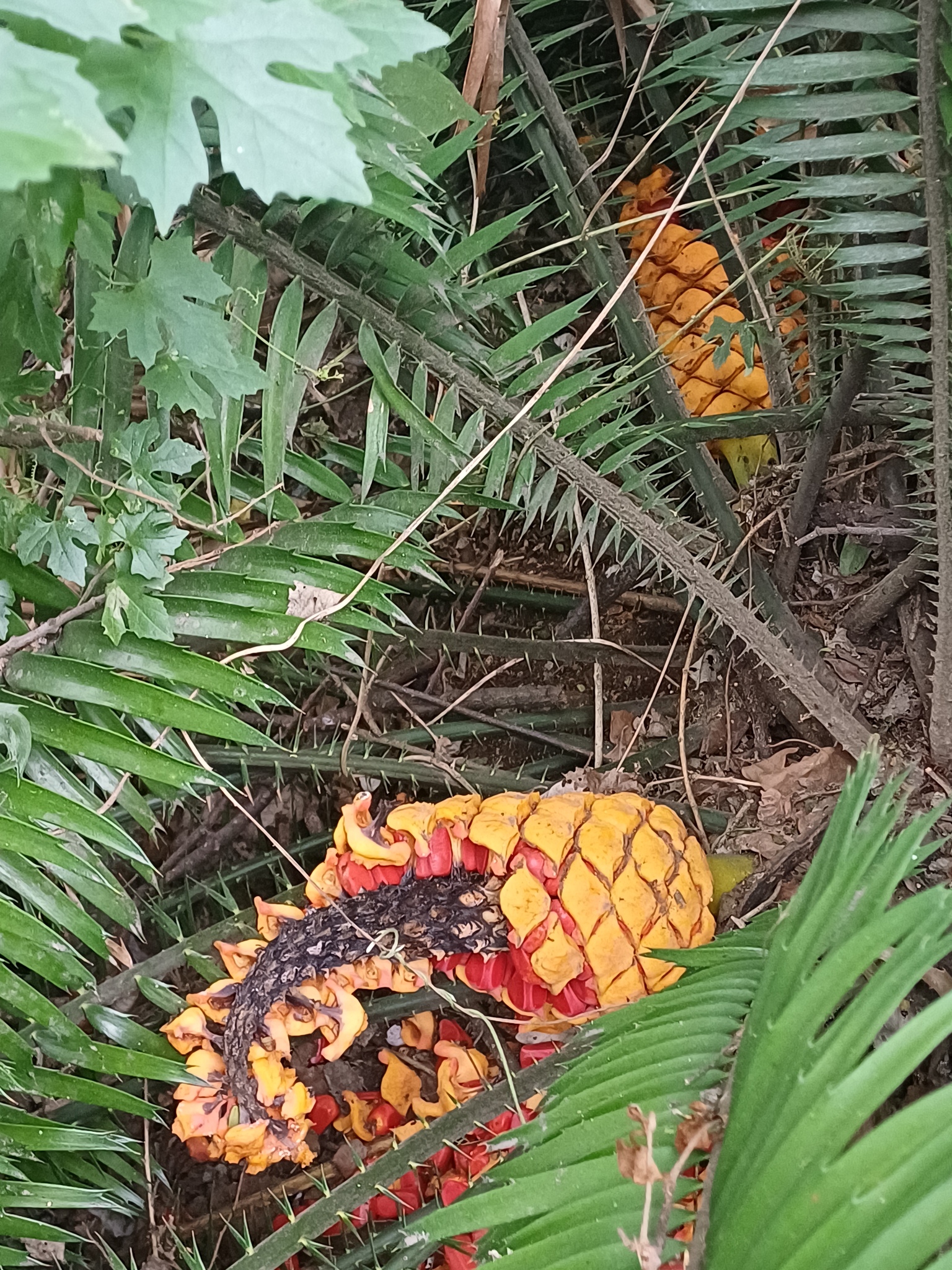
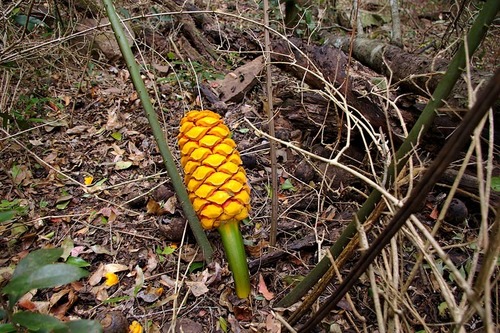
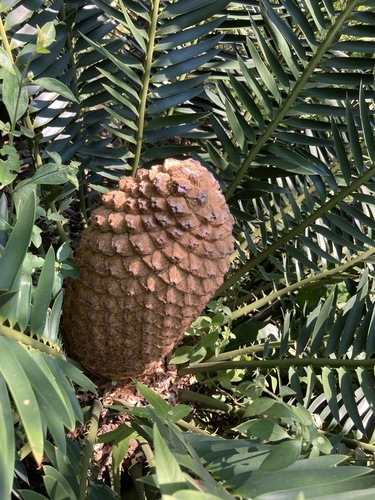
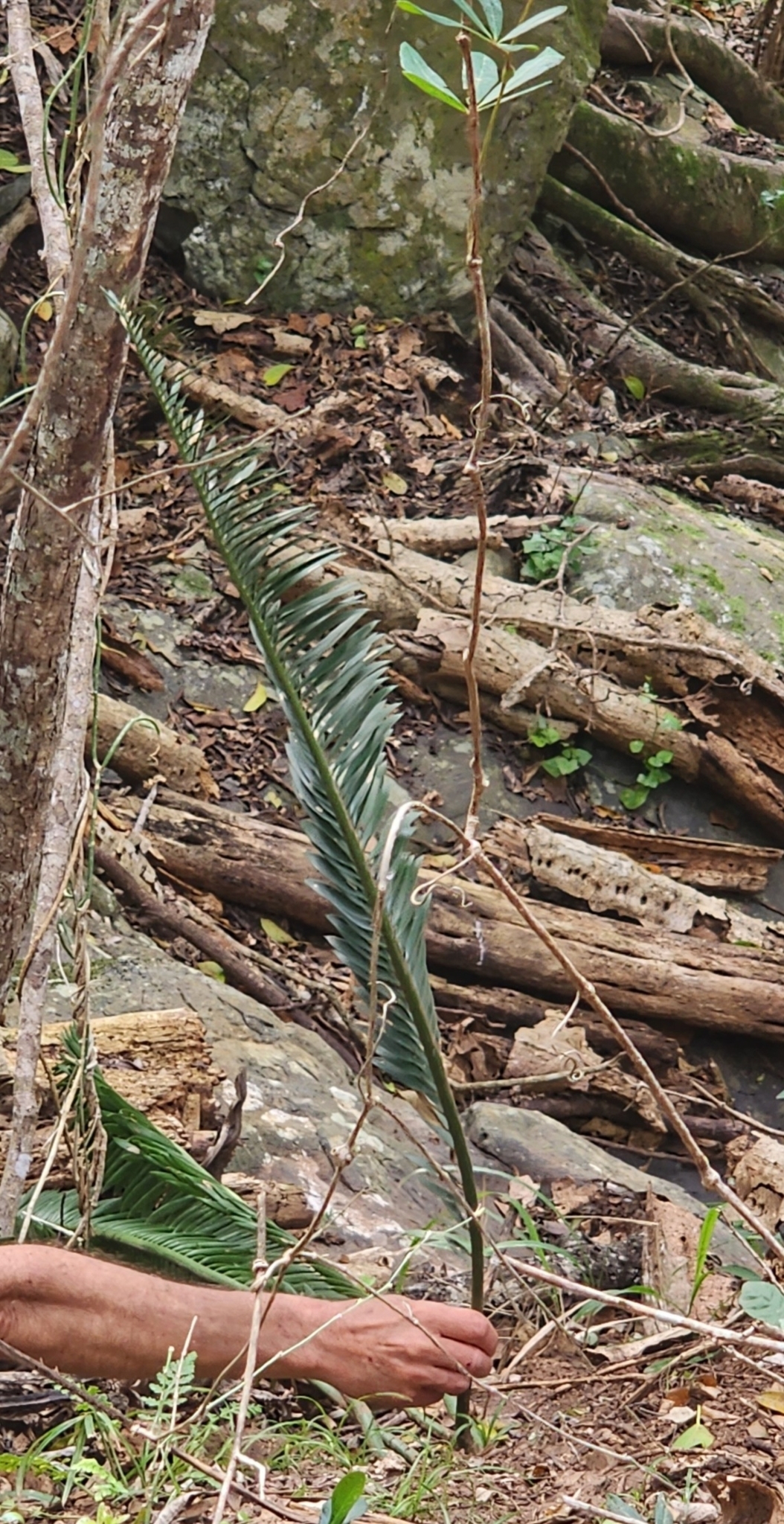
Encephalartos chimanimaniensis is a striking cycad native to the Chimanimani Mountains. It features a stout trunk and pinnate leaves, often with a blue-green hue.
At-a-glance light, water, soil, and growing conditions from plant data
Full sun to partial shade.
75% intensity
Prefers bright, indirect light or direct morning sun.
Allow soil to dry out completely between waterings.
25% intensity
Infrequent, deep watering is key.
Well-drained, sandy or loamy
50% intensity
Warm to moderate temperatures.
50% intensity
Prefers temperatures between 18-30°C. Protect from frost.
Outdoor
50% intensity
Feed sparingly during growing season.
25% intensity
Use a balanced, slow-release fertilizer formulated for cycads.
Safety information from plant toxicity data
| Attribute | Value |
|---|---|
| Toxic for humans | Yes 5/5 intensity |
| Toxic for pets | Yes 5/5 intensity |
| Edible | No |
All parts toxic, especially seeds
Key traits and growing stats from plant data
Watering, pruning, propagation, and repotting details from plant data
Water deeply but infrequently, allowing the soil to dry out completely between waterings. Overwatering is a common cause of root rot.
Reduce watering significantly during cooler, dormant periods to prevent fungal diseases.
Prune only to remove dead or damaged leaves. Cut leaves back to the trunk to maintain a clean appearance. Avoid removing healthy green leaves as they are essential for photosynthesis and the plant's overall health.
Propagation is primarily by seed, which can be slow and challenging. Seeds require specific scarification and stratification treatments.
Offsets (pups) can sometimes be carefully separated from mature plants, but this is often difficult and risky.
Repot only when the plant is severely root-bound, typically every 3-5 years for younger plants. Use a well-draining potting mix. Handle the roots with extreme care as they are sensitive and prone to damage.
Identify plants like this with ePlant AI
Snap a photo to get care tips and match similar species on the go.
Monthly activity intensity for bloom and fruit across both hemispheres.
Flowering & fruiting calendar
Flowering & fruiting calendar
Photos of Chimanimani Cycad (Encephalartos chimanimaniensis)
Where Chimanimani Cycad (Encephalartos chimanimaniensis) is found
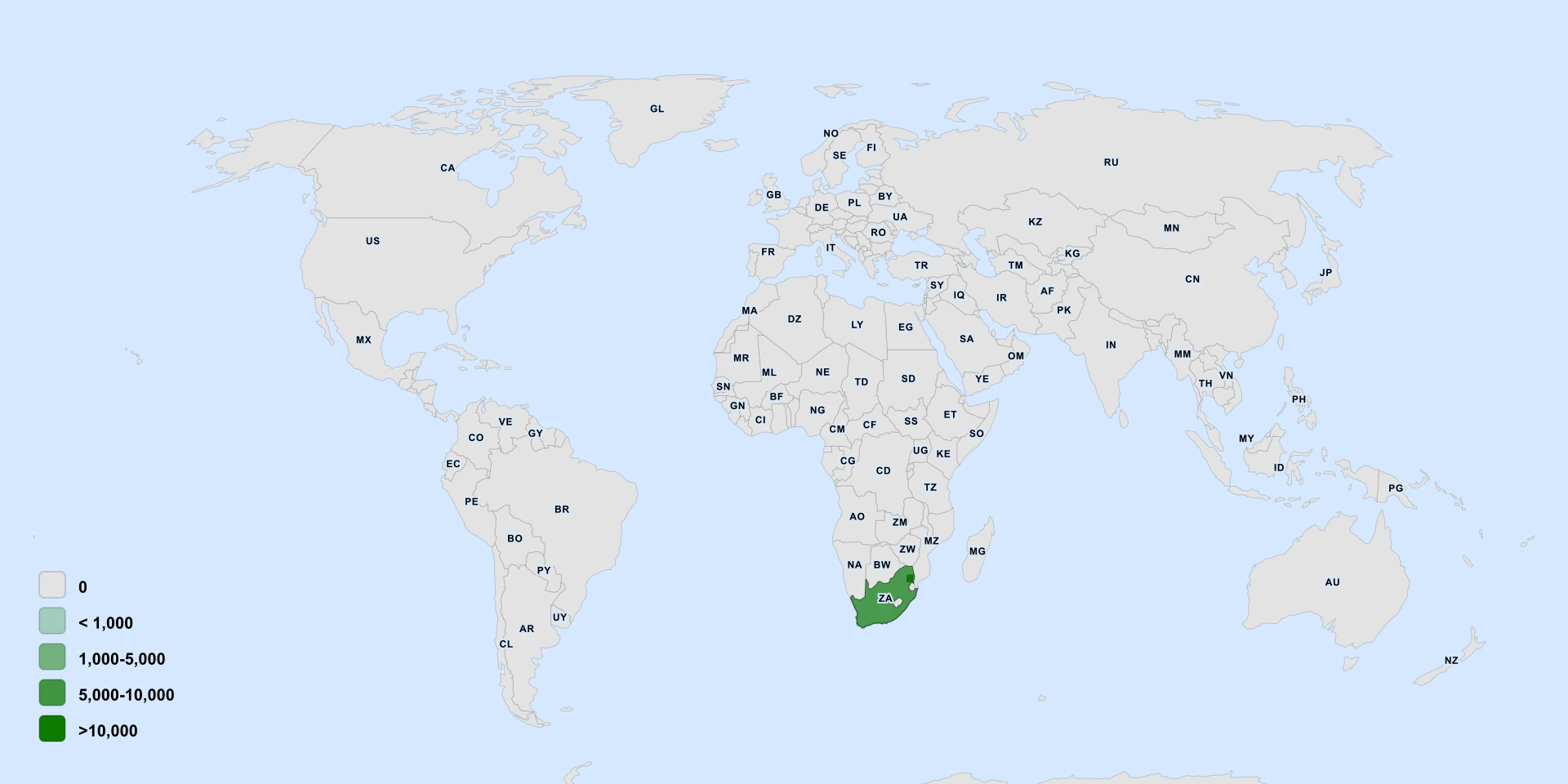
Density
Tap map to explore
Common names and botanical synonyms
Botanical classification
| Rank | Name |
|---|---|
| Kingdom | Plantae |
| Division | Tracheophyta |
| Class | Cycadopsida |
| Order | Cycadales |
| Family | Zamiaceae |
| Genus | Encephalartos |
| Species | Encephalartos chimanimaniensis |
Similar in genus Encephalartos
Answers based on plant encyclopedia data