Water
Keep the central cup filled with fresh water, and water the soil lightly when the top few centimeters feel dry. Avoid waterlogging the soil, as this can lead to root rot. Reduce watering frequency in cooler months.
Ensure good drainage.
Also known as Lobster Claw · Lobster-Claws · Painted Feather
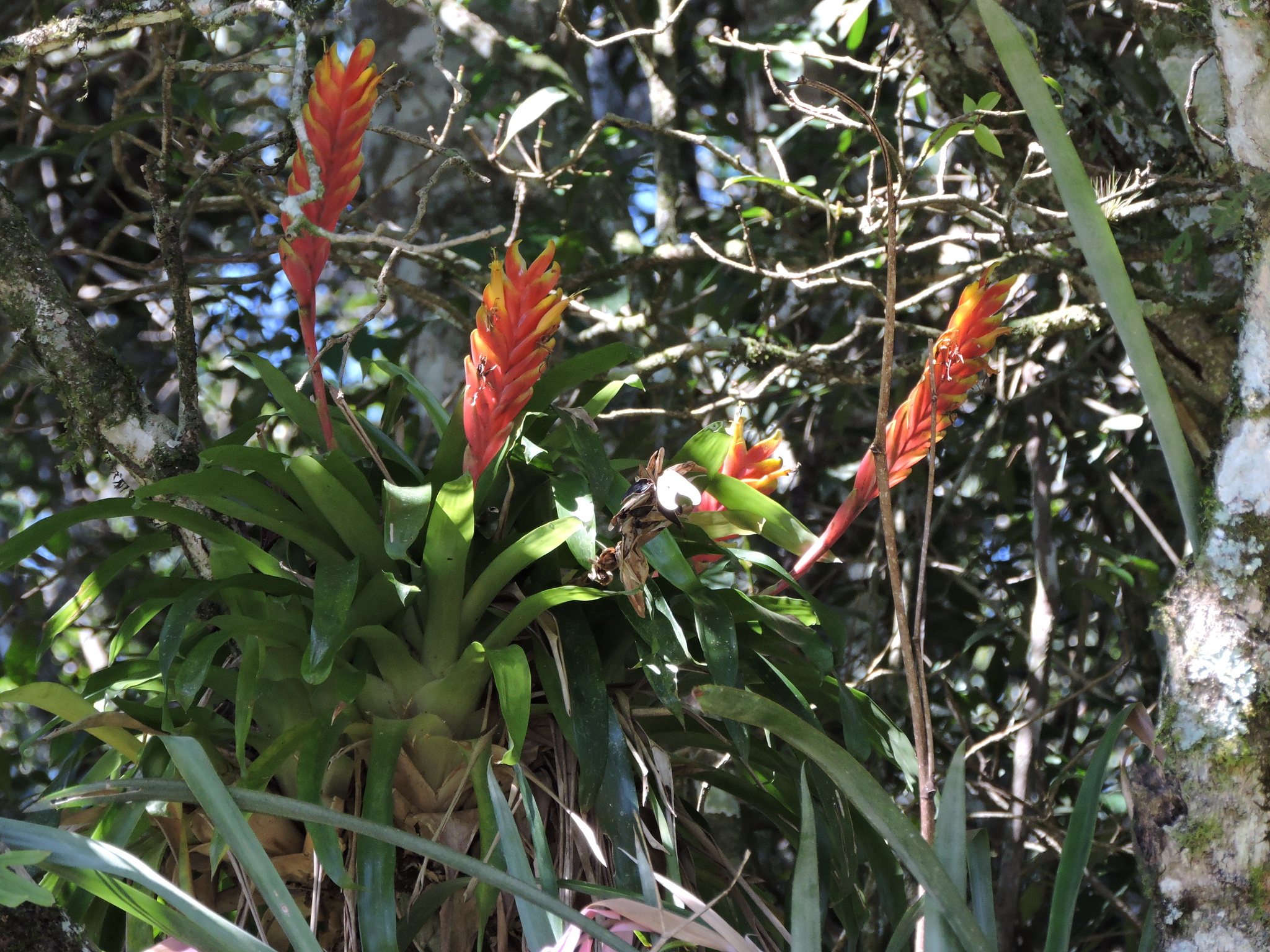
Vriesea carinata is a striking bromeliad with upright, sword-shaped leaves forming a rosette, topped by a vibrant, flat, fan-shaped inflorescence.
At-a-glance light, water, soil, and growing conditions from plant data
Bright, Indirect
75% intensity
Prefers bright, filtered light. Avoid direct sunlight, which can scorch the leaves. North or east-facing windows are ideal.
Moderate
50% intensity
Keep the central cup filled with water and water the soil lightly when dry. Ensure good drainage.
Well-draining potting mix, such as a bromeliad or orchid mix.
50% intensity
Average to Warm
50% intensity
Thrives in temperatures between 18-25°C. Avoid sudden temperature fluctuations and cold drafts.
Light
25% intensity
Feed with diluted liquid fertilizer every 2-3 months during the growing season.
Safety information from plant toxicity data
| Attribute | Value |
|---|---|
| Toxic for humans | No 0/5 intensity |
| Toxic for pets | No 0/5 intensity |
| Edible | No |
Non-toxic
Key traits and growing stats from plant data
Watering, pruning, propagation, and repotting details from plant data
Keep the central cup filled with fresh water, and water the soil lightly when the top few centimeters feel dry. Avoid waterlogging the soil, as this can lead to root rot. Reduce watering frequency in cooler months.
Ensure good drainage.
Pruning is generally minimal for Vriesea carinata. Remove any dead or browning leaves by cutting them close to the base with clean shears.
After the plant flowers and produces pups, the mother plant will naturally decline and can be removed once it is fully spent.
Vriesea carinata is primarily propagated through offsets, also known as pups, which grow from the base of the mother plant. Once the pups are about one-third the size of the parent plant and have developed their own roots, they can be carefully separated and potted into their own containers.
Repotting is only necessary when the plant becomes root-bound or if the potting medium has degraded, typically every 2-3 years. Use a well-draining bromeliad mix or a blend of peat moss, perlite, and bark.
Ensure the new pot has adequate drainage holes.
Identify plants like this with ePlant AI
Snap a photo to get care tips and match similar species on the go.
Monthly activity intensity for bloom and fruit across both hemispheres.
Flowering & fruiting calendar
Flowering & fruiting calendar
Photos of Vriesea Carinata (Vriesea carinata)
Where Vriesea Carinata (Vriesea carinata) is found

Density
Tap map to explore
Common names and botanical synonyms
Botanical classification
| Rank | Name |
|---|---|
| Kingdom | Plantae |
| Division | Tracheophyta |
| Class | Liliopsida |
| Order | Poales |
| Family | Bromeliaceae |
| Genus | Vriesea |
| Species | Vriesea carinata |
Similar in genus Vriesea
Answers based on plant encyclopedia data