Skip to plant details

Solanum UmbellatumSolanum umbellatum

Also known as Nightshade

  • Category: Ornamental
  • Type: Shrub
  • Sunlight: Bright Indirect
  • Water: Moderate
  • Temperature: Average to Warm

Safety note: This plant may be toxic to humans and pets. See toxicity details.

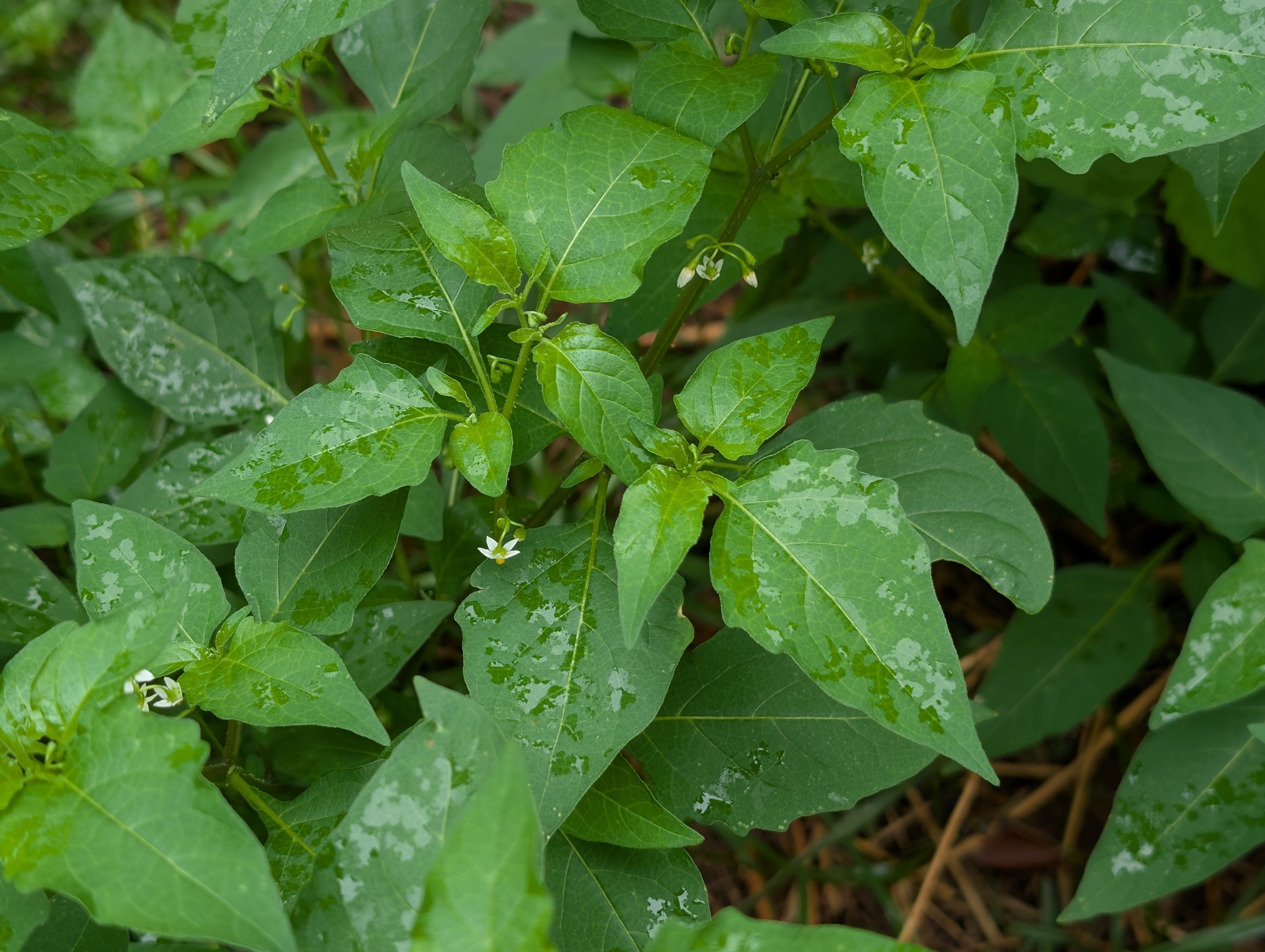
Solanum umbellatum is a shrub or small tree known for its attractive clusters of white to pale violet flowers and round, black berries. It thrives in warm climates.

Solanum umbellatum is a species of flowering plant in the nightshade family, Solanaceae. This species is recognized for its distinct morphological features and its presence within specific ecological niches. As a member of the extensive Solanum genus, it shares characteristics with many other well-known plants, including tomatoes and potatoes, though its specific uses and ecological roles are unique to this taxon. Physically, Solanum umbellatum is typically an erect shrub or small tree, often reaching heights of 1 to 4 meters. Its growth habit is generally upright and branching. The leaves are simple, alternate, and can vary in shape, often being ovate to elliptical, with margins that may be entire or somewhat undulate. The surface of the leaves can be glabrous or slightly pubescent. The inflorescences are characteristic, borne in terminal or axillary cymes, often appearing umbel-like, which gives rise to its specific epithet, "umbellatum." The flowers themselves are typically actinomorphic, with five petals, and are usually white or pale violet in color. The calyx is persistent and often accrescent. Following pollination, the plant produces fruits, which are berries. These berries are usually globose and can range in color from green when immature to yellow or orange when ripe. The seeds are small, numerous, and embedded within the fleshy pulp of the berry. The bark of mature plants is generally smooth and greyish. The native distribution of Solanum umbellatum is primarily in South America, with documented occurrences in countries such as Brazil and Argentina. It thrives in a variety of natural habitats, often found in open woodlands, savannas, and disturbed areas. In terms of cultivation requirements, Solanum umbellatum generally prefers well-drained soils and a sunny to partially shaded environment. While it is adapted to its native climate, specific horticultural needs for widespread cultivation are not extensively documented for ornamental purposes. Information regarding specific ornamental, agricultural, medicinal, culinary, or economic importance for Solanum umbellatum is not widely established or scientifically documented in a manner that allows for definitive statements. Its ecological role within its native ecosystems, such as providing habitat or food for local fauna, is a subject for ecological study rather than widespread horticultural application. One interesting characteristic of Solanum umbellatum, common to many Solanum species, is the presence of alkaloids, though the specific types and concentrations can vary. These compounds can influence the plant's interactions with herbivores and its potential for medicinal or toxicological study. The umbel-like inflorescence is a key diagnostic feature, distinguishing it from other closely related species within the genus. Further detailed research into its ethnobotany and biochemical composition would be necessary to ascertain any specific documented uses.

Photograph © Federico Oviedo Brenes

Solanum Umbellatum Care Summary

At-a-glance light, water, soil, and growing conditions from plant data

Light Exposure

Bright Indirect

75% intensity

Prefers bright, indirect light. Avoid direct, intense sunlight.

Watering Needs

Moderate

50% intensity

Keep soil consistently moist but not soggy.

Soil

Well-drained

50% intensity

Temperature Range

Average to Warm

50% intensity

Ideal temperatures between 18-25°C. Avoid frost and sudden temperature drops.

Fertilization Schedule

Moderate

50% intensity

Fertilize every 4-6 weeks during the growing season.

Solanum Umbellatum Toxicity

Safety information from plant toxicity data

Toxicity details for Solanum Umbellatum
AttributeValue
Toxic for humansYes

3/5 intensity

Toxic for petsYes

3/5 intensity

EdibleNo

Fruits and leaves are toxic if ingested.

Solanum Umbellatum Quick Facts

Key traits and growing stats from plant data

Plant Type
Shrub
Plant Category
Ornamental
Plant Place Type
Garden, Pot
Lifespan
Perennial
Plant Height
1-3 m
Spread
1-2 m
Growth Rate
Moderate
Dormancy
None
Leaf Color
Green
Leaf Type
Simple
Flower Size
2-3 cm
Optimal Sunlight Lux
60000

Care guide for Solanum Umbellatum

Watering, pruning, propagation, and repotting details from plant data

Water

Water regularly, keeping the soil consistently moist but not waterlogged. Allow the top few centimeters of soil to dry out between waterings.

Reduce watering slightly during cooler months, but do not let the soil become completely dry. Good drainage is essential to prevent root rot.

Pruning

Prune in late winter or early spring before new growth begins. Remove any dead, damaged, or crossing branches to maintain a healthy structure. You can also prune to shape the plant and encourage bushier growth.

This helps to improve air circulation and overall plant health.

Propagation

Propagate from semi-hardwood cuttings taken in summer or from seed sown in spring. For cuttings, use a rooting hormone and plant in a well-draining potting mix.

Keep the cuttings moist and in a warm location with bright, indirect light. Seeds require consistent moisture and warmth.

Repotting

Repot young plants annually in spring, and mature plants every 2-3 years. Use a good quality, well-draining potting mix. Choose a pot that is only slightly larger than the current one to avoid waterlogging.

Repotting provides fresh nutrients and space for root growth.

Identify plants like this with ePlant

Snap a photo to get care tips and match similar species on the go.

Try for Free

Flowering & Fruiting Cycles

Monthly activity intensity for bloom and fruit across both hemispheres.

Northern hemisphere

Flowering & fruiting calendar

Peak bloom · JunPeak fruit · Jul
FloweringFruiting
02468JanFebMarAprMayJunJulAugSepOctNovDecActivity intensityMonths66
Southern hemisphere

Flowering & fruiting calendar

Peak bloom · AugPeak fruit · Sep
FloweringFruiting
02468JanFebMarAprMayJunJulAugSepOctNovDecActivity intensityMonths66

Solanum Umbellatum Names & Synonyms

Common names and botanical synonyms

Common Names

  • Nightshade

Synonyms

  • Solanum chlorophloium St.-Lag.
  • Solanum cortex-virens Dunal
  • Solanum lancifolium Sessé & Moc.
  • Solanum receptum Van Heurck & Müll.Arg.

Solanum Umbellatum Taxonomy

Botanical classification

Taxonomic classification of Solanum Umbellatum
RankName
kingdomPlantae
divisionTracheophyta
classMagnoliopsida
orderSolanales
familySolanaceae
genusSolanum
speciesSolanum umbellatum

Solanum Umbellatum FAQs

Answers based on plant encyclopedia data

What are the light requirements for Solanum umbellatum?

Solanum umbellatum prefers full sun to partial shade. It performs best with at least six hours of direct sunlight per day.

What type of soil is best for Solanum umbellatum?

This plant thrives in well-drained soil. It can tolerate a range of soil types, including sandy, loamy, and clay soils, but good drainage is crucial.

How often should Solanum umbellatum be watered?

Water regularly, especially during dry periods, to keep the soil consistently moist but not waterlogged. Once established, it can tolerate some drought.

Is Solanum umbellatum frost-tolerant?

Solanum umbellatum is generally not frost-tolerant and is best suited for warmer climates. It may be damaged or killed by freezing temperatures.

Are the berries of Solanum umbellatum edible?

The berries of Solanum umbellatum are considered toxic if ingested. It is advisable to keep children and pets away from the plant.