Skip to plant details

Pseuderanthemum MaculatumPseuderanthemum maculatum

Also known as Carruthers' Falseface · Golden Pseuderanthemum · Loropetlum

  • Category: Ornamental
  • Type: Shrub
  • Sunlight: Bright, indirect light
  • Water: Regular watering
  • Temperature: Average room temperatures
  • Habitat: Indoor, Outdoor

Pseuderanthemum maculatum is a tropical evergreen shrub known for its attractive foliage, often variegated with cream, yellow, or white markings.

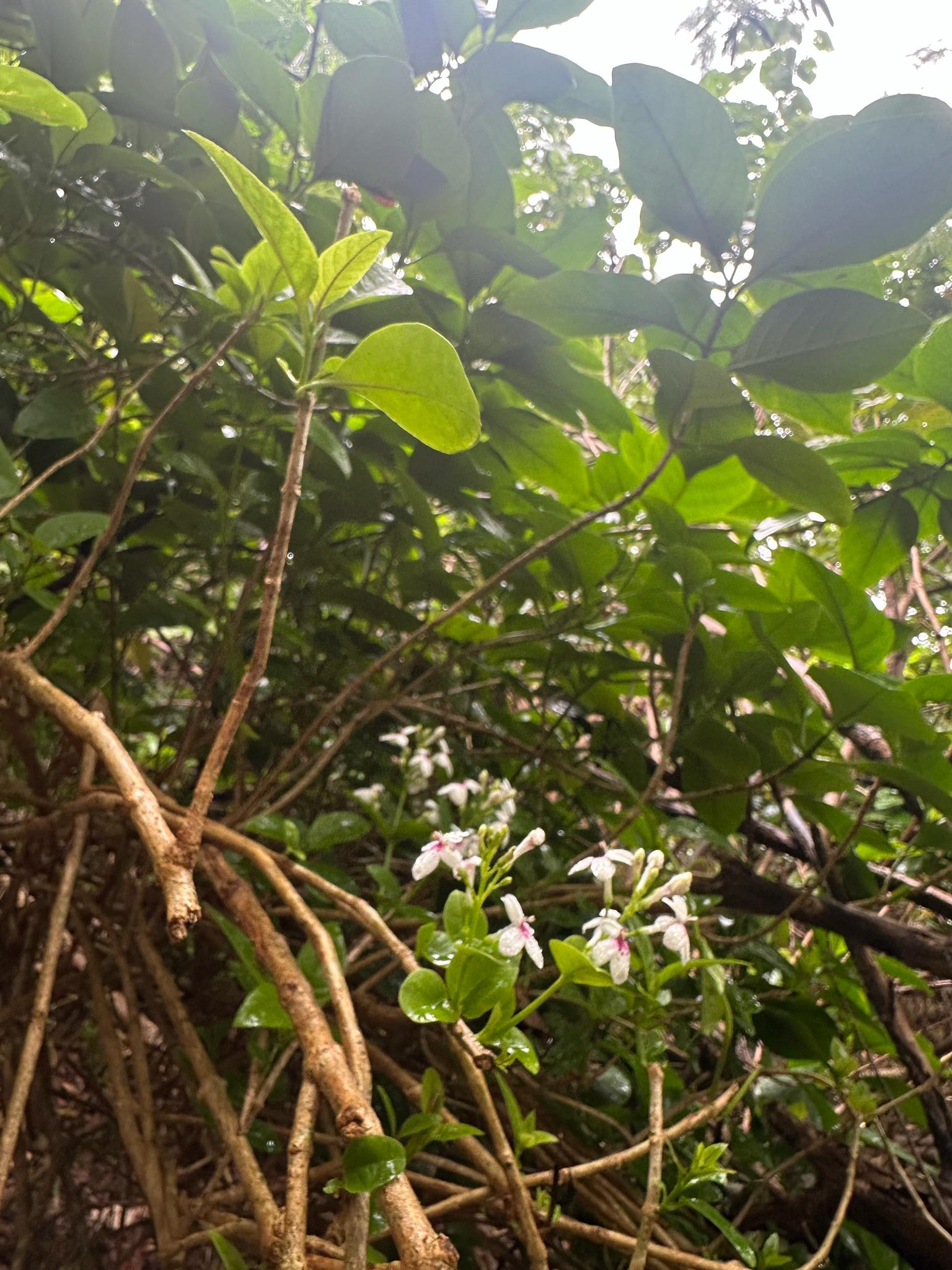
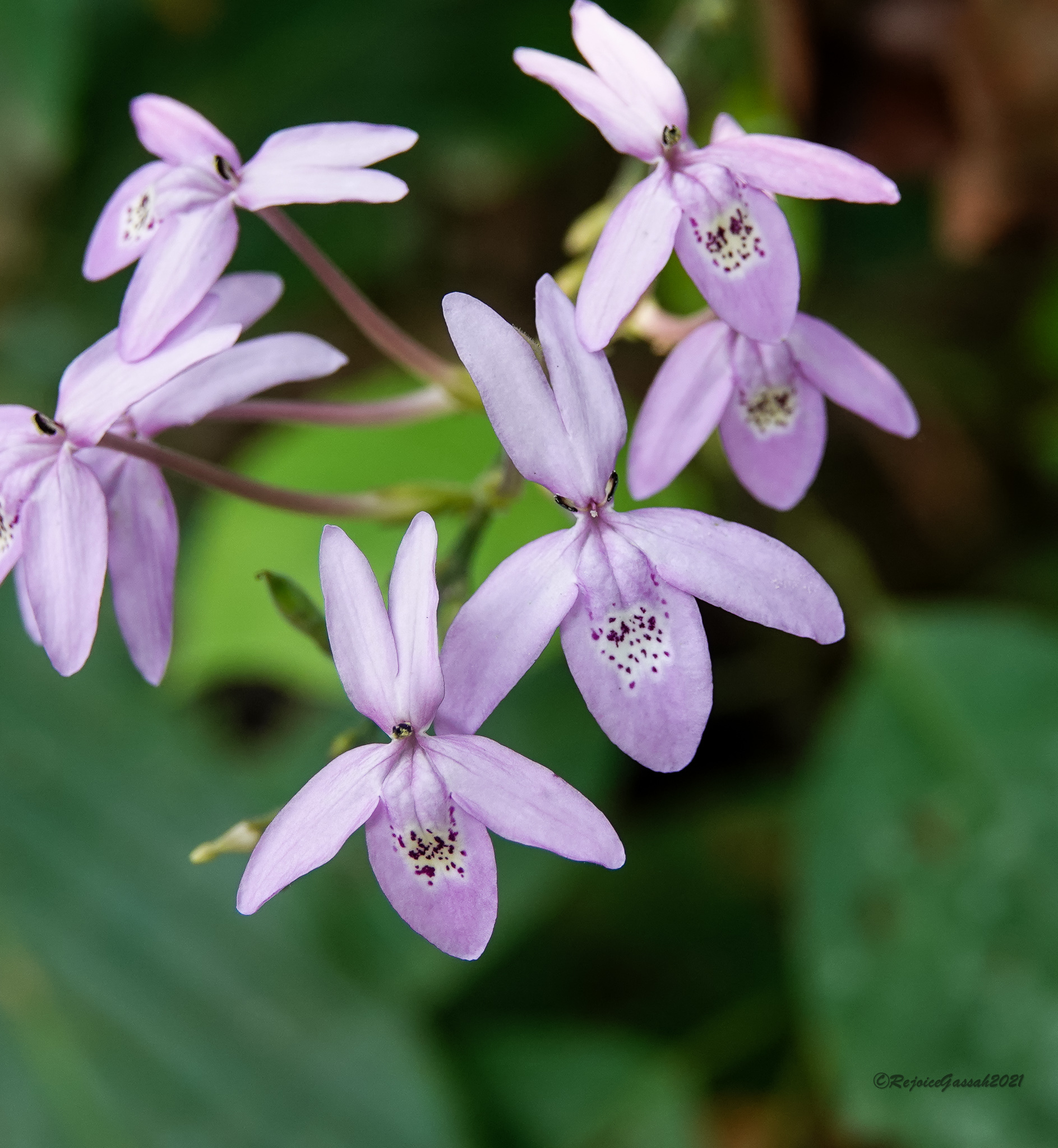
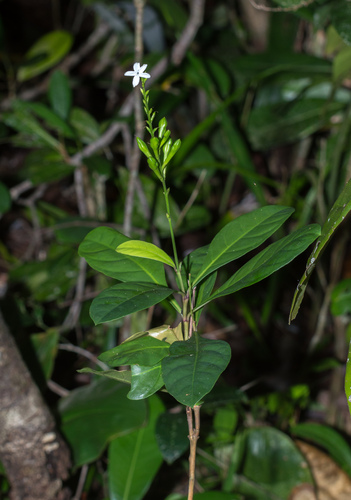
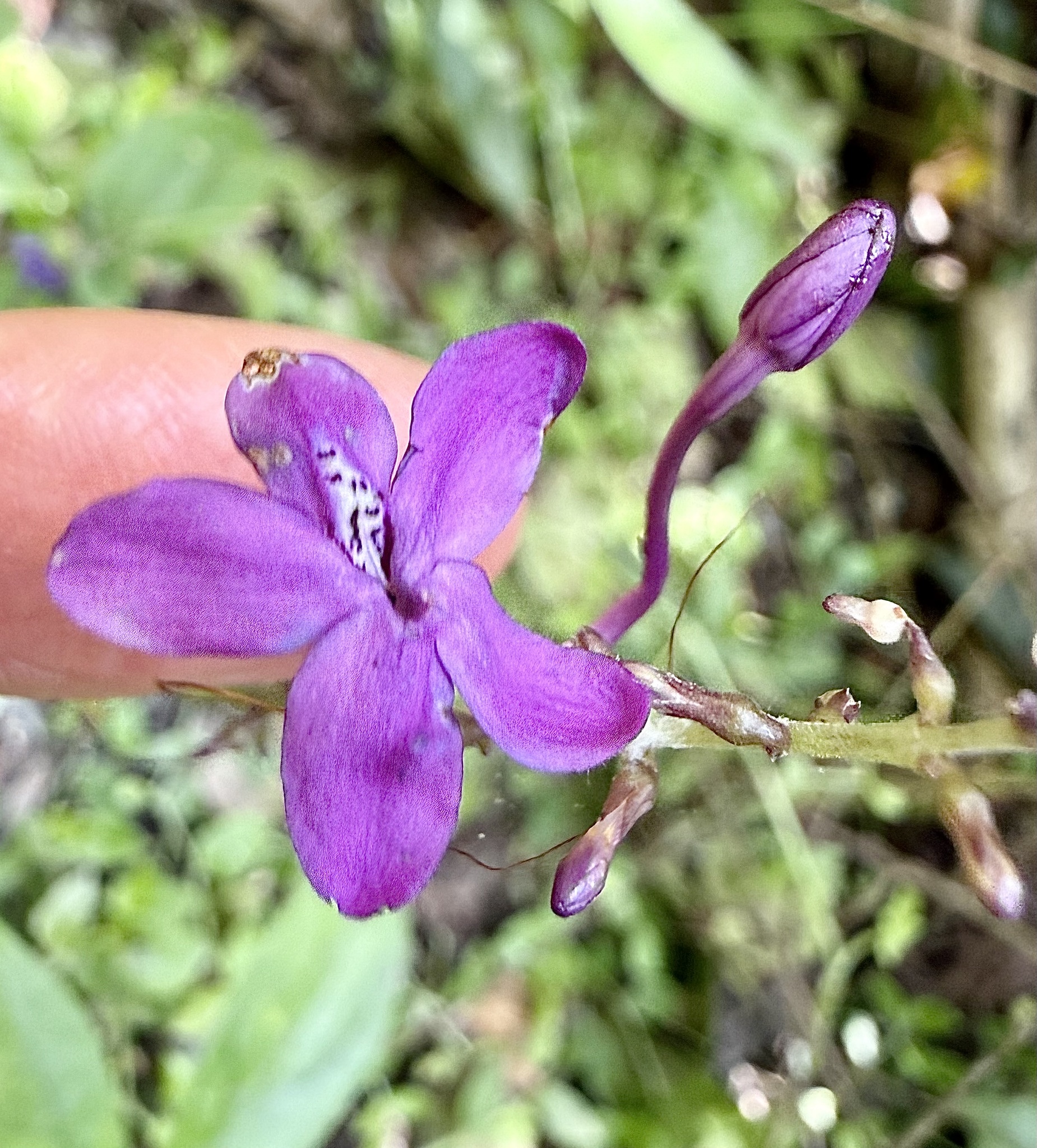
Pseuderanthemum maculatum is a species of flowering plant in the family Acanthaceae. This plant is recognized for its attractive foliage and is often cultivated as an ornamental. It is a herbaceous perennial that typically forms a bushy, upright growth habit. Mature plants can reach a height of approximately 30 to 60 centimeters, with a similar spread. The most striking feature of Pseuderanthemum maculatum is its foliage. The leaves are ovate to lanceolate in shape, with serrated or undulate margins. They are arranged oppositely along the stems and are typically a deep green color, often adorned with irregular markings or blotches of white, cream, or pale yellow, which give the plant its common name and ornamental appeal. The inflorescences of Pseuderanthemum maculatum are borne in terminal or axillary spikes. The individual flowers are relatively small and tubular, usually with five petals. The color of the flowers can vary, but they are often white or pale pink, sometimes with darker markings in the throat. These flowers are typically produced intermittently throughout the warmer months, adding a delicate touch to the plant's visual display. Following flowering, small capsules may develop, containing seeds. The bark of the stems is generally smooth and green when young, becoming slightly woody with age. Pseuderanthemum maculatum is native to the tropical regions of Australia, specifically found in Queensland. Its natural habitat is typically within rainforest understories or along the edges of forests, where it thrives in dappled shade and moist conditions. In cultivation, it is well-suited to tropical and subtropical climates and is also grown as a houseplant in cooler regions. It prefers well-drained, fertile soil and benefits from consistent moisture, though it can tolerate short periods of dryness once established. For optimal growth and leaf coloration, it requires bright, indirect light; direct sunlight can scorch the leaves, while deep shade may result in less vibrant variegation. Regular pruning can help maintain a compact and bushy form. While primarily valued for its ornamental qualities, there is limited scientifically documented information regarding other significant uses for Pseuderanthemum maculatum. Its attractive, variegated foliage makes it a popular choice for landscaping in suitable climates and for container gardening. The plant's ability to tolerate shade makes it a useful option for underplanting in gardens or for brightening dimly lit indoor spaces. Its ecological role in its native habitat is likely that of a groundcover plant, contributing to the understory vegetation. No widespread medicinal, culinary, or economic applications are scientifically established for this species. An interesting characteristic is the way its variegated leaves provide visual interest even in the absence of flowers, making it a year-round garden feature.

Photograph © Sugianto Tjandra · CC-BY-NC

Pseuderanthemum Maculatum Care Summary

At-a-glance light, water, soil, and growing conditions from plant data

Light

Bright, indirect light

75% intensity

Prefers bright, filtered light; can tolerate partial shade, but may become leggy. Avoid direct, harsh sunlight which can scorch leaves.

Watering

Regular watering

75% intensity

Keep soil consistently moist, allowing the top layer to dry slightly between waterings.

Soil

Well-drained

50% intensity

Temperature

Average room temperatures

50% intensity

Thrives in temperatures between 18-24°C. Avoid sudden temperature fluctuations and cold drafts.

Habitat

Indoor, Outdoor

50% intensity

Fertilizer

Regular feeding during growing season

50% intensity

Feed with a balanced liquid fertilizer diluted to half strength monthly from spring to fall.

Pseuderanthemum Maculatum Toxicity

Safety information from plant toxicity data

Toxicity details for Pseuderanthemum Maculatum
AttributeValue
Toxic for humansNo

0/5 intensity

Toxic for petsNo

0/5 intensity

Pseuderanthemum Maculatum Quick Facts

Key traits and growing stats from plant data

Plant Type
Shrub
Plant Category
Ornamental
Plant Place Type
Garden, Pot
Plant Environment
Indoor, Outdoor
Lifespan
Perennial
Plant Height
0.5-1.0 m
Spread
0.5-1.0 m
Growth Rate
Moderate
Dormancy
None
Leaf Color
Green, White, Yellow, Purple
Leaf Type
Simple
Flower Size
1-2 cm
Optimal Sunlight Lux
1500

Care guide for Pseuderanthemum Maculatum

Watering, pruning, propagation, and repotting details from plant data

Water

Keep the soil consistently moist but not waterlogged. Water thoroughly when the top 2-3 cm of soil feels dry. Reduce watering slightly during cooler months, but avoid letting the soil dry out completely.

Good drainage is crucial to prevent root rot.

Pruning

Prune to maintain a desirable shape and encourage bushier growth. Pinch back the tips of stems regularly. Remove any leggy or overgrown branches to promote denser foliage.

Pruning can be done at any time, but is most effective in spring before active growth begins.

Propagation

Easily propagated from stem cuttings. Take 10-15 cm cuttings from healthy stems, remove lower leaves, and dip the cut end in rooting hormone.

Plant in moist potting mix or perlite and keep in a warm, humid environment until roots form, usually within 3-4 weeks.

Repotting

Repot every 1-2 years, or when the plant becomes root-bound. Choose a pot that is slightly larger than the current one. Use a well-draining potting mix.

Repotting is best done in spring before the start of the active growing season to minimize stress.

Identify plants like this with ePlant

Snap a photo to get care tips and match similar species on the go.

Try for Free

Flowering & Fruiting Cycles

Monthly activity intensity for bloom and fruit across both hemispheres.

Northern hemisphere

Flowering & fruiting calendar

Peak bloom · JunPeak fruit · Aug
FloweringFruiting
02468JanFebMarAprMayJunJulAugSepOctNovDecActivity intensityMonths85
Southern hemisphere

Flowering & fruiting calendar

Peak bloom · NovPeak fruit · Jan
FloweringFruiting
02468JanFebMarAprMayJunJulAugSepOctNovDecActivity intensityMonths855

Pseuderanthemum Maculatum Names & Synonyms

Common names and botanical synonyms

Common Names

  • Carruthers' Falseface
  • Golden Pseuderanthemum
  • Loropetlum
  • Pseuderanthemum
  • Purple False Eranthemum
  • Ruspolia
  • Yellow-Vein Eranthemum

Synonyms

  • Eranthemum albomarginatum B.S.Williams
  • Eranthemum argenteum Van Geert
  • Eranthemum atropurpureum W.Bull ex A.de Vos
  • Eranthemum aureoreticulatum H.J.Veitch
  • Eranthemum carruthersii Seem.
  • Eranthemum eldorado B.S.Williams
  • Eranthemum maculatum (G.Lodd.) Regel
  • Eranthemum moorei A.de Vos
  • Eranthemum nigrescens W.Bull
  • Eranthemum nigrum Linden
  • Eranthemum reticulatum W.Bull ex A.de Vos
  • Eranthemum schomburgkii Anon.
  • Eranthemum tricolor W.Bull
  • Eranthemum versicolor A.de Vos
  • Eranthemum whartonianum Hemsl.
  • Justicia maculata G.Lodd.
  • Pseuderanthemum atropurpureum (W.Bull ex A.de Vos) Radlk.
  • Pseuderanthemum carruthersii (Seem.) Guillaumin
  • Pseuderanthemum eldorado (B.S.Williams) Radlk.
  • Pseuderanthemum jaluitense Lindau
  • Pseuderanthemum kewense L.H.Bailey
  • Pseuderanthemum moorei (A.de Vos) Radlk.
  • Pseuderanthemum nigrum (Linden) Hallier f.
  • Pseuderanthemum reticulatum (W.Bull ex A.de Vos) Radlk.
  • Pseuderanthemum tricolor Radlk.
  • Pseuderanthemum versicolor (A.de Vos) Radlk.
  • Siphoneranthemum atropurpureum (W.Bull ex A.de Vos) Kuntze
  • Siphoneranthemum eldorado (B.S.Williams) Kuntze
  • Siphoneranthemum moorei (A.de Vos) Kuntze
  • Siphoneranthemum reticulatum (W.Bull ex A.de Vos) Kuntze
  • Siphoneranthemum tricolor (W.Bull) Kuntze
  • Siphoneranthemum versicolor (A.de Vos) Kuntze

Pseuderanthemum Maculatum Taxonomy

Botanical classification

Taxonomic classification of Pseuderanthemum Maculatum
RankName
kingdomPlantae
divisionTracheophyta
classMagnoliopsida
orderLamiales
familyAcanthaceae
genusPseuderanthemum
speciesPseuderanthemum maculatum

Pseuderanthemum Maculatum FAQs

Answers based on plant encyclopedia data

What are the light requirements for Pseuderanthemum maculatum?

Pseuderanthemum maculatum thrives in bright, indirect light. It can tolerate some direct morning sun but should be protected from harsh afternoon sun.

How often should I water Pseuderanthemum maculatum?

Water Pseuderanthemum maculatum when the top inch of soil feels dry. It prefers consistently moist soil but avoid waterlogging.

What kind of soil does Pseuderanthemum maculatum prefer?

This plant prefers well-draining, fertile potting mix. A general-purpose indoor potting mix is usually suitable.

Can Pseuderanthemum maculatum be grown outdoors?

Yes, Pseuderanthemum maculatum can be grown outdoors in tropical and subtropical climates where it is not exposed to frost. In cooler climates, it is typically grown as a houseplant.

How do I propagate Pseuderanthemum maculatum?

Pseuderanthemum maculatum can be easily propagated from stem cuttings. Take cuttings in spring or summer and root them in moist soil or water.