Water
Water thoroughly when the potting medium is nearly dry. Avoid letting the plant sit in water, as this can lead to root rot.
Reduce watering slightly during the cooler, dormant periods, but never allow the pseudobulbs to completely shrivel.
Also known as Digby's Beaked Laelia
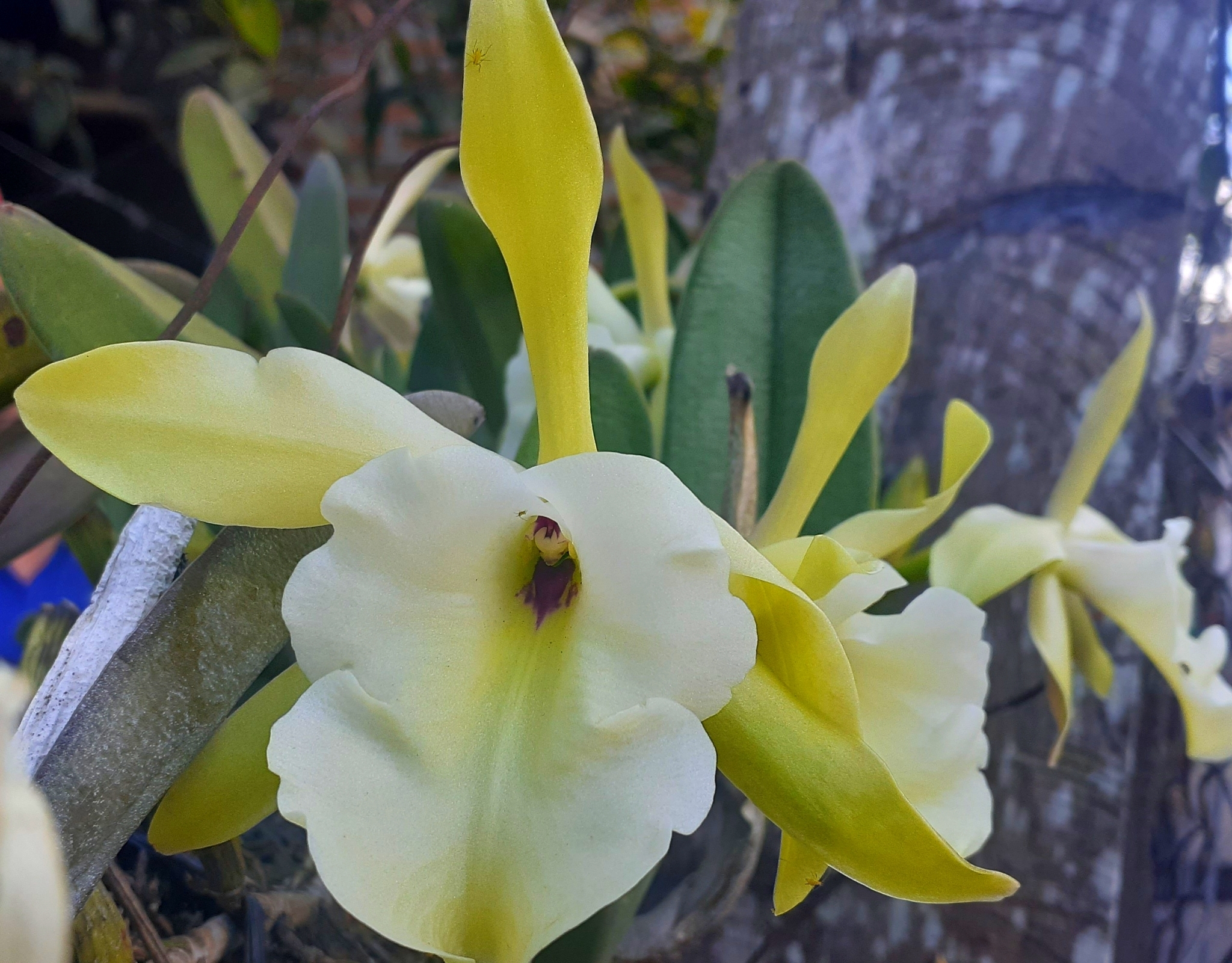
Flor Nacional De Honduras (Rhyncholaelia digbyana) is a spectacular orchid with large, fragrant, white to greenish-yellow flowers, featuring a distinctive, fringed lip.
At-a-glance light, water, soil, and growing conditions from plant data
Bright indirect
75% intensity
Provide bright, filtered light, mimicking its natural habitat. Avoid direct, harsh sunlight, which can scorch the leaves.
Moderate
50% intensity
Allow potting mix to dry slightly between waterings.
Orchid bark mix or similar well-draining medium
50% intensity
Warm to intermediate
75% intensity
Prefers daytime temperatures of 21-27°C and nighttime temperatures of 13-18°C. Avoid drastic temperature fluctuations.
Moderate
50% intensity
Fertilize during the growing season with a balanced orchid feed, reducing frequency in winter.
Safety information from plant toxicity data
| Attribute | Value |
|---|---|
| Toxic for humans | No 0/5 intensity |
| Toxic for pets | No 0/5 intensity |
| Edible | No |
Key traits and growing stats from plant data
Watering, pruning, propagation, and repotting details from plant data
Water thoroughly when the potting medium is nearly dry. Avoid letting the plant sit in water, as this can lead to root rot.
Reduce watering slightly during the cooler, dormant periods, but never allow the pseudobulbs to completely shrivel.
Pruning is generally minimal for Rhyncholaelia digbyana. Remove spent flower spikes after blooming to encourage reblooming.
Dead or damaged leaves or pseudobulbs can be carefully trimmed away using sterile cutting tools to maintain plant health and appearance.
Propagation is primarily achieved through division.
When the plant has multiple pseudobulbs and has outgrown its pot, carefully divide the clump into sections, ensuring each section has at least three healthy pseudobulbs and roots. Repot divisions as usual.
Repot every 2-3 years, or when the potting medium begins to break down. Choose a pot that provides good drainage, slightly larger than the previous one.
Use a well-draining orchid mix, such as bark and perlite, and ensure the rhizome is at or slightly above the surface.
Identify plants like this with ePlant AI
Snap a photo to get care tips and match similar species on the go.
Monthly activity intensity for bloom and fruit across both hemispheres.
Flowering & fruiting calendar
Flowering & fruiting calendar
Photos of Flor Nacional De Honduras (Rhyncholaelia digbyana)
Where Flor Nacional De Honduras (Rhyncholaelia digbyana) is found

Density
Tap map to explore
Common names and botanical synonyms
Botanical classification
| Rank | Name |
|---|---|
| Kingdom | Plantae |
| Division | Tracheophyta |
| Class | Liliopsida |
| Order | Asparagales |
| Family | Orchidaceae |
| Genus | Rhyncholaelia |
| Species | Rhyncholaelia digbyana |
Similar in genus Rhyncholaelia
Answers based on plant encyclopedia data