
About the author
James Okonkwo
Horticulturist & Plant Identification Specialist
James holds a B.Sc. in plant science and has led community plant-ID workshops across the UK. He focuses on field identification, invasive species awareness, and how AI tools fit alongside traditional botany.
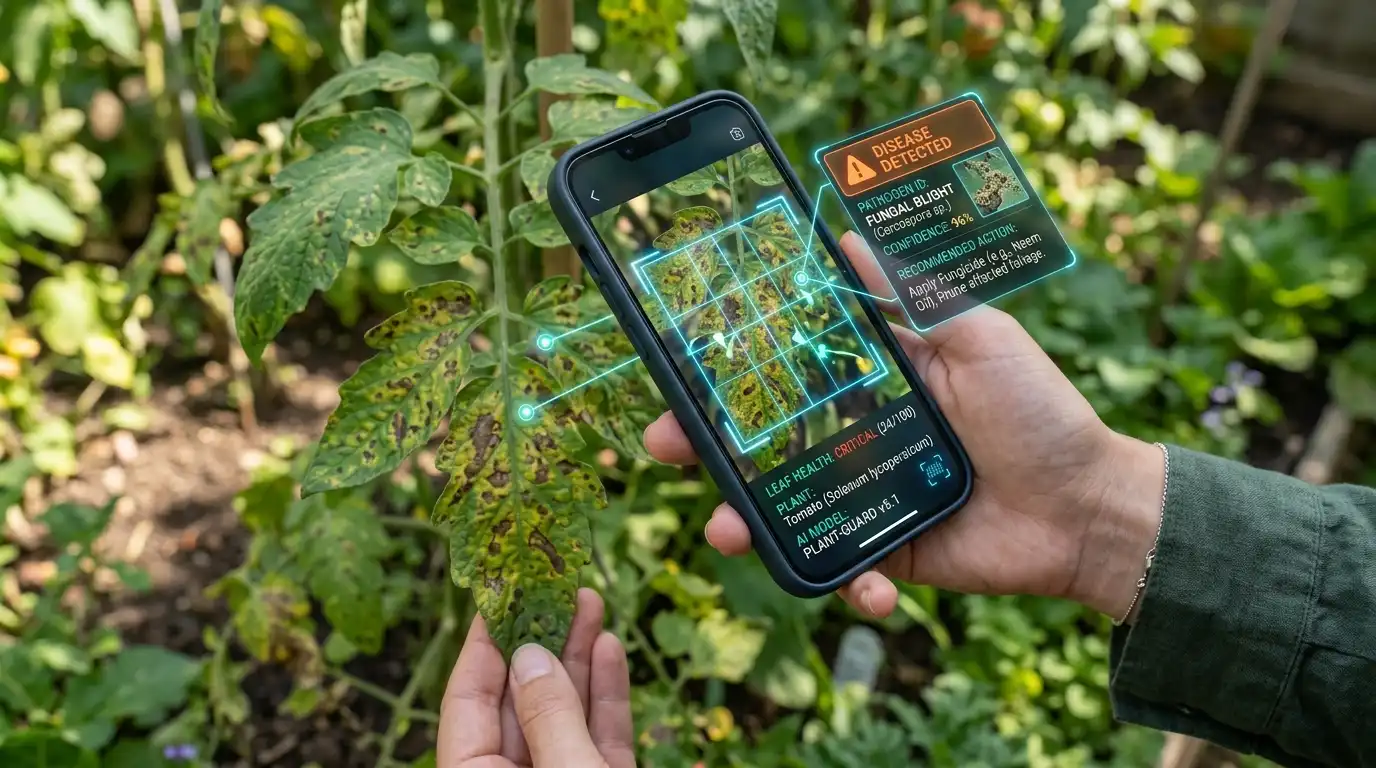
"Yes, AI can help identify many plant diseases and pest damage from a photo. Apps like ePlant AI get a lot right on common issues such as powdery mildew, spider mite damage, and overwatering. They work best as a first step, not a replacement for a lab or expert when the stakes are high.
AI plant ID and disease tools are trained on millions of images. They are good at pattern recognition: leaf spots, webbing, yellowing patterns, and typical pest or fungal damage. Research in Nature Scientific Reports and similar work shows strong accuracy for many visual diagnoses. Use the ePlant AI identifier and our disease diagnosis to get a fast second opinion. For detailed symptom guides, see our plant diseases guide and yellow leaves guide.
What AI Plant Apps Get Right
- Recognizing common leaf patterns (powdery mildew, black spot, rust).
- Spotting pest damage (stippling from spider mites, aphid honeydew).
- Suggesting overwatering or root rot when leaves and context fit.
- Narrowing down plant species so you can look up care and typical problems.
Where AI Can Miss or Mislead
- Rare or new diseases not well represented in training data.
- Confusing similar-looking issues (e.g. nutrient deficiency vs virus).
- Poor photo quality, wrong angle, or wrong plant part reducing accuracy.
- No lab confirmation: for serious crops or legal/economic decisions, always get expert or lab diagnosis when needed.
Best practice: use AI for quick triage and learning, then confirm critical cases with extension services or a plant pathologist. Try ePlant AI for ID and disease hints, and read our how to identify plants with AI for tips on taking better photos.
Try AI Plant and Disease ID
Upload a photo with ePlant AI for instant plant ID and disease hints.
Diagnose with ePlant AIFrequently Asked Questions
How accurate is AI plant disease identification?
For common diseases and clear photos, leading apps often achieve high accuracy. Accuracy drops with rare conditions, blurry or poorly lit images, or wrong plant part. Use AI as a helpful first step, not a final verdict for high-stakes decisions.