
About the author
Elena Vasquez
Indoor Gardening & Lifestyle Editor
Elena writes about apartment-friendly plants, design-forward houseplant trends, and creative projects like kokedama and terrariums. She balances aesthetics with realistic care advice for busy households.
A curled leaf is a clue. Learn which signs point to everyday stress-and which deserve a closer look.
Why are tomato leaves curling?
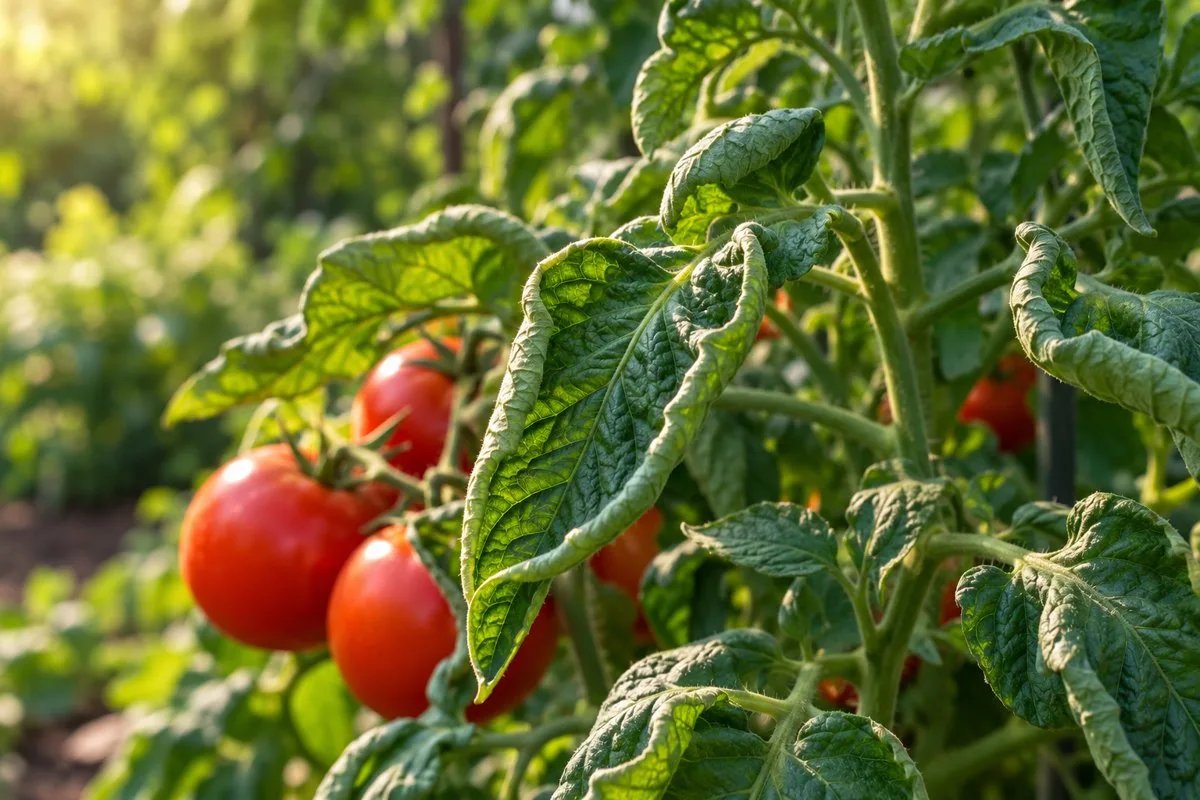
Tomato leaves can curl because of heat or moisture stress, growth changes, pests, herbicide injury, or disease. Green rolled lower leaves with healthy new growth often fit physiological leaf roll. Yellow, distorted new leaves or a stunted plant need closer investigation. Check the soil and leaf undersides before choosing a treatment.
For a broader houseplant and garden overview, see why plant leaves curl. If you are unsure of the variety or want a second look at symptoms, try our plant identifier or plant disease identifier.
Start with a 60-second plant check
Before you reach for fertilizer or a spray, look at the whole plant. Is it still growing? Are the affected leaves green or yellow? Is the soil dry, damp, or waterlogged? Curling is a symptom, so the useful question is what changed before it started.
- Check the newest leaves. Compare the growing tip with older leaves lower down. Healthy new growth is reassuring.
- Feel the soil below the surface. Check several spots in a bed, or the root zone of a pot. A dry surface can hide wet soil underneath.
- Turn over a leaf. Look for clusters of aphids, moving whiteflies, sticky residue, or fine webbing.
- Review the last few days. Note heat, wind, heavy rain, transplanting, pruning, fertilizer, and nearby weed spraying.
Tomato leaves curling up vs. down: what it tells you
Direction helps describe the problem, but cannot identify the cause by itself. Pair the curl with leaf color, the age of affected leaves, and the condition of the growing tip.
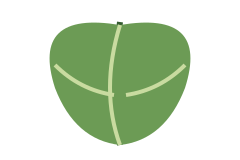
Curling upward
Green, firm lower leaves with normal new growth often fit physiological leaf roll.
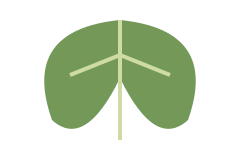
Curling downward
Inspect moisture, roots, and recent feeding. Downward curl alone does not prove overwatering.

Curling + yellowing
Check drainage and pests. Small distorted new leaves with stunting deserve closer investigation.
Simplified illustrations of symptom patterns; these are not diagnostic photographs.
| What you see | What to investigate | First action |
|---|---|---|
| Green lower leaves rolled up; plant growing normally | Physiological leaf roll, heat or moisture stress | Check moisture; avoid unnecessary treatment |
| Curling and wilting with dry soil | Water shortage | Water the root zone and reassess |
| Curling or yellowing with persistently wet soil | Poor drainage or root stress | Check drainage before watering again |
| Twisted, narrow or misshapen new leaves | Herbicide exposure or another growth disorder | Review spray and compost history |
| Small yellow curled new leaves; stunted plant | Virus disease, including TYLCV where present | Seek local diagnosis; inspect for whiteflies |
Why are my tomato leaves curling?
1Heat, dry weather, and physiological leaf roll
Older leaves can roll inward and upward while staying green and firm. This is a stress response called physiological leaf roll. Pruning and rapid growth may also contribute. If the growing tip looks normal and fruit continues developing, the curled leaves alone are not a reason to spray. This condition generally does not noticeably reduce yield.
Check that watering is consistent and the root zone is not drying excessively. During exceptional heat, temporary afternoon shade may help a stressed container plant. Keep airflow around the plant and avoid stripping off its protective foliage.
2Too little water-or roots staying too wet
A thirsty plant may wilt as well as curl. Water slowly at the base when the root zone is dry, rather than giving a quick splash over the leaves. If soil is already wet, more water can make root stress worse. Check that containers drain freely and are not sitting in a water-filled saucer.
There is no watering schedule that fits every garden. Container size, weather, soil, plant size, and rainfall all change demand. Use the soil condition to guide the next watering; curl direction cannot tell you whether the plant needs a drink.
3Transplanting, pruning, or a sudden change in conditions
Note whether curling began just after planting out, heavy pruning, or moving a pot from a sheltered spot into stronger sun and wind. Stabilize care and watch the growing tip. Seedlings should be introduced to outdoor conditions gradually rather than moved straight from indoors into a full day of exposure.
4Heavy feeding or a fertilizer mistake
Do not assume curled leaves mean the plant lacks calcium or magnesium. Review the product, dose, and date of your last feeding. Too much nitrogen encourages leafy growth at the expense of fruiting. Use soil-test guidance and the product label instead of adding extra nutrients in response to one ambiguous symptom.
5Aphids and other pests
Heavy aphid feeding can distort leaves. Check undersides and tender shoots for small clustered insects. Photograph what you find before treating. Fine webbing or tiny pale speckles calls for a closer pest inspection rather than an automatic diagnosis from the curl. Choose a control suitable for the identified pest and edible tomatoes; follow label directions. See our pest guide.
6Herbicide drift or contaminated growing materials
Unusual twisting and narrow, distorted new leaves can follow exposure to weed killers. Ask whether a nearby lawn was sprayed or whether new manure, compost, or mulch was added. Some herbicide residues can enter gardens through these materials. Stop using suspect inputs and get local advice before assuming ordinary water stress.
7Tomato yellow leaf curl virus and other viruses
Tomato yellow leaf curl virus (TYLCV) can cause small, upward-curled leaves with yellow margins, crumpling, and stunted growth. Certain whiteflies spread it. The combination is more concerning than green lower leaves rolling on an otherwise vigorous plant. Symptoms overlap with other problems, so a photograph or curl direction alone cannot confirm infection.
Watering and fertilizer do not cure a viral infection. Seek advice from a local extension service or plant clinic when new growth is yellow and distorted, the plant stops growing, or several plants develop similar symptoms. Confirmation matters before removing plants.
How to fix curling tomato leaves: your next steps
Today: inspect, then make one targeted change
If the root zone is dry, water slowly. If it is saturated, correct the drainage problem. If pests are present, identify them. If only older green leaves are rolled and the plant is healthy, keep care steady.
Take three clear photos: the whole plant, the growing tip, and the underside of an affected leaf. Record when curling started, recent weather, and the last watering or treatment. That makes it easier to compare progress or ask for help.
Over the next several days, track new growth and whether symptoms spread. Existing rolled leaves may stay curled even after stress improves. A healthier growing tip is a more useful recovery signal than waiting for every old leaf to flatten.
Get help sooner if
The whole plant remains wilted despite appropriate moisture, new leaves become strongly distorted or yellow, stems show damage, or symptoms spread rapidly. Do not wait for a planned check-in if the plant is deteriorating.
Avoid these common mistakes
- Adding water before checking the soil.
- Removing every curled green leaf.
- Applying a fungicide to presumed physiological leaf roll.
- Stacking fertilizer, neem oil, and other treatments without identifying a cause.
- Using a fixed promise such as “all leaves will uncurl in 48 hours” to judge success.
Keep the next flush of growth healthy
Build a routine around observation rather than emergency treatment. Check container moisture more closely in hot weather, maintain free drainage, and water the soil rather than repeatedly wetting foliage. Mulch can help moderate changes in soil moisture. Leave space around the stem and use clean materials.
Harden off seedlings gradually, avoid excessive pruning during stressful weather, and follow a measured feeding plan. Keep weed-killer sprays away from the vegetable garden. Inspect transplants and leaf undersides regularly so you notice pest activity before it becomes a large infestation.
If TYLCV has been confirmed in your area, ask about resistant tomato varieties and locally appropriate whitefly management. Healthy transplants and prevention of virus spread are more useful than attempting to reverse infection.
Not sure what you are looking at?
Explore likely matches from a clear photo before choosing a care routine.
Identify with ePlant AIFrequently Asked Questions
Should I remove curled tomato leaves?
Usually, leave green curled leaves in place if the plant is otherwise healthy. They still support the plant. Removal may be appropriate for diseased tissue as part of a confirmed management plan, but curl alone is not a reason to prune.
Can overwatering cause tomato leaves to curl?
Persistently wet soil can stress roots and may occur alongside curling or yellowing. Check soil moisture and drainage. Downward curling alone does not confirm overwatering.
Will curled tomato leaves straighten out?
Not always. Physiological leaf roll can persist in older leaves. Judge recovery by healthy new growth and stable plant condition rather than requiring old leaves to become flat.
Why are tomato leaves curling and turning yellow?
Investigate wet roots, pest activity, and disease. Small yellow curled new leaves combined with stunting can raise suspicion of a virus, but this pattern needs confirmation.
Does tomato leaf curl affect the fruit?
Physiological leaf roll generally does not noticeably reduce yield. Viral diseases and severe root or environmental stress can affect fruit production. The cause matters more than the curl itself.
Is neem oil a cure for tomato leaf curl?
No. Neem products may have labeled uses against some pests, but they do not correct drainage, heat stress, herbicide injury, or a viral infection. Identify the problem before choosing a treatment.
References & further reading
This guide draws on university extension and integrated pest management resources. The hero image is AI-generated; the symptom drawings are simplified illustrations. Neither substitutes for plant inspection or testing.